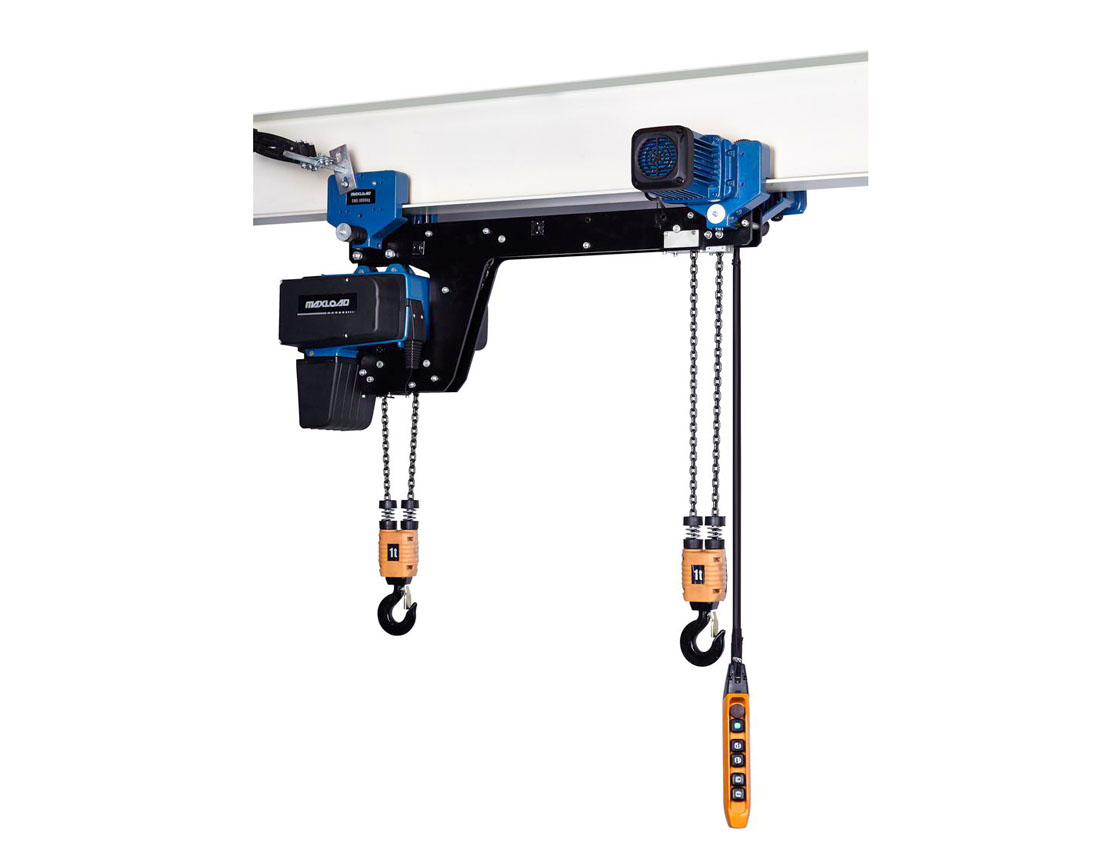
I. Overview
electric chain hoist as an important lifting equipment in industrial operations, its operation safety is directly related to personnel safety and stable operation of equipment. In order to effectively prevent accidents, extend the service life of the equipment, standardise the user's operating behaviour, the following precautions are listed for the operator's reference and compliance.
II.Precautions for safe us
1. Ensure that the electric chain hoist used meets the relevant ISO level and specified conditions of use.
2. overloading is strictly prohibited, and objects exceeding the rated load shall not be lifted.
3. prohibit the use of non-specified grade (e.g. below ISO 80 grade) of chain.
4. If the lifting capacity is insufficient, it shall not be used forcibly.
5. carry out a comprehensive daily inspection before each use to ensure that the equipment is in good condition.
6. Before starting, check that the chain links are loose and natural and that there are no knots, twists or tangles, if any, they must be corrected before use.
7. Hooks must be equipped with an effective anti-drop device, if it is missing or ineffective, it is prohibited to use it.
8. The hoist must be equipped with upper and lower limit stops, if missing, the hoist must not be put into use.
9. It is prohibited to wrap the chain directly around the load for lifting.
10. Do not use the tip of the hook to carry heavy loads, which should be hung in the centre of the hook.
11 Prohibit rapid lifting and frequent repetitive action to prevent equipment fatigue damage.
12. Do not exceed the lifting or lowering limit point (up and down stroke limit).
13. It is forbidden to stay, pass or work under the suspended weight.
14. shall not pull objects diagonally, lifting offset angle shall not exceed.
15. Take necessary measures to prevent the electric hoist body falling.
16. In high frequency impact working conditions, it is recommended to replace the chain once a year.
17. In special environments such as below -40℃, above 100℃, corrosive or explosive places, the chain should be replaced every six months and the lower hook every two years. If the chain is used frequently, it should be inspected and replaced in advance as appropriate.
18. If the chain breaks, welding is strictly prohibited and the whole chain must be replaced.
19. The whole chain must be replaced and partial replacement is strictly prohibited.
20. In special environments such as electroplating factory and heat treatment factory, the chain should be inspected every month and replaced every year.
21. The chain should be kept in lubricated condition and lubricant should be applied regularly.
22. Gears, bearings and other friction parts should be added with lubricating grease on time.
23. The hoist which is not used for a long time should be cleaned, rust-proofed and properly stored.
24. the user shall not modify the equipment privately, if need to adjust or upgrade, the manufacturer shall be responsible for the implementation.
25. If it is necessary for two hoists to lift a load together, sufficient safety load margin should be ensured, synchronous control should be adopted, and the operation process should be strictly monitored and operated cautiously.
III. Conclusion
Electric chain hoist in lifting efficiency at the same time, but also on the operator's standard operation puts forward higher requirements.
Strictly observing the above safety matters is the basis for guaranteeing the construction safety and stable operation of the equipment.
Enterprises should organise regular operation training and maintenance inspection to ensure that the chain hoist is always in the best working condition.
 0086 156 1824 5535
 0086 156 1824 5535