Stable Operation Even Under Extreme Loads? Unveiling the Load-Bearing Capacity of Chain Hoists
One of the most critical performance indicators of industrial lifting equipment is load-bearing capacity. It not only directly affects the weight of objects the equipment can lift, but also the safety and stability of the overall operation process. Whether an electric chain hoist can consistently perform at its rated load capacity is a key concern for many purchasers and users, especially under extreme loads, high-frequency operations, or complex working conditions.
This article will explore the chain hoist's structural advantages, material processing, design logic, and testing standards, revealing how it maintains stable operation in high-load environments, truly achieving "lifting, stable lifting, and long-term lifting."
I. The "Compression-Resistant Frame" of Structural Design
Chain hoists utilize a linear, vertical, and endless chain structure. Compared to traditional wire rope hoists, this design provides more uniform force distribution and greater resistance to deformation under high loads. The load path between core components, including the hook, sprocket, housing, motor, and reducer, is clear, with no intermediate bends or complex turning points, minimizing energy loss and structural fatigue points.
At the same time, vertical tension is maintained between the upper and lower hooks and the load chain, preventing lateral swing and chain kinking. Even during short periods of full or even overload operation, the structure remains stable and deformation-free, ensuring smooth lifting operations.
II. High-Strength Chain: Small Links Carry Heavy Loads
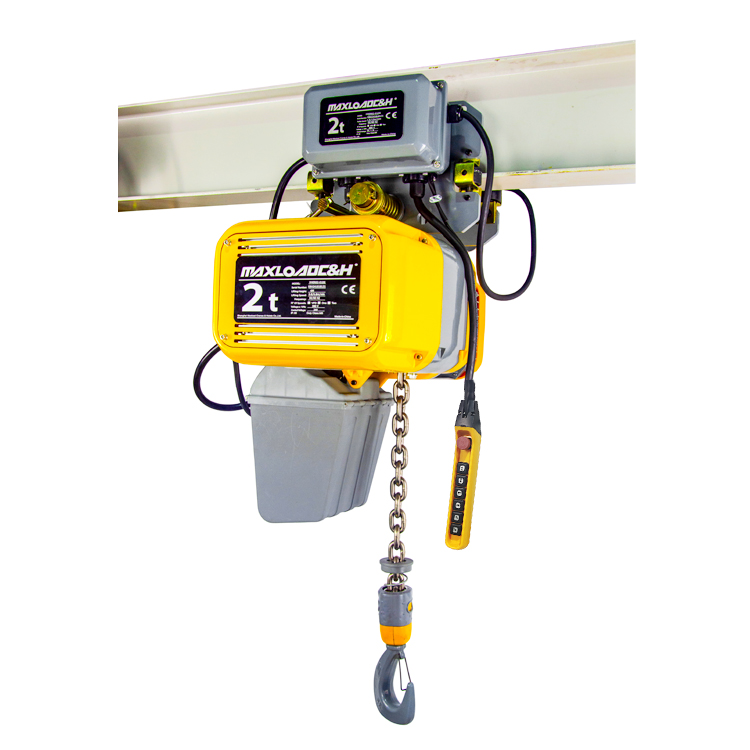
Chain hoist chains are typically G80 or higher-grade alloy steel load chains. Each link undergoes rigorous heat treatment (such as high-frequency quenching and carburizing) to achieve ultra-high tensile strength and excellent fatigue resistance. For example, a 2-ton hoist typically achieves a chain tensile strength exceeding 80 kN, far exceeding the rated load strength.
More notably, the chain surface utilizes multiple corrosion-resistant processes, including galvanizing, blackening, and electrophoresis. This ensures stable performance even in harsh operating conditions, such as humidity, acidity, alkalinity, and high temperatures, ensuring load-bearing performance remains unaffected by environmental fluctuations.
III. Hook and Overload Protection: Safety in the Details
The stable load-bearing performance of a high-performance hoist is inseparable from the safety design of the hook. Modern chain hoists generally utilize forged alloy steel hooks, which possess a certain degree of elastic deformation. Even under unexpected impacts, they can absorb some of the energy and prevent breakage. Anti-slip tongues are also included to prevent cargo from falling.
The overload protection device acts as an invisible guardian, automatically shutting down the equipment when the load exceeds the rated value, preventing damage or accidents caused by forced lifting. This feature ensures that the hoist will not operate beyond its critical limit, providing users with dual protection.
IV. Multi-stage Reduction Gears: The Transmission Guarantee Behind the Load
Although the chain is the front-end load-bearing structure, the enormous torque behind it comes from the reduction gear system. Chain hoists often feature a three- or four-stage reduction mechanism. Each gear stage is made of high-precision carburized alloy steel and undergoes CNC machining and high-frequency heat treatment to ensure extremely high meshing accuracy and strength.
The benefits of this design include:
- Distributed force, reducing the burden on individual gears;
- Reduced mechanical wear and extended life;
- Smooth operation, without stuttering or speed drops, even under high loads.
V. Factory Testing Standards: Not every unit leaves the factory
High load capacity isn't just a claim, it's a test. Reputable chain hoist manufacturers conduct the following tests before shipment:
- Static load test: Hoist deformation and stability are tested at 1.25 times the rated load.
- Dynamic load test: Multiple lifts at 1.1 times the rated load are performed to verify system coordination.
- Overload protection test: Simulates the functioning of the trigger mechanism under extreme loads.
- Chain fatigue test: Continuously starts and stops the chain to test durability and breakage probability.
Only by passing these rigorous tests can we ensure the equipment's stable and reliable load-bearing performance in real-world use.
VI. Actual Performance Under Extreme Conditions
A wind turbine installation company once used a 5-ton chain hoist during field construction, requiring the lifting of structural components in conditions of strong sea breezes and large temperature fluctuations. After three consecutive days of high-intensity lifting, the equipment experienced no chain jamming, temperature rise, or delays, demonstrating its excellent load-bearing and stability.
Another example is a steel structure company using a customized 10-ton chain hoist to lift a 9.5-ton steel beam. The hoist operated continuously for 24 hours, with only routine chain lubrication and maintenance, and remained in excellent condition. These real-world examples demonstrate that, with proper selection, chain hoists are capable of handling extreme loads.
VII. Correct Selection is the Prerequisite for Achieving High Load Capacity
It is important to note that even the most high-performance hoists must be carefully selected based on the intended operating environment and frequency. Key selection points include:
- Determine the maximum lifting capacity and duty cycle;
- Determine whether dual-chain or multi-chain synchronous control is required;
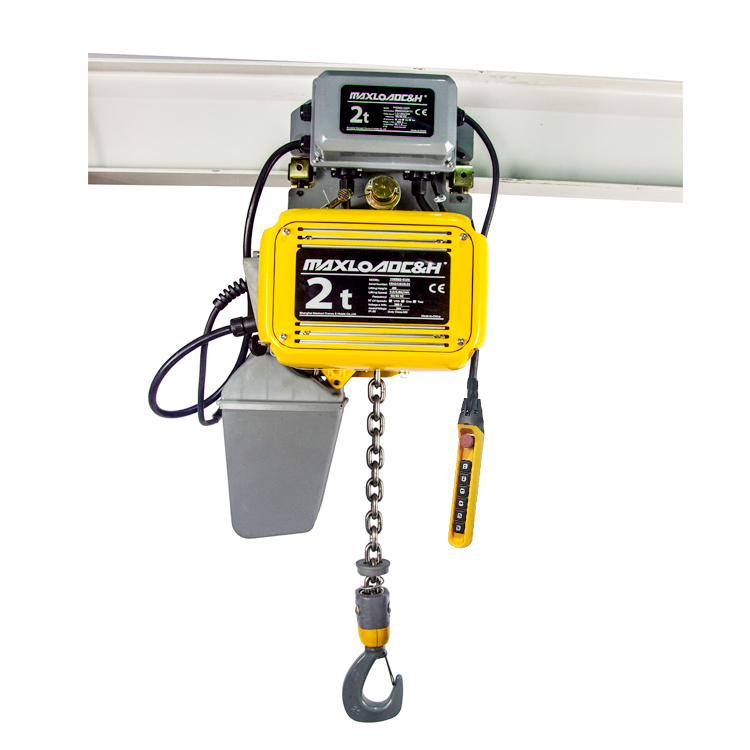
- Evaluate whether rails, a trolley, or an intelligent control module are required;
- Consider special environmental influences such as temperature, humidity, and dust.
VIII. Summary: Stable load-bearing capacity is a concentrated reflection of the overall system's capabilities.
The ability of an excellent chain hoist to maintain stable operation under extreme loads does not rely on the strength of a single component, but rather is the result of a comprehensive and coordinated approach across the entire system, encompassing structure, materials, transmission, safety design, and testing.
For companies with high-intensity, high-frequency lifting requirements, choosing a chain hoist with a truly high load capacity not only improves production efficiency but also ensures safety. In demanding working conditions, the stability of a chain hoist is your reliable "heavy-duty choice."
 0086 156 1824 5535
 0086 156 1824 5535