Building Multi-Layered Protection to Safeguard Operational Safety
Electric hoists, as the core equipment in industrial lifting applications, have their safety performance directly linked to personnel safety, equipment stability, and production efficiency. To address potential risks such as overloading, loss of control, and electrical failures, modern electric hoists integrate multiple safety protection devices, forming a comprehensive "prevention-monitoring-emergency response" protection system. Below is a detailed analysis of five key categories of these devices:
I. Overload Protection: Preventing Structural Damage at the Source
Load Limiters
Function: Continuously monitor the load weight and trigger audible and visual alarms when the actual load reaches 95% of the rated capacity. If the load exceeds 100%, the device automatically cuts off the power supply, halting the lifting operation.
Technical Principle: Converts the load signal into an electrical signal via tension sensors or lever mechanisms, which is then analyzed by an electronic control system to issue control commands.
Application Scenarios: Mandatory for all electric hoists with a rated capacity of ≥1 ton, these devices are crucial for preventing wire rope breakage, motor burnout, or structural deformation.
Advanced Features: Some high-end models incorporate digital displays for real-time load weight visualization and historical data logging, supporting overload record tracing.
Safety Alarm Devices
Function: Work in conjunction with load limiters to alert operators via buzzers, indicator lights, or vibration feedback when the load approaches critical levels.
Extended Applications: In hazardous environments, alarm devices can be upgraded to explosion-proof or corrosion-resistant variants for enhanced reliability.
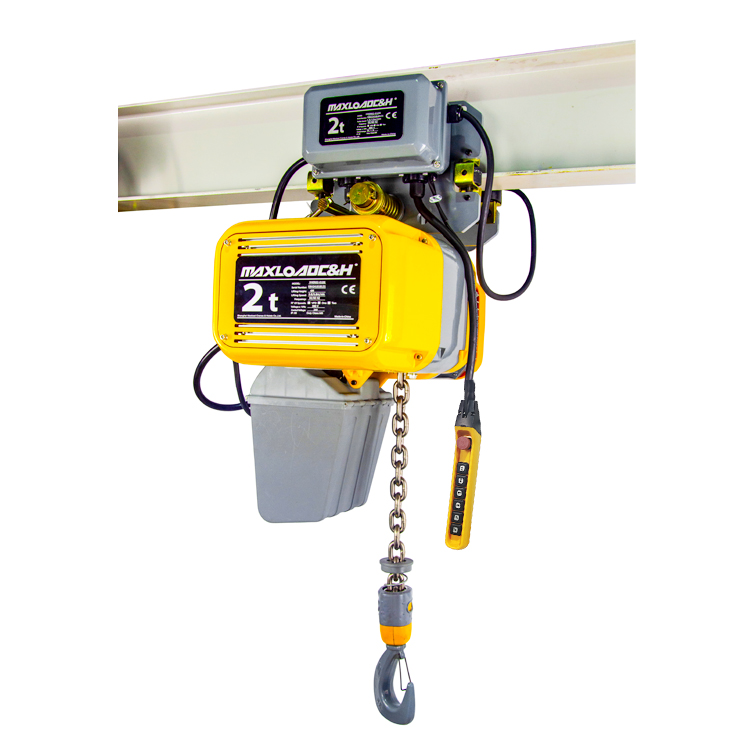
II. Travel Protection: Precise Control of Movement Boundaries
Lifting Height Limiters
Function: Detect the upper and lower limits of the hook's travel through linkage with the wire rope via a rope guide. When the hook reaches these limits, the device automatically cuts off the motor power to prevent drum housing damage, gearbox rupture, or wire rope disengagement.
Technical Upgrades: Modern limiters employ non-contact sensors to reduce mechanical wear and improve response speed. Some models support adjustable limit positions to accommodate diverse working conditions.
Running Travel Limiters
Function: Installed at the ends of crane trolley or gantry tracks, these devices use limit switches to restrict horizontal movement range, preventing derailment or collisions with walls or other obstacles.
Supporting Devices: Track ends are typically equipped with stoppers (hard barriers) and buffers (hydraulic or polyurethane buffers) to absorb collision energy and minimize impact damage to equipment and structures.
III. Electrical Protection: Ensuring System Stability and Personnel Safety
Phase Sequence Protection Devices
Function: Detect the phase sequence of the motor power supply and automatically cut off the circuit if the phases are reversed (incorrect three-phase power sequence), preventing motor reversal that could lead to hook detachment or load drop.
Application Variations: Some domestic CD/MD-type electric hoists require additional installation of these devices, while imported AS-type hoists often integrate them as standard. Certain models support automatic phase sequence correction for improved operational convenience.
Power Failure Protection and Backup Power Supplies
Function: Immediately halt hoist operation and engage the brake to secure the load in the event of a power anomaly or outage. Some high-end models feature UPS backup power or supercapacitors for short-duration low-speed operation to a safe position.
Technical Principle: Voltage sensors monitor power status, while energy storage devices provide emergency power to prevent loss of control due to sudden power cuts.
Electrical Short-Circuit and Grounding Protection
Function: Prevent circuit short-circuits via fuses or circuit breakers and divert leakage currents to the ground through grounding wires to protect operators from electric shock.
Low-Voltage Control: Modern electric hoists commonly use 36V safety voltage for pendant controls, with some models offering wireless remote operation to further reduce electric shock risks.
IV. Mechanical Protection: Enhancing Structural Strength and Reliability
Braking Systems
Function: Lifting mechanisms must be equipped with brakes (cone or disc brakes), while running mechanisms should also incorporate brakes in principle. Some advanced models use dual-brake systems, where a secondary brake activates immediately if the primary brake fails, preventing load drop.
Technical Principle: Brakes rely on spring or electromagnetic force to generate braking torque proportional to the load, ensuring reliable load retention during static conditions. Brake surfaces are treated (galvanized or powder-coated) for enhanced corrosion resistance.
Wire Rope Safety Measures
Fixing Methods: Wire ropes are securely fastened to the drum using rope clamps, with a minimum of 2 safety turns retained on the drum when the hook reaches the lower limit to prevent disengagement.
Anti-Tangling Design: Single-layer winding drums use rope guides to ensure orderly rope arrangement, while multi-layer drums feature helical grooves to reduce interlayer friction and extend service life.
Hook Safety Devices
Anti-Slip Design: Hooks incorporate safety latches or spring-loaded safety clips to prevent accidental load disengagement.
Material and Process: Hooks are forged from high-tensile steel (40Cr or 20MnSi) and subjected to quenching and tempering for enhanced strength and toughness. Surfaces are polished or galvanized to reduce wear and corrosion.
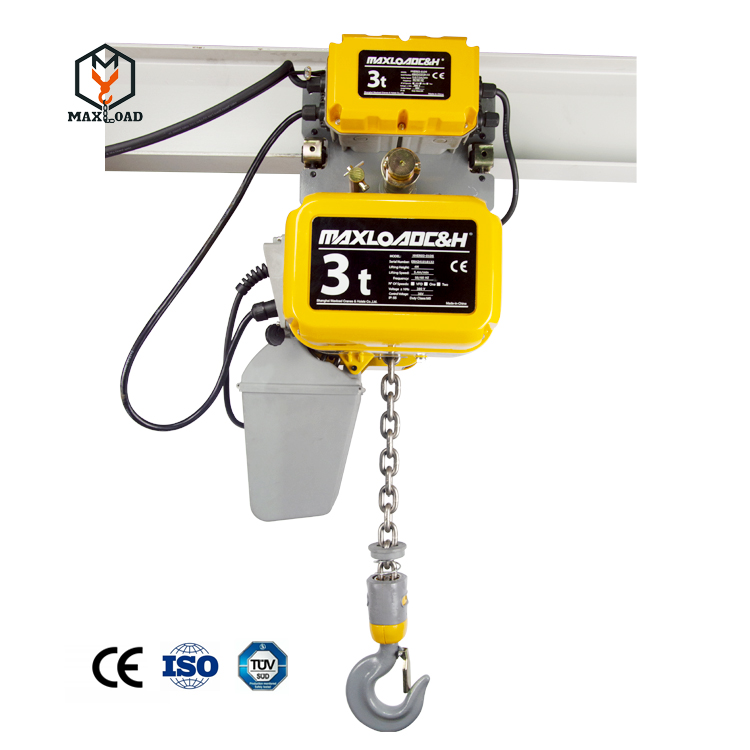
V. Emergency Protection: Responding to Unforeseen Situations
Emergency Stop Buttons and Remote Control
Function: Red circular emergency stop buttons, typically located on remote controls or control panels, immediately cut off power and halt all hoist operations when pressed. Some models support remote shutdown via mobile apps or web interfaces.
Design Specifications: Emergency stop buttons must feature self-locking mechanisms to prevent accidental restarts and have slip-resistant surfaces for reliable operation in wet or oily conditions.
Anti-Drop Devices and Safety Brakes
Function: Running trolleys are equipped with rail-hanging mechanisms to prevent derailment, while some models incorporate safety brakes (centrifugal brakes) on hooks or drums that automatically engage to stop the drum if overspeed or loss of control occurs, preventing load drop.
Technical Principle: Safety brakes trigger braking by detecting rotational speed or centrifugal force, with response times ≤0.2 seconds to effectively intercept falling loads.
Environmental Adaptability Protection
IP Ratings: Ingress Protection (IP) codes (IP54, IP65) indicate dust and water resistance levels, protecting electrical components from environmental damage. Outdoor hoists require IP67 or higher ratings for short-term submersion capability.
Explosion-Proof Design: Hoists used in flammable or explosive environments must comply with ATEX or IECEx certifications, featuring explosion-proof motors, control boxes, and buttons for safe operation.
VI.Conclusion: Safety Is Paramount, and Protection Must Be Comprehensive
The safety protection devices of electric hoists serve as the "invisible guardians" in industrial operations, requiring a balance of reliability, sensitivity, and durability in their design. Enterprises should conduct regular inspections and maintenance of these devices to ensure their effectiveness, while operators must receive professional training to understand the functions and operating procedures of each device. With the integration of IoT and AI technologies, electric hoists are evolving toward intelligence, with future models expected to incorporate more proactive safety features (collision warning, fatigue monitoring) to further enhance industrial safety.
 0086 156 1824 5535
 0086 156 1824 5535