Electric Hoists: An All-Around Helper for Industrial Lifting
In modern industrial and logistics scenarios, electric hoists, as a representative of lightweight and compact lifting equipment, have become indispensable "aerial lifters" in factories, warehouses, construction sites, and other locations due to their efficiency, safety, and flexibility. This article will comprehensively analyze the value and potential of this equipment from four perspectives: technical principles, core advantages, application scenarios, and key purchasing considerations.
I.Technical Principle: Electric-Driven Precision Lifting System
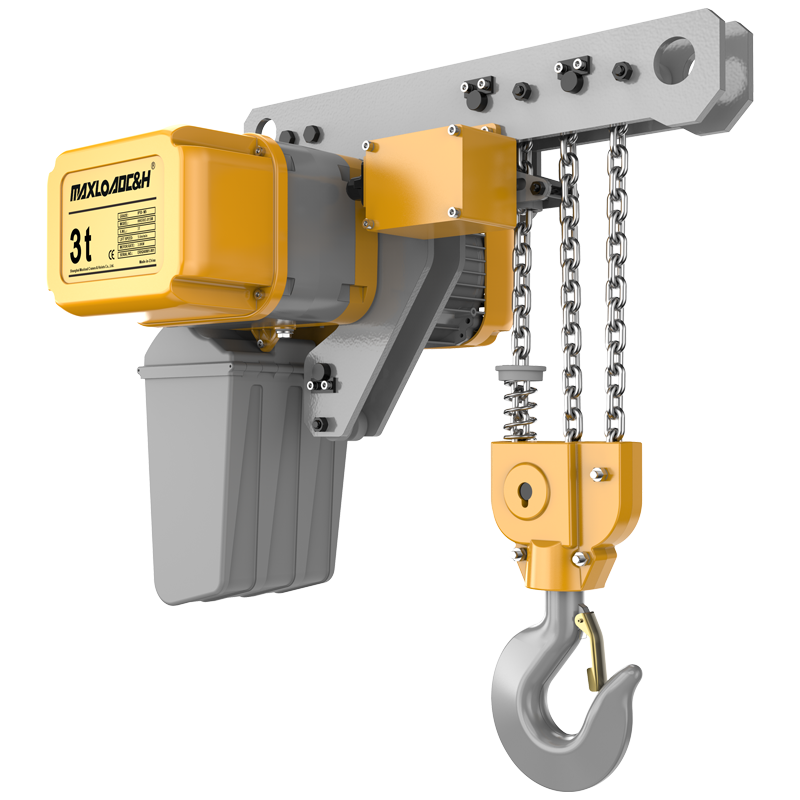
The core structure of an electric hoist consists of an electric motor, a speed reducer, a drum, a brake, a chain/wire rope, and a control module. Its operating principle is that electricity drives the motor, which is reduced in speed and amplified by the speed reducer to drive the drum to retract and unreel the chain or wire rope, achieving vertical lifting or horizontal movement of heavy objects.
Braking System: Electromagnetic or mechanical braking is used to instantly lock the load in the event of a power outage, preventing the risk of slipping.
Control Methods: Available with wired or wireless remote control, the operator can precisely control lifting, lowering, and stopping from a safe distance. Protective Design: The outer casing is typically made of high-strength alloy or engineering plastic, offering dustproof, waterproof, and corrosion-resistant properties, making it suitable for harsh working conditions.
II. Core Advantages: Why They're the Industry's Top Choice?
Energy Efficiency
Compared to traditional manual hoists, electric hoists significantly improve operating efficiency through their electric drive, making them particularly suitable for high-frequency, heavy-load handling tasks. Some models feature variable speed technology, enabling stepless speed regulation, reducing energy consumption, and minimizing mechanical shock.
Safety and Reliability
A built-in overload protection device automatically shuts off power when the load exceeds the rated value. A dual braking system and limit switches further eliminate the risk of overtravel. In addition, some models support remote monitoring, providing real-time feedback on equipment status and preventing malfunctions.
Flexible Adaptability
Select single-speed or dual-speed models based on your needs, supporting various mounting options such as single-track, dual-track, and cantilever beams. Mini electric hoists can even be equipped with manual trolleys for flexible operation in space-constrained environments.
Easy Maintenance
The modular design allows for easy disassembly and maintenance of key components (such as the motor and brake). Regular lubrication of the chain and wire rope prolongs service life and reduces long-term operating costs.
III. Application Scenarios: A "Universal Tool" Covering All Industries
The application scope of electric hoists goes far beyond conventional wisdom. Applications include, but are not limited to:
Manufacturing: Mold lifting, production line material transfer, and equipment maintenance;
Warehousing and logistics: Cargo loading and unloading, high-bay rack storage and retrieval, and container handling;
Construction: Concrete pouring, steel lifting, and scaffolding assembly;
Agriculture: Feed handling, greenhouse equipment installation, and grain storage management;
Emergency Rescue: Post-disaster reconstruction, vehicle rescue, and aerial work support.
IV. Buying Guide: How to Choose the Right Electric Hoist?
Identify Load Requirements
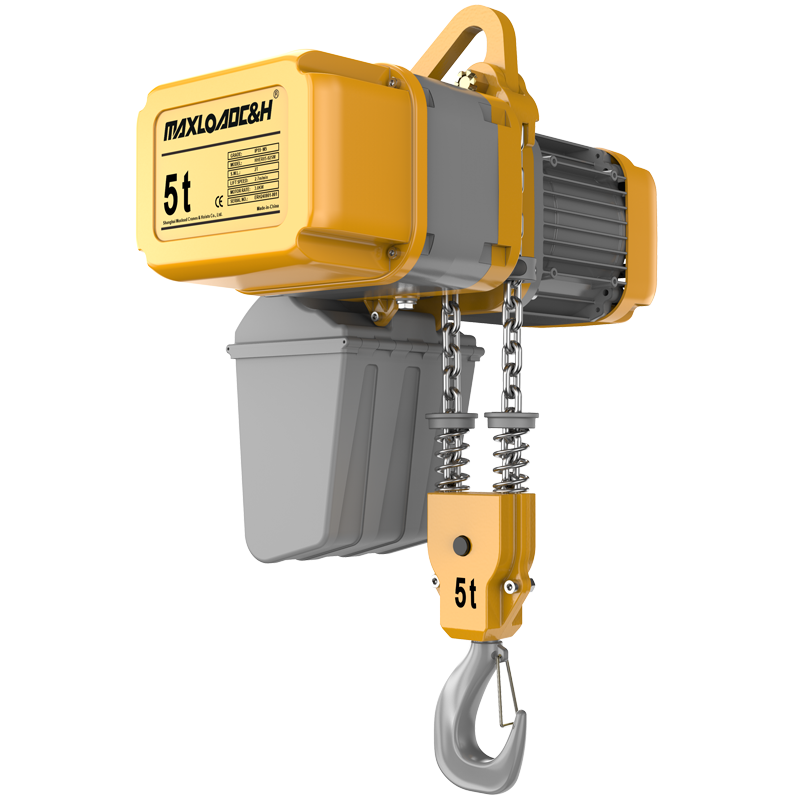
Select a rated lifting capacity based on the application scenario (typically ranging from 0.5 tons to 50 tons), and allow a 20% safety margin to account for dynamic loads.
Lifting Height and Speed
Measure the maximum lifting height of the work area and prioritize models with standard travel and customizable strokes. For faster positioning, choose dual-speed or variable-frequency models. Power Supply and Environmental Compatibility
For indoor operations, a single-phase 220V power supply model is recommended. For outdoor or explosion-proof environments, a three-phase 380V or explosion-proof motor is required. For humid environments, a higher level of protection (IP55 or higher) is required.
Additional Functional Requirements
Do you need intelligent features such as overload alarms, counters, and remote control? Consider your budget and actual needs.
V. Conclusion: Electric Hoists: The "Lightweight Revolution" of Future Industry
With the development of the Internet of Things and intelligent control technologies, electric hoists are evolving from simple lifting tools to intelligent, modular, and energy-efficient ones. For example, some new models have integrated sensors and data analysis modules to optimize operating efficiency in real time and predict maintenance cycles. For businesses, Choosing a reliable electric hoist is not only key to improving productivity but also an important step in achieving safe, efficient, and sustainable development.
 0086 156 1824 5535
 0086 156 1824 5535