Electric Hoists: Technological Pioneers in Industrial Lifting
In modern industrial production, the efficiency and safety of material handling directly determine a company's competitiveness. As a lightweight and efficient lifting device, electric hoists, with their modular design, precise control, and wide applicability, have become a core tool in factory workshops, warehouse logistics, equipment maintenance, and other applications. This article will comprehensively analyze the technological core and practical value of electric hoists from four perspectives: technical principles, structural innovations, application scenarios, and safety regulations.
Ⅰ. Precision Synergy of Mechanical and Electrical Systems
The core technology of electric hoists lies in the deep integration of mechanical transmission and electrical control. Its operating principle can be broken down into the following key components:
1. Power Transmission System
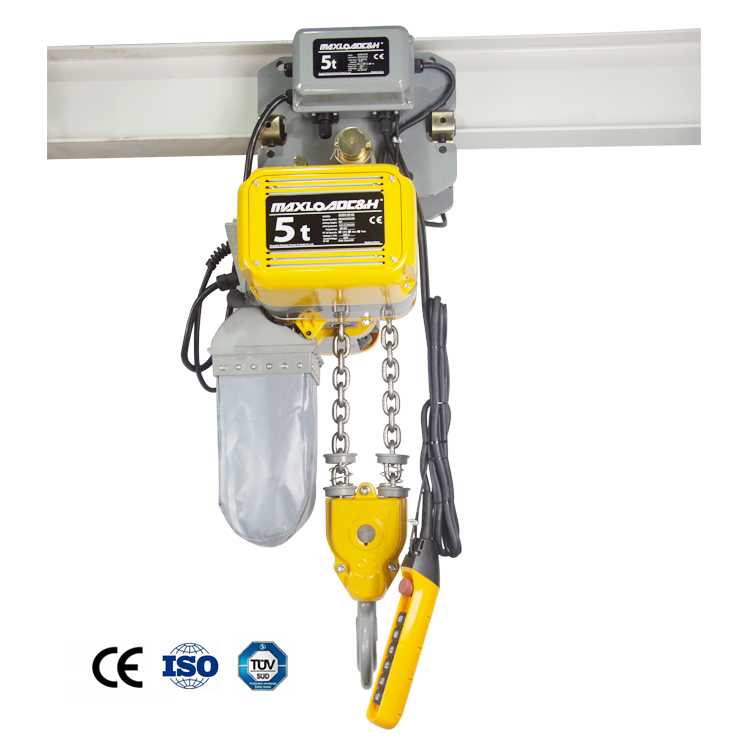
Electric hoists use a three-phase asynchronous motor or a conical rotor motor as their power source. Conical motors have an integrated braking function, enabling rapid braking through spring pressure in the event of a power outage, improving safety by over 30% compared to traditional electromagnetic brakes. Power is transmitted via a planetary gear or worm gear reducer, achieving torque amplification and speed regulation, ensuring a smooth and impact-free lifting process. For example, the DH electric hoist uses a planetary reducer to reduce motor speed to 1/50 while increasing output torque fivefold.
2. Electrical Control System
Modern electric hoists generally utilize low-voltage control technology, using components such as magnetic contact pressure gauges and limit switches for overload protection and stroke control. When the load exceeds the rated value, the overflow valve automatically releases pressure to prevent wire rope breakage. When the hook approaches its limit position, the limit switch cuts off power to prevent equipment damage. Some high-end models also feature wireless remote control, allowing operators to precisely control lifting, lowering, and lateral movement within a range of 100 meters.
3. Drive and Load-bearing Structure
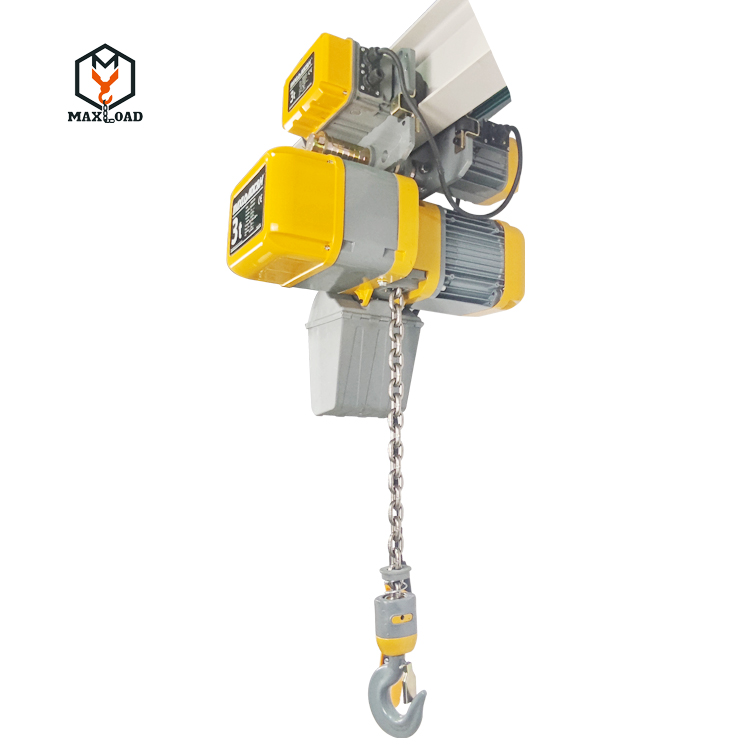
Wire rope electric hoists use a drum-wound wire rope to raise and lower heavy objects, making them suitable for aerial work at heights of 3-30 meters. Chain electric hoists, on the other hand, utilize a closed chain drive, resulting in a more compact structure suitable for shorter, more frequent lifts. For example, the PK electric chain hoist, with a chain pitch of only 12.7 mm, can complete 360-degree rotation and lifting within a 0.5-meter space.
Ⅱ. Breakthroughs in Modular Design
The technological evolution of electric hoists has consistently revolved around "lightweighting, integration, and intelligence." Structural innovations are primarily reflected in the following areas:
1. Integration of Motor and Reducer
Traditional electric hoists use separate motor and reducer designs, resulting in excessive longitudinal dimensions. The AS-type electric hoist, however, integrates the reducer directly into the rear of the motor, reducing the overall length by 40%. This "integrated drive module" not only simplifies installation but also improves equipment reliability through a shared cooling system.
2. Cantilever Crane Slewing Mechanism
Electric hoist cantilever cranes utilize a slewing bearing or bearing structure to achieve 360° cantilever rotation. Their core innovation lies in the precise control of the slewing drive. For example, one cantilever crane model utilizes a harmonic reducer, achieving a slewing accuracy of ±0.1°, significantly superior to the ±1° error of traditional gear drives and meeting the requirements of precision assembly lines.
3. Upgraded Materials and Processes
Modern electric hoists widely utilize aluminum alloy housings and high-strength alloy steel drums, reducing weight while improving corrosion resistance. Taking the DH electric hoist as an example, its drum wall thickness has been optimized from 8 mm to 5 mm, reducing weight by 35%. A heat treatment process has also resulted in a surface hardness of HRC45, extending its service life to over 10 years.
Ⅲ. Full Chain Coverage from Factory to Logistics
The adaptability of electric hoists makes them the preferred equipment for material handling in multiple industries. Typical application scenarios include:
1. Factory Floors: The Efficiency Engine of Precision Manufacturing
In automotive manufacturing workshops, electric hoist jib cranes can accurately lift engine blocks (weighing up to 2 tons) to the assembly line with a positioning error of less than 2 mm. After introducing electric hoists, a machining company reduced component lifting time from 15 minutes per lift to 3 minutes per lift, increasing production line efficiency by 400%.
2. Warehousing and Logistics: An Intelligent Solution for High-Frequency Handling
In e-commerce warehouses, mini electric hoistscan quickly move small items weighing less than 0.5 tons, enabling goods-to-person picking in conjunction with automated guided vehicles (AGVs). After deploying 20 electric hoists at a logistics center, cargo turnover increased by 65% and labor costs decreased by 40%.
3. Equipment Maintenance: A Safety Aid in Confined Spaces
When maintaining chemical equipment, explosion-proof electric hoists can operate safely in environments containing flammable gases. Their three-stage reduction transmission system and disc brakes ensure stability during lifting, avoiding the secondary damage caused by the shaking of traditional manual hoists.
Ⅳ. Full Process Control from Operation to Maintenance
The safe operation of electric hoists relies on strict operating procedures and a maintenance system. Key points include:
1. Triple Inspection Before Operation
Equipment Condition: Verify that the wire rope is free of breakage, the brake is sensitive, and the limiter is effective.
Environmental Conditions: Ensure the lifting site is dry, ventilated, and free of obstructions.
Personnel Qualifications: Operators must undergo professional training and wear protective equipment such as hard hats and non-slip shoes.
2. Five Taboos During Operation
Overloading is strictly prohibited (the rated load error must not exceed 5%);
Slanting or tilting of the hoist is strictly prohibited (the deviation between the hook centerline and the load's center of gravity must be less than 3°);
Sudden acceleration or sudden stopping is strictly prohibited (the lifting speed must be controlled within 8 meters per minute);
Staying above personnel is strictly prohibited (a safe distance of more than 2 meters is required);
Using standard electric hoists in humid environments is strictly prohibited (products with an IP54 protection rating must be used).
3. Periodic Maintenance Management
Daily Inspection: Clean the equipment surface and inspect the wire rope for wear
Weekly Inspection: Lubricate gears, bearings, and other transmission components and test braking performance;
Monthly Inspection: Calibrate limit switches and replace aging electrical components.
Conclusion
Technological innovations in electric hoists have not only reshaped the efficiency standards of material handling but also strengthened the safety barrier for industrial production through the integration of safety design and intelligent control. From modular drive systems to IoT integration, every breakthrough in electric hoists proves that the power of technology begins with meticulous attention to detail and is achieved through precise response to needs. In the future, with the deep integration of materials science and digital technology, electric hoists will surely lift the next peak of industrial civilization with a lighter posture.
 0086 156 1824 5535
 0086 156 1824 5535