How Can Electric Chain Hoists Enhance Automation in Small and Medium-Sized Manufacturing Enterprises?
The manufacturing industry is currently undergoing a crucial phase of transformation and upgrading, particularly for small and medium-sized enterprises (SMEs), which face numerous challenges such as rising labor costs, labor shortages, and safety risks. In this context, promoting mechanization and automation of the production process is a key path to improving production efficiency and enhancing competitiveness. Electric chain hoists, as flexible, compact, and intelligent lifting equipment, are becoming an important tool for SMEs to achieve automation.
This article will explore the key role of electric chain hoists in the automation upgrade process, based on the actual needs of manufacturing enterprises, and discuss how their configuration and integration can help SMEs move towards intelligent manufacturing.
I. Pain Points and Automation Needs of SMEs
1. Rising Labor Costs and the Dilemma of Labor-Intensive Operations
Most SMEs rely heavily on manual labor. Facing challenges such as labor shortages, high employee turnover, and rising labor costs, they urgently need to replace manual labor with automation.
2. High Repetitiveness in Production Processes
Many production processes in SMEs are highly repetitive, such as material handling, semi-finished product transport, and equipment assembly. Electric chain hoists can effectively replace manual handling, improving efficiency and consistency.
3. Sensitivity to Equipment Investment: Seeking Low-Cost, High-Return Solutions
Compared to large enterprises with ample financial resources, SMEs are more cautious about investing in automation equipment. Therefore, they need equipment with high cost-performance and easy maintenance.
4. Frequent Safety Incidents: Urgent Need for Improved Safety
Manual handling and lifting processes involve many safety hazards, such as operator errors, unstable loads, and falling objects. More secure mechanical equipment is urgently needed to replace manual operations.
II. How Electric Chain Hoists Fit into Automation Upgrade Scenarios
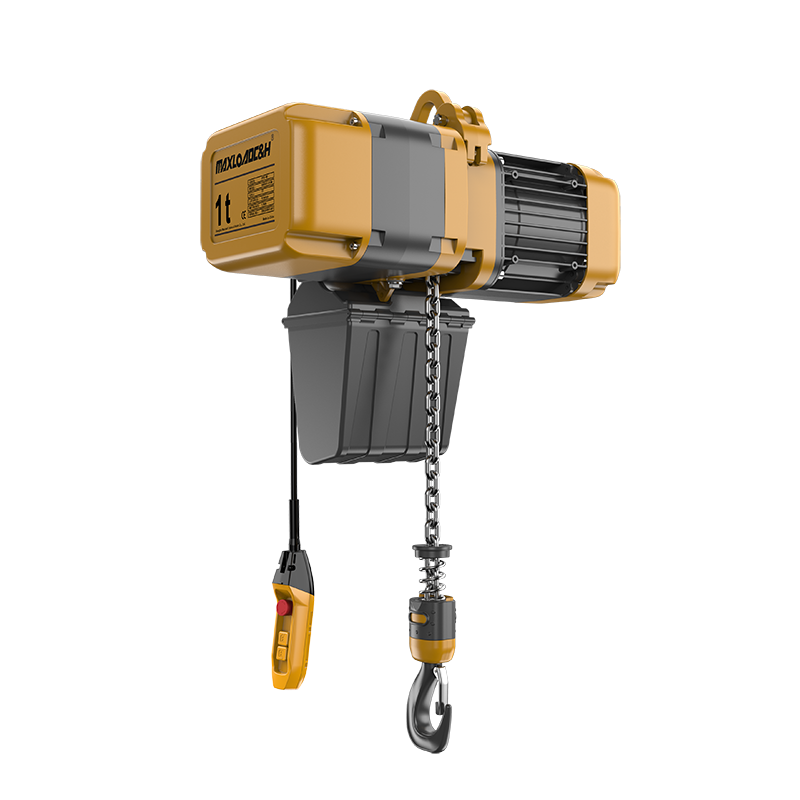
Electric chain hoists, with their compact design, flexible control, and smooth operation, are ideally suited for production line integration and automation in SMEs.
1. Standard Modular Design for Easy Integration
Electric chain hoists have standard mounting interfaces, allowing flexible installation on track systems, fixed brackets, or mobile gantry cranes. They can also be seamlessly integrated with production line systems and automated control platforms through their control terminals.
2. Supports various control methods for intelligent operation
It can be used with button-operated controls, remote controls, PLCs, frequency inverters, and other control systems to meet diverse operational needs. Some intelligent models can also integrate with MES systems, enabling data collection, equipment networking, and remote monitoring – core functions of a smart factory.
3. Automates repetitive material handling, reducing manual intervention
For production processes requiring frequent loading, unloading, and material transfer, the chain hoist, combined with a rail system or robotic arm, can automatically pick up and lift materials, freeing up manpower and improving production consistency.
4. Suitable lifting capacity for small to medium-sized parts
Small and medium-sized manufacturing enterprises typically handle light to medium loads, such as equipment, parts, and molds weighing 1 to 3 tons. The chain hoist is perfectly suited for these applications, avoiding overinvestment or wasted capacity.
III. Typical Application Scenarios and Case Studies
1. Hardware Manufacturing: Automated Handling of Molds and Semi-finished Products
In the hardware manufacturing industry, molds are frequently loaded and unloaded. Traditional manual handling by two people is inefficient and risky. One company integrated a chain hoist with a suspended rail system, enabling quick lifting and lowering with a button control. One person can now complete the lifting operation, increasing efficiency by over 50%.
2. Home Appliance Assembly Line: Automated Material Handling
Large components in home appliance production, such as housings, compressors, and panels, need to be placed precisely on the worktable. Using a chain hoist with a positioning system, workers can easily load and unload parts, preventing drops and improving safety.
3. Food Equipment Factory: Precise Positioning of Large Equipment
During the assembly of large equipment, multiple components need to be assembled precisely. Two chain hoists can be used for synchronized lifting, and remote control via a handheld controller ensures accurate positioning.
4. Electrical Cabinet Manufacturing: Improved Production Line Efficiency
Chain hoists are used for lifting and moving electrical cabinet frames, effectively preventing damage from manual handling and improving assembly accuracy, and reducing rework.
IV. Investment and Return Analysis: Leveraging "Small Equipment" for "Big Efficiency"
1. Low Initial Investment, Low Implementation Threshold
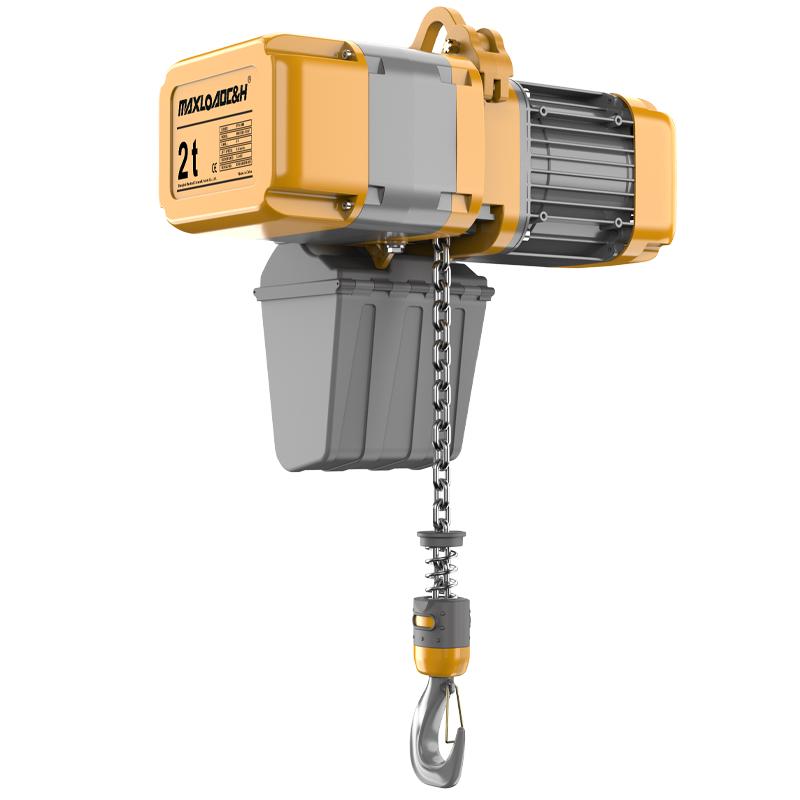
Standard chain hoists are affordable, ranging from a few thousand to tens of thousands of yuan, far less expensive than complex automated equipment like robots and AGVs, making them suitable for a gradual automation transformation path.
2. Short Return on Investment Period, Low Operating Costs
The equipment is easy to operate and has low maintenance costs, making it suitable for high-frequency, long-term operation. Most companies can recoup their investment within 3-6 months through efficiency improvements and labor savings.
3. Supports Iterative Upgrades and Future Smart Integration
Chain hoists support control system expansion and track system upgrades, allowing businesses to gradually enhance their automation level based on future needs, offering continuous upgrade potential.
V. Conclusion: The "First Step" for SMEs Towards Automation
In the wave of digital transformation in manufacturing, SMEs face both challenges and opportunities. As an automation device with low investment, fast ROI, and flexible scalability, the chain hoist is becoming the "first step" for many companies towards smart manufacturing.
Through proper configuration and integration, chain hoists can not only improve lifting efficiency but also serve as a foundational module for building efficient production lines, stabilizing production rhythm, and creating a safe working environment. With the continuous advancement of control systems and intelligent technologies, chain hoists will empower more SMEs to take flight towards smart manufacturing.
 0086 156 1824 5535
 0086 156 1824 5535