Daily Maintenance Guide for Electric Hoists: Key Measures for Safety and Longevity
As a frequently used lifting equipment in industrial settings, the reliable operation of electric hoists directly affects work efficiency and personnel safety. Systematic daily maintenance effectively prevents malfunctions and reduces wear and tear. This guide outlines key maintenance points from a professional perspective:
I. Basic Checks and Operating Procedures
Pre-start Inspection
Visual Inspection: Check for cracks, oil leaks, unusual noises, and odors. Pay special attention to the wire rope/chain for broken strands, twisting, rust, or misalignment. Ensure the rope ends are securely fastened and the drum winding is correct.
Function Test: Conduct a no-load test to verify brake sensitivity, limit switch accuracy, and control button responsiveness. Ensure the brake slip is ≤V/100 (V is the stable lifting speed under load). The hook should move smoothly without jamming.
Environmental Check: Clear debris from the track, ensure the operating area is free of obstacles, and maintain the operating temperature between -25°C and 40°C. Avoid use in corrosive gas or high-humidity (>85%) environments.
Operating Restrictions
Never overload (over 125% rated load), pull at an angle, or press reverse buttons simultaneously. Do not use the limit switch as a replacement for a travel switch, or leave heavy loads suspended overnight, which can cause permanent deformation.
Always disconnect the main power after operation. For 10-20 ton models, note the motor overheat protection function (automatic shutdown after continuous operation is normal; it will resume after cooling).
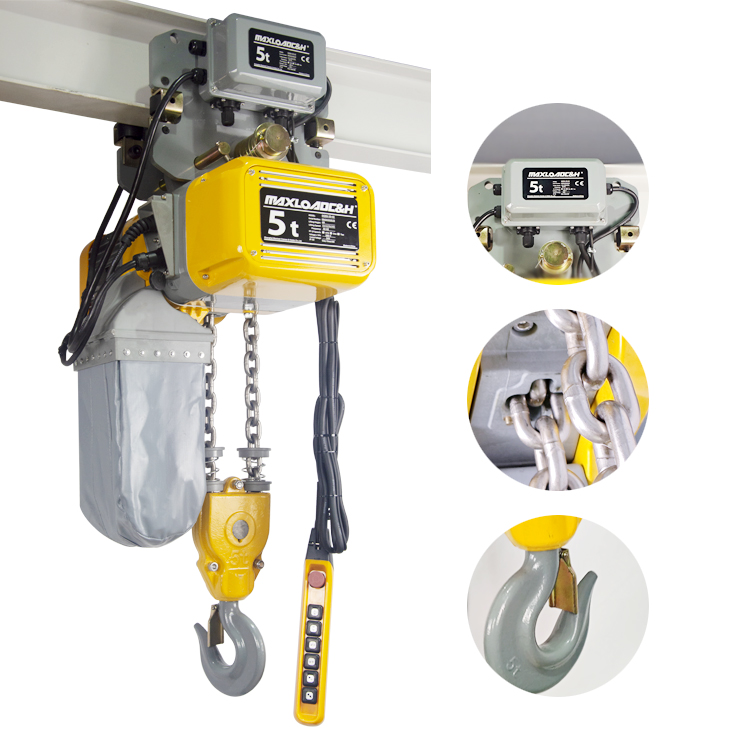
II. Maintenance Schedule for Key Components
Lubrication System Management
Gearbox Oil: Check oil level and cleanliness after 500 hours of operation, then every 3 months. Apply specialized grease to the chain monthly; increase cleaning frequency in dusty environments. Never apply grease directly with your hands.
Bearings and Gears: Add grease quarterly, ensuring the correct amount to avoid contamination. Motor bearing temperature rise must meet standards, and insulation resistance must be above the specified value.
Electrical System Maintenance
Check cables, switches, and grounding devices monthly for damage, aging, or leakage. Test the control box button sensitivity to prevent malfunctions. Motor and Gearbox: Regularly check for operating noise, temperature rise, and oil leaks. Replace the lubricating oil according to the manufacturer's instructions after initial use, and follow the periodic maintenance schedule thereafter.
Safety Device Verification
Limit Switch and Brake: Verify the accuracy of the upper and lower limit switches quarterly, ensuring a clearance of >50mm (120mm for models over 10 tons) between the hook and the drum when the hook reaches the upper limit, and at least 2 turns of wire rope remain on the drum during descent.
The brake lining surface must be kept flat, and the brake performance must meet standards. Safety devices such as overload protection and short-circuit protection must be tested regularly for reliability.
III. Long-Term Maintenance and Troubleshooting
Regular Maintenance Plan
Short-term maintenance: Clean the surface daily, and check the hook's rotation smoothness weekly; perform minor repairs (fastener inspection, lubrication) quarterly, and major repairs annually, including replacement of worn chains, brake pads, etc.
Professional Inspection: Conducted by certified personnel, with detailed records of maintenance time, items, and results, providing data for equipment management and fault analysis.
Emergency Troubleshooting
If an abnormality is detected (motor overheating, brake failure), immediately shut down the machine and disconnect the power. After cooling, investigate the cause. Power must be off and a warning sign posted before any repair work; operation with a load is strictly prohibited.
Wire rope replacement standards refer to GB/T5972-1986; replace immediately when broken wires or wear reaches the threshold; installation must comply with regulations.
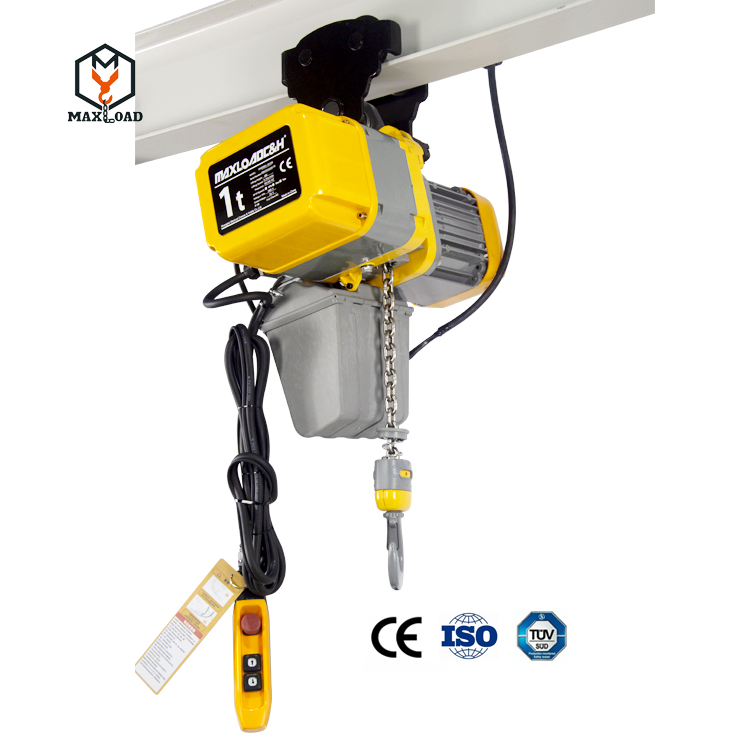
IV. Environmental Adaptation and Storage
Use rain protection equipment when operating outdoors to prevent water damage; clean and apply rust prevention treatment when not in use for extended periods, and run the hoist unloaded for 3 minutes. Store in a dry, well-ventilated environment.
Avoid use in humid, high-temperature, or corrosive environments. Do not lift molten metal, toxic, flammable, or explosive materials.
Conclusion
Daily maintenance of electric hoists is a systematic process, requiring a personalized plan tailored to the specific characteristics of the equipment. Standard operation, regular inspections, timely lubrication, and professional maintenance can significantly improve equipment reliability, extend service life, and ultimately achieve safe and efficient production. It is recommended that enterprises establish maintenance files and have professionals implement standardized processes to ensure that every link is traceable and verifiable, so as to safeguard safe production.
 0086 156 1824 5535
 0086 156 1824 5535