Stage Hoists: The Silent Heroes Behind Stage Art
In the dazzling world of stage art, every precise coordination of lighting, sound, and scenery relies on a silently supporting mechanical device: the stage hoist. As a core component of the stage mechanical system, it serves as a bridge between artistic creativity and technical realization with its efficiency, safety, and flexibility. From epic productions in large theaters to delicate choreography in small studios, stage hoists serve as "invisible guardians," ensuring the precise positioning and dynamic presentation of stage equipment.
I. Definition and Types of Stage Hoists
A stage hoist is a mechanical device designed specifically for lifting stage equipment. It achieves precise positioning of lighting, sound, scenery, and other equipment through vertical or horizontal movement. It is primarily categorized into manual and electric hoists.
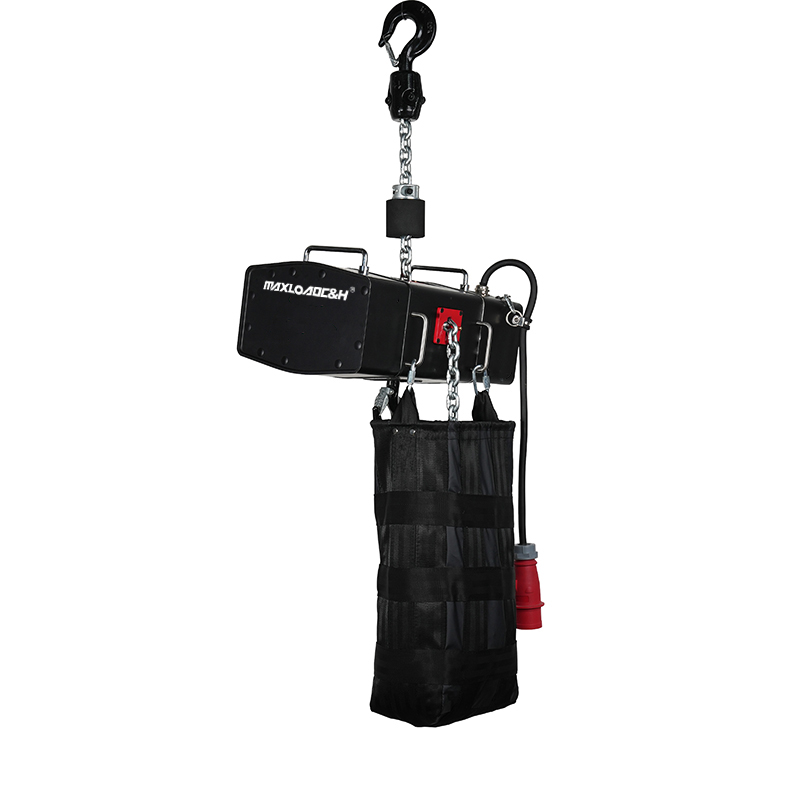
Manual hoists are manually powered, simple in structure, and low in cost, making them suitable for small stages or temporary performances. The operator pulls a hand chain or turns a handwheel, utilizing a gear transmission system to convert manual force into mechanical power to raise and lower the equipment. Although less efficient, their flexibility and portability make them ideal for outdoor performances or quick set construction. Electric hoists are driven by electric motors. Chain hoists use chains as a transmission medium, resulting in small size, light weight, and a compact structure, making them suitable for stage settings with limited space. The automated nature of electric hoists makes them far superior to manual hoists in terms of lifting speed and operating precision, making them the mainstream choice for modern stage machinery systems.
II. Working Principle and Technical Features
The core principle of stage hoists is based on mechanical transmission and force balance. Manual hoists use gear meshing to amplify manual force, achieving large displacement with minimal force. Electric hoists, on the other hand, use a motor-reducer combination to convert electrical energy into mechanical energy, driving the drum to wind the wire rope or chain, achieving vertical or horizontal movement of the equipment.
In terms of technical features, stage hoists must meet three core requirements: high load capacity, high precision, and high safety. For example, electric hoists typically have load capacities ranging from hundreds of kilograms to several tons, meeting the requirements for hoisting large lighting racks and audio equipment. The lifting speed can be precisely adjusted from 0.5 to 20 meters per minute through variable frequency control, ensuring smooth equipment movement. Safety features include overload protection, limit switches, and emergency brakes to prevent equipment overload, exceeding limits, or accidental falls, ensuring the safety of both operators and equipment.
III. Advantages and Application Scenarios
The advantages of stage hoists lie in three dimensions: efficiency, safety, and expressiveness.
In terms of efficiency, electric hoists offer one-touch lifting and lowering, significantly reducing stage set construction time. Manual hoists offer flexible operation to accommodate a variety of scenarios. The combination of these two shifts stages scheduling from manual labor to precise control, improving overall performance efficiency.
In terms of safety, stage hoists utilize multiple safety mechanisms, including mechanical limits, electronic protection, and redundant design, to minimize operational risks. For example, overload protection automatically cuts power when the load exceeds the rated value, preventing equipment damage or casualties. Emergency brakes quickly stop equipment in emergencies, ensuring on-site safety. In terms of expressiveness, the precise control capabilities of stage hoists offer a wide range of possibilities for artistic creation. For example, they can achieve a "gradient lighting effect" by slowly raising and lowering, create the visual spectacle of a "floating stage" by hovering at high altitude, or create complex, dynamic stage scenes through the coordinated movement of multiple devices. These effects rely on the stage hoist's precise control of the equipment's position and speed.
In terms of application scenarios, stage hoists are widely used in theaters, concerts, conference centers, exhibition halls, and other settings. In theaters, they support the precise positioning of lighting, sound, and scenery; in concerts, they facilitate the rapid switching of stage special effects equipment; and in conferences and exhibitions, they handle the lifting of display boards and projection equipment. It can be said that wherever there is a need to enhance stage equipment, stage hoists are present.
IV. Maintenance and Safety Standards
The long-term and stable operation of stage hoists requires scientific maintenance and strict safety standards.
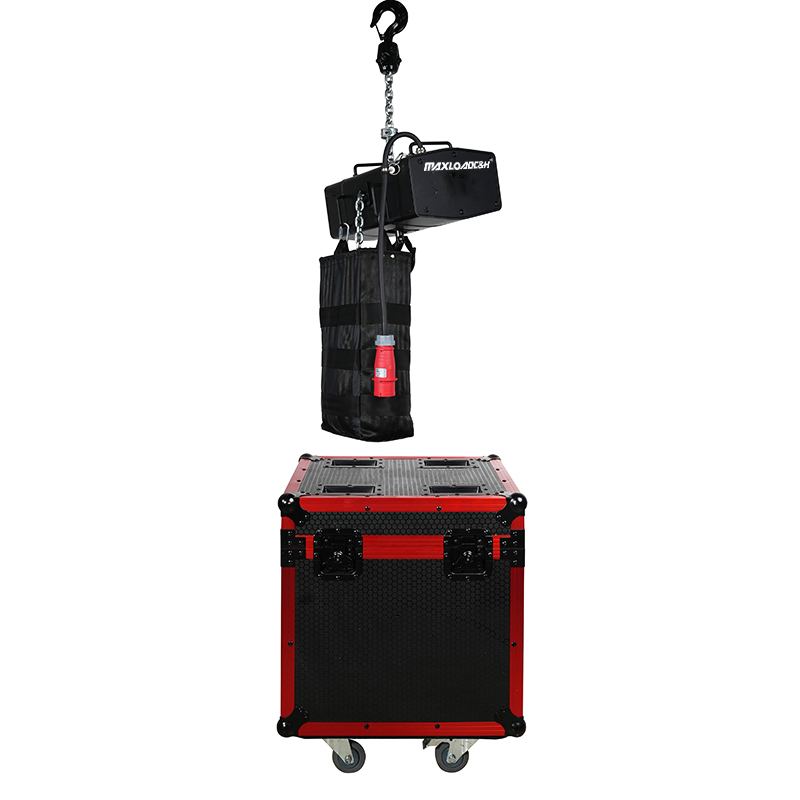
Routine maintenance includes the lubrication transmission components, inspection of wire ropes and chains for wear, and performance testing of motors and control systems. For example, wire ropes need to be regularly coated with anti-rust oil to prevent rust and breakage; chains need to be inspected for wear at joints and damaged parts replaced promptly. Furthermore, regular load testing is required to ensure that the equipment operates normally under rated load.
Safe operation requires operators to be familiar with the equipment's performance and adhere to the principles of "no overloading, no speeding, and no violations." For example, it is strictly forbidden to touch transmission components while the equipment is in operation, to force operation when the load exceeds the rated value, and to perform overhead work without safety guards. Furthermore, regular safety training is required for operators to enhance their safety awareness and emergency response capabilities.
Conclusion
The stage hoist, a seemingly ordinary mechanical device, is an indispensable "invisible hero" behind stage art. Its efficient, safe, and flexible features support the precise positioning and dynamic presentation of stage equipment. With its future trends of intelligence and automation, it is driving the continuous innovation and development of stage art. In the future of stage art, we have reason to believe that the stage hoist will continue to present audiences with more breathtaking visual feasts with its "silent yet powerful" approach.
 0086 156 1824 5535
 0086 156 1824 5535