Common faults and solutions for electric chain hoists
As a key piece of equipment in modern industrial lifting operations, electric chain hoists are highly valued for their efficiency and safety. However, with frequent and long-term use, malfunctions and abnormalities are inevitable. To help users better understand the equipment's operating status and perform efficient maintenance, this article systematically summarizes common chain hoist failure symptoms, causes, and solutions, providing a practical guide covering both self-inspection and repair.
I. The Core Concept of Failure Prevention: Prevention is Better Than Repair
The best maintenance for any piece of equipment is proactive prevention. Although chain hoists are compact and feature delicate components, proper use and regular maintenance significantly reduce the probability of failure. Preventive maintenance includes:
Daily routine inspections before lifting;
Monthly thorough inspections of the chain, hook, brake, and electronic control system;
Maintenance intervals and spare parts replacement schedules based on operating frequency.
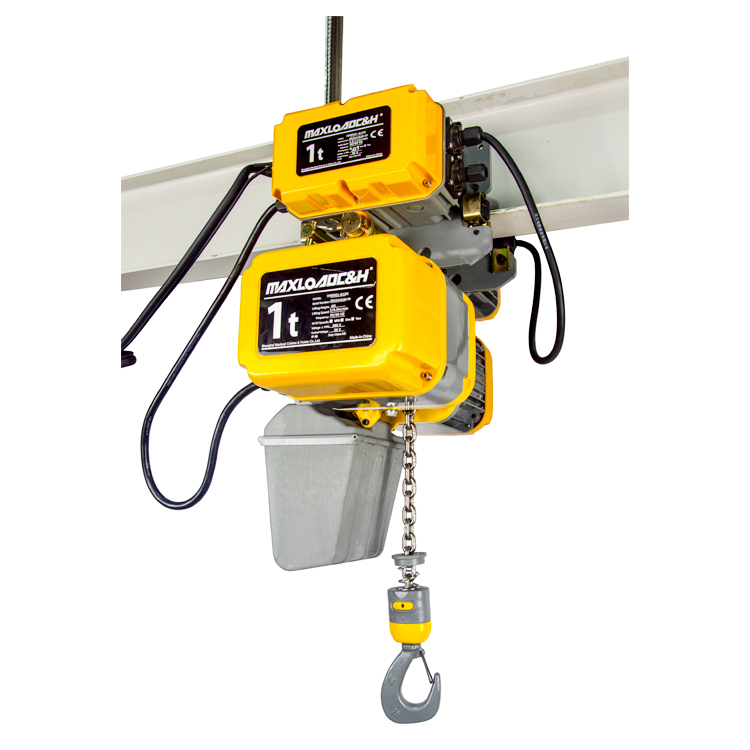
II. Common Fault Classification and Phenomenon Identification
1. Electrical Faults
Phenomenon 1: No response when pressing controller buttons
Cause: Power not connected, control circuit open, controller damaged
Handling: Check power indicator → Check wiring terminals → Replace controller
Phenomenon 2: Smooth lifting or lowering/stuck
Cause: Inverter fault, incomplete brake release, contactor damage
Handling: Restart the inverter → Test brake clearance → Replace contactor
2. Mechanical Faults
Phenomenon 1: Chain jamming, skipping, or kinking
Cause: Severe chain wear, insufficient lubrication, abnormal sprocket wear
Handling: Replace chain → Add special grease → Check and replace sprockets
Phenomenon 2: Hook deformation or sluggish rotation
Cause: Overload or hook material fatigue
Handling: Immediately replace the hook assembly and check whether overload protection is effective
3. Brake System Abnormalities
Phenomenon 1: Hook descends slowly after discharge
Cause: Electromagnetic brake wear, loose spring
Action: Replace brake pads → Adjust brake clearance → Reinstall springs
Phenomenon 2: Sudden drop during lifting (dangerous)
Cause: Brake failure or dislodged brake pads
Action: Emergency stop equipment → Inspect brake system → Replace entire brake assembly
4. Limit switch failure
Phenomenon: Hook continues to operate despite exceeding the limit
Cause: Damaged limit switch or incorrect wiring
Action: Test limit trigger points → Replace limit switches → Recalibrate limit distances
III. Recommended Self-Inspection Procedure (Daily + Periodic)
1. Daily pre-startup inspection items:
Power supply stability, emergency stop button reset;
Controller sensitivity, all buttons' responsiveness;
Chain rust, jamming, or kinking;
Hook safety buckle securely closed;
Any unusual noise, odor, or shaking. 2. Weekly/Monthly Inspection Recommendations:
Check the clearance between the motor and brake for a normal value (0.3-0.5mm);
Clean the electrical control box and tighten the terminals;
Lubricate the chain and check the tension;
Check the limit switch travel and position for correctness;
Test the sensitivity of the overload protector.
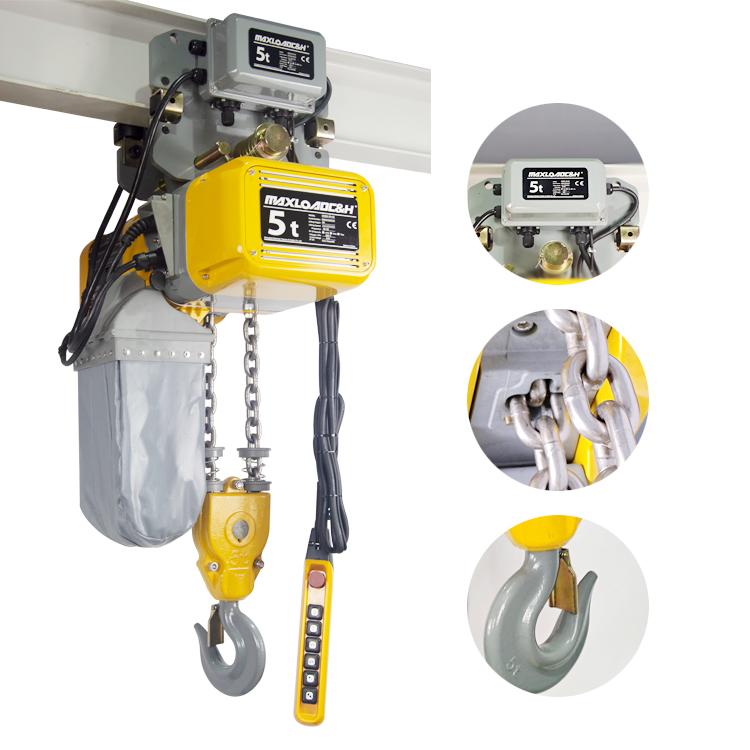
IV. Special Precautions and Safety Warnings
1. Overloading is strictly prohibited: Even if the equipment is equipped with standard overload protection, its limits should not be deliberately tested.
2. Operation with a fault is prohibited: If any unusual noise, odor, or control abnormality is detected, the equipment should be shut down and investigated immediately.
3. Maintenance must be performed with the power off: Maintenance with power on must be avoided to ensure operator safety.
4. Replacement of key components, such as motors, brakes, and electrical control boxes, must be performed by professionals with an electrician's license or with assistance from the manufacturer's after-sales service.
Conclusion: Trouble-free equipment comes from understanding the equipment.
The failure rate of a chain hoist is not predetermined; it is closely related to user awareness and operation. Establishing good usage habits and mastering quick troubleshooting techniques for common problems are key to extending equipment lifespan and ensuring operational safety.
We recommend that all users establish a standardized inspection schedule and provide systematic operator training after purchasing the equipment. If you encounter unresolved issues during use, please contact our technical support team. We will provide remote diagnosis and prompt service to ensure stable, safe, and efficient lifting operations.
 0086 156 1824 5535
 0086 156 1824 5535