Why is the chain hoist's dual brake system safer?
In industrial lifting operations, the equipment's brake system is directly related to the safety of workers and the stability of equipment operation. Especially in scenarios involving high-frequency lifting and heavy load handling, any uncontrolled downturn could result in serious property damage and personal injury. As a representative of modern lifting equipment, the electric chain hoist, equipped with a dual brake system, has taken lifting safety to a new level. So, what is the secret behind this dual brake mechanism? How does it effectively ensure foolproof lifting operations? This article will reveal the answers.
Ⅰ. What is a dual brake system?
A dual brake system refers to a chain hoist equipped with two braking methods at the motor output: an electromagnetic brake and a mechanical brake. These two devices operate independently but work in conjunction to instantly lock the load and prevent it from sliding down in the event of a machine stop or power outage.
This design is more than a simple "backup"; it is designed to handle a variety of complex operating conditions and provide a layered safety protection. Even if one braking system fails due to an abnormality, the other can still respond promptly, ensuring safe and uninterrupted operations.
Ⅱ. Electromagnetic Brake: Fast Response, Intelligent Control
The electromagnetic brake is the most commonly used first-tier braking system for chain hoists. Its principle is: when the equipment is powered on, the electromagnet releases, disengaging the brake. When the operation stops or power is lost, the electromagnet loses its magnetic force, and the spring pushes the brake pads against the disc, allowing for rapid braking.
Its features include:
Fast Response: Braking occurs instantly upon power failure, with virtually no delay;
Simple Maintenance: Compact design and manageable wear;
Precise Control: Can be linked with a frequency converter for flexible starting and precise stopping.
In practice, electromagnetic brakes can meet most lifting requirements and are particularly suitable for assembly lines and logistics handling, where high control sensitivity is required.
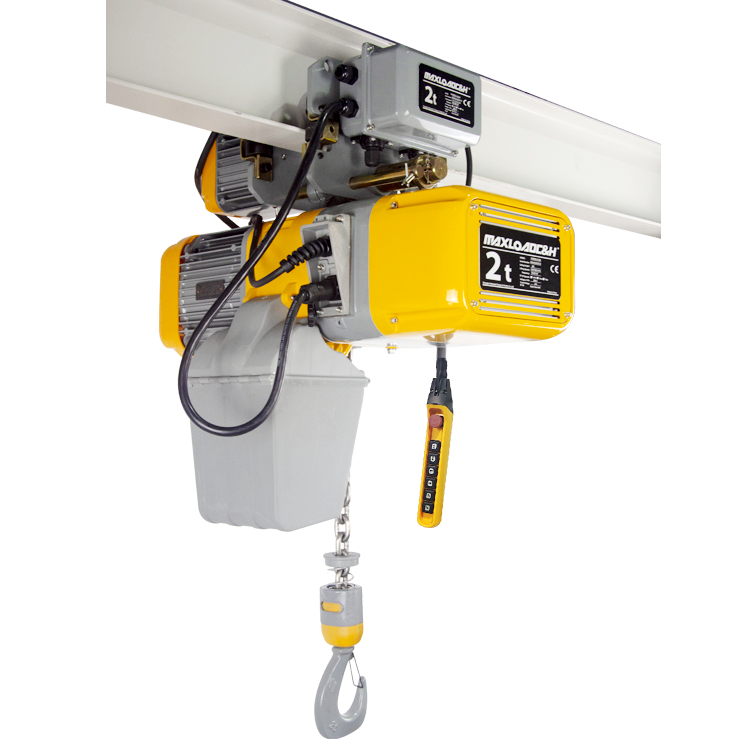
Ⅲ. Mechanical Brake: The "Ultimate Insurance" at Critical Moments
Unlike electromagnetic brakes, which rely on electrical energy, mechanical brakes are physically constructed braking devices, typically consisting of a pawl, ratchet, and spring, and are built into a reducer or sprocket system. When a load is rising or hovering, the mechanical brake automatically locks the mechanism, preventing the chain from reversing and the load from falling.
The main advantages of this system are:
Power independence: Braking remains normal even in the event of a power outage or control system failure;
High reliability: Virtually no response delay, the robust structure is suitable for high-load environments;
Longevity: As a passive braking device, it exhibits low wear and failure rates.
The mechanical brake acts more like a "never-slacking guardian," providing a last-ditch safety guarantee at critical moments.
Ⅳ. Dual Brake Linkage: A Model of Safety Redundancy
The combination of electromagnetic and mechanical brakes is more than a simple "1+1=2" solution; it represents a true "safety redundancy" mechanism. Their coordinated operation is as follows:
1. During normal operation, the electromagnetic brake acts as the primary brake, providing smooth and reliable braking;
2. In the event of a power outage or electromagnetic system failure, the mechanical brake immediately takes over to prevent accidental object drops;
3. When the emergency stop (e-stop button) is triggered, both systems engage simultaneously, ensuring the fastest braking response. This dual-brake mechanism not only reduces the risk of human error but also significantly improves the overall equipment's adaptability to harsh working conditions. It is particularly suitable for industries with extremely high lifting safety requirements, such as aerospace, wind turbine assembly, and nuclear power maintenance.
Ⅴ. Advantages Compared to Traditional Single-Brake Systems
Compared to traditional hoists with only a single brake system, the dual-brake design of a chain hoist offers significant advantages:
Higher Safety: Two independent braking systems prevent serious accidents caused by single-point failures;
Redundant and Reliable Equipment: Improves system fault tolerance and ensures continuity of critical operations;
Extended Service Life: By sharing braking pressure, the wear frequency of individual devices is reduced;
Enhanced Customer Trust: A highly valued safety factor in bidding and product selection.
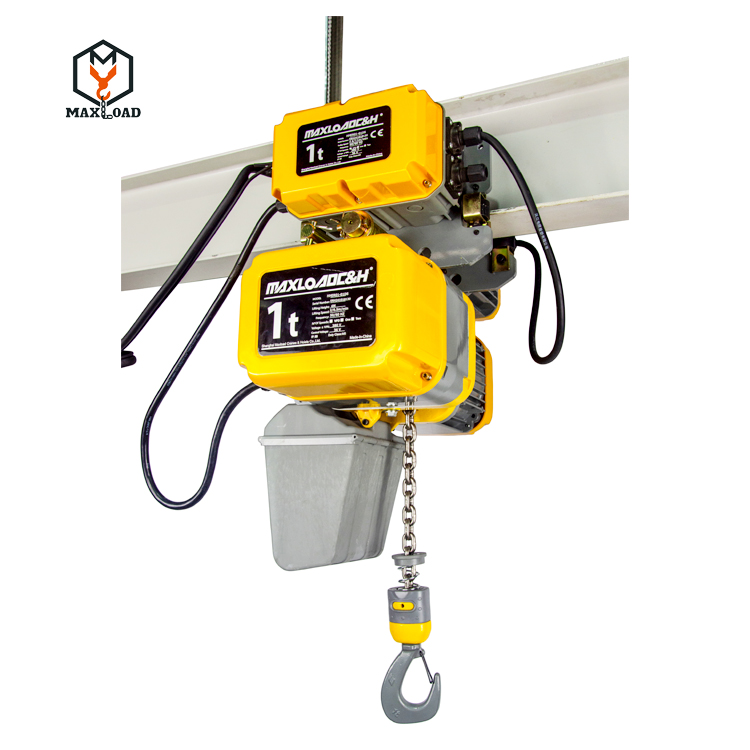
Ⅵ. Regular Inspection and Maintenance Are Essential
Despite the powerful performance of the dual-brake system, it requires daily maintenance and care to maintain its optimal condition:
Electromagnetic Brake: Check brake pad wear, adjust clearance, and remove foreign objects;
Mechanical Brake: Check pawl engagement, spring tension, and lubrication;
Overall Testing: It is recommended to conduct a monthly hoist brake test to ensure emergency braking reliability. Some leading brands rigorously test each chain hoist before shipment, including overload testing, braking distance testing, and electromagnetic coil life testing. Users should prioritize products that have undergone these comprehensive quality inspection processes.
Ⅶ. Conclusion: Safety is not just a slogan, but a systemic guarantee
In industrial settings where efficiency is paramount, safety is a fundamental requirement. Chain hoists implement this philosophy through a dual brake system, demonstrating not only the manufacturer's unwavering commitment to quality but also providing users with a foundation for peace of mind.
From brake response to complete system integration, the "safety redundancy" approach embodied in chain hoists is a trend in the future of industrial equipment development. Choosing a high-quality chain hoist with a dual brake system is not only an investment in stable equipment operation but also a commitment to the safety of workers.
 0086 156 1824 5535
 0086 156 1824 5535