Electric Hoists: The "Invisible Pillar" of Industrial Lifting
In modern industrial production, logistics, warehousing, construction sites, and other applications, electric hoists quietly shoulder the heavy responsibility of making heavy lifting seem effortless. While not as eye-catching as giant cranes, their efficiency, flexibility, and safety have made them indispensable tools across various industries. This article will systematically analyze the inherent value of this "invisible pillar" from five perspectives: technical principles, classification, application scenarios, advantages, characteristics, and future trends.
I. Electric Drive: Precision
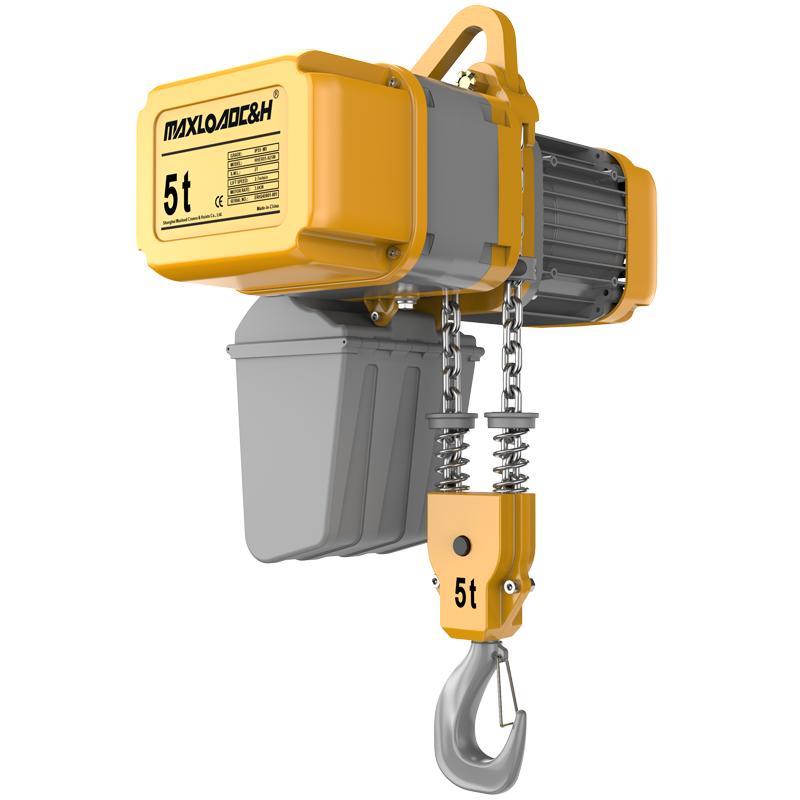
The core principle of an electric hoist is to achieve vertical or horizontal movement of heavy objects through electric drive. Its structure typically consists of a motor, a speed reducer, a drum (or sprocket), a brake, and a control system. The motor serves as the power source, reducing speed and increasing torque through the speed reducer to drive the drum or sprocket. A wire rope or chain winds around and releases the drum, lifting and lowering the load. The brake quickly locks in the event of a power outage or emergency, ensuring safe operation. Some high-end models are also equipped with electronic limiters and overload protection devices to further enhance operational precision and safety.
This design enables electric hoists to lift heavy objects in confined spaces, such as installing equipment on factory floors, retrieving goods from high-rise warehouse shelves, and even lifting rebar on construction sites. Operation can be accomplished via wired remote control, wireless remote control, or intelligent control systems, eliminating the need for close operator contact, significantly reducing operational risks.
II. Flexible Choices for Diverse Scenarios
Electric hoists can be divided into various types based on their structure and purpose. Based on their drive method, they are primarily divided into wire rope hoists and chain hoists. The former uses a wire rope wound around a drum for lifting and lowering, making them suitable for large loads and long distances. The latter, which utilizes a chain drive, is compact, lightweight, and easy to maintain, making it suitable for applications with limited space or frequent lifting.
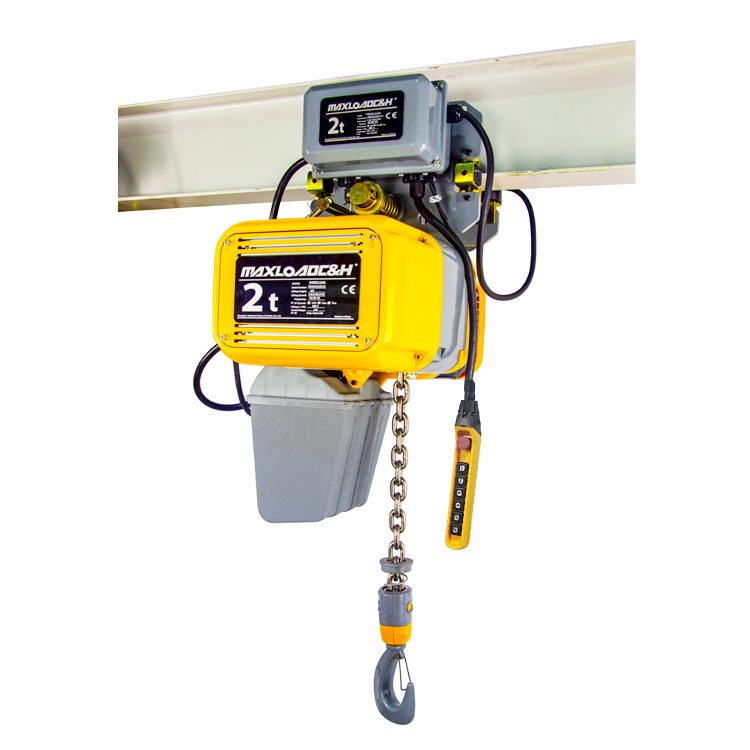
Based on their mounting method, they can be categorized as fixed, mobile, and suspended. Fixed hoists are typically mounted on fixed supports and are suitable for fixed-point operations; running hoists can be moved along rails and are suitable for long-distance handling within a workshop; suspended hoists are suspended from hooks or rails and are commonly used for material transfer on production lines. Specialized models, such as explosion-proof and corrosion-resistant, are also available for use in specialized environments like the chemical and mining industries.
III. Comprehensive Coverage, From Factory to Home
Electric hoists are used in nearly every field requiring lifting. In industrial production, they are used for equipment assembly, material handling, and loading and unloading machine tools, providing a key support for efficient assembly line operation. In construction, they assist in lifting rebar, formwork, and precast concrete components, improving construction efficiency. In warehousing and logistics, they serve as a "handling aid" for high-bay warehouses and high-bay racking, enabling rapid storage and retrieval of goods.
Electric hoists also play an important role in specialized fields such as automotive repair, shipbuilding, and power maintenance. Even in everyday life, small electric hoists are often used to lift heavy objects in garages and gardens, becoming a valuable tool for individual users.
IV. "Dual Guarantee" of Efficiency and Safety
Electric hoists offer advantages in many areas. First, they are user-friendly. Lifting, lowering, and lateral movement can be performed via remote control or buttons, reducing manual labor. Second, they offer efficiency. Compared to manual handling, electric hoists can lift and position heavy objects more quickly, particularly in high-volume, high-frequency operations.
Safety is another key advantage. Modern electric hoists are generally equipped with multiple protection devices, such as overload limiters, phase failure protection, and emergency brakes, effectively preventing risks such as overload and misoperation. Some models also utilize intelligent control systems that monitor operating status in real time and provide early warning of potential failures.
V. "Dual-Wheel Drive" of Intelligence and Greening
Electric hoists are developing towards intelligence, modularization, and greening. In terms of intelligence, IoT technology enables remote monitoring, fault diagnosis, data collection, and analysis, enhancing the intelligence of equipment management. Modular design, through the combination of standardized components, allows for rapid customization and maintenance, reducing user costs.
The greening trend is reflected in energy conservation and environmental protection. The adoption of high-efficiency motors, optimized transmission systems, and environmentally friendly materials can reduce energy consumption and pollution during equipment operation. At the same time, some companies are exploring electric hoists powered by clean energy sources such as solar energy and hydrogen to further reduce carbon emissions.
In terms of safety performance, the future will place greater emphasis on the application of active safety technologies, such as collision avoidance sensors and visual recognition systems, achieving an upgrade from "passive protection" to "active prevention." Furthermore, optimization of human-machine interfaces and digitalized operator training will further enhance operator safety and comfort.
Conclusion: An Irreplaceable "Cornerstone of Industry"
As core equipment in the industrial lifting field, electric hoists, with their efficiency, safety, and flexibility, support the efficient operation of modern industry. From factory floors to construction sites, from warehousing and logistics to daily life, they serve as an "invisible pillar." With continuous technological advancements, electric hoists will continue to evolve towards intelligence, greenness, and safety, providing solid support for the upgrading and transformation of various industries. Their value lies not only in improving efficiency and reducing costs, but also in promoting safer and more sustainable industrial production through technological innovation. In the foreseeable future, this "industrial cornerstone" will continue to play an irreplaceable role in countless scenarios.
 0086 156 1824 5535
 0086 156 1824 5535