Electric Hoists: The Intelligent Backbone of Industrial Lifting
In modern industrial production, electric hoists, as essential lifting equipment, are found in manufacturing workshops, logistics and warehousing centers, construction sites, and even ports. These electrically powered mechanical devices, which use drums or sprockets to lift and lower heavy objects, have become an indispensable "muscle" in the industrial sector thanks to their efficiency, flexibility, and safety, supporting vertical transportation needs ranging from micro parts to heavy equipment. This article will systematically analyze the industrial value and development of electric hoists from four perspectives: technical principles, application evolution, intelligent trends, and maintenance standards.
I. Precision Coordination of Mechanical and Electrical Systems
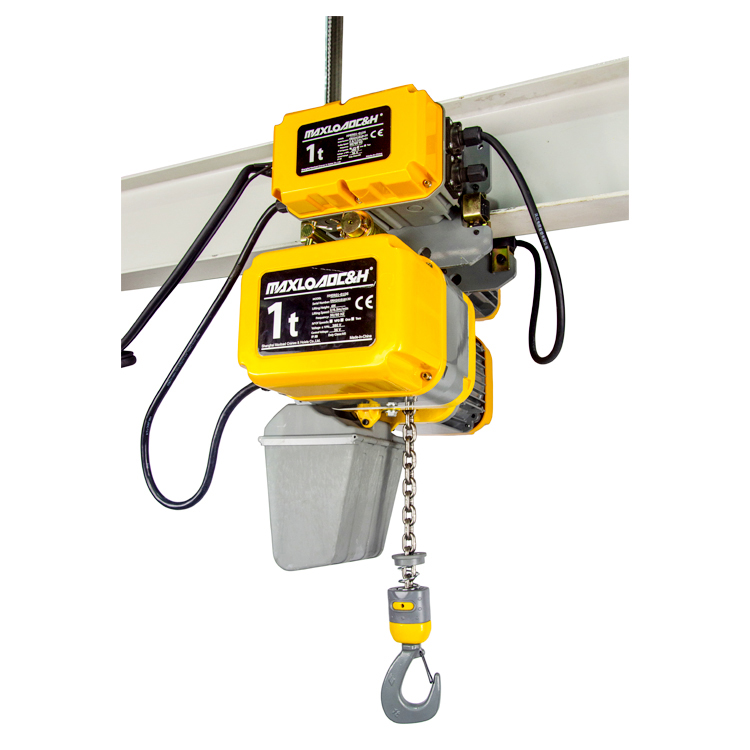
The core structure of an electric hoist can be broken down into three main components: the power system, the transmission system, and the control system. The power system typically uses an AC or DC motor, which, through a speed reducer, converts high-speed rotation into low-speed, high-torque output to drive the drum or sprocket. For example, in a wire rope electric hoist, the motor drives the drum through the speed reducer, which in turn winds or releases the wire rope, thereby lifting and lowering cargo. A chain electric hoist performs the same function through the meshing of a chain and sprocket. The control system uses contactors, relays, or PLCs to implement functions such as start/stop, limit switches, and overload protection. Modern equipment even integrates frequency converters for stepless speed regulation, improving operational precision.
Safety design is the cornerstone of electric hoist technology. Dual limit switches (upper and lower limit switches and overload protection) prevent accidents such as "top-slip" and "hook slip." Electromagnetic brakes automatically engage upon power failure, ensuring load stability. Some high-end models also feature encoders for real-time position feedback, enabling closed-loop control. These features enable electric hoists to maintain millimeter-level positioning accuracy even when lifting loads ranging from 500 kg to 20 tons.
II. From Industrial Standard to Specific Customization
The popularity of electric hoists began with the wave of the Industrial Revolution in the mid-20th century. Early models were primarily wire rope hoists. Their large tonnage and long travel made them a staple in factory workshops, mining ports, and other applications. With the advancement of manufacturing sophistication, electric chain hoists, with their compact size, light weight, and easy maintenance, have gained popularity in applications such as automotive assembly and the lifting of precision instruments. For example, in electronic chip production lines, miniature electric chain hoists precisely lift wafer cassettes, avoiding static damage caused by manual handling. In automotive assembly plants, multiple electric hoists work collaboratively to precisely position the body frame.
The construction sector has seen the rise of vertical applications for electric hoists. Electric hoist components in construction elevators can be mounted on construction platforms, enabling vertical transportation for high-altitude work. In curtain wall installations, specialized electric hoists utilize rail systems for both horizontal and vertical movement, improving the efficiency of glass curtain wall installation. In the logistics and warehousing industry, electric hoists are integrated with racking systems to form the "vertical arteries" of automated warehouses. The coordinated operation of shuttles and electric hoists enables rapid storage and retrieval of goods.
III. Industrial Evolution Empowered by the Internet of Things
In the 21st century, the intelligent transformation of electric hoists has become an industry focus. The integration of IoT technology has enabled equipment to evolve from stand-alone devices to intelligent nodes. Equipped with sensor networks, electric hoists can collect real-time operational data (such as load, speed, temperature, and vibration) and upload it to cloud platforms for big data analysis. Operations and maintenance personnel can remotely monitor equipment status through a mobile app, and predictive maintenance systems can proactively identify potential faults, such as motor overheating and gear wear, thereby avoiding unplanned downtime.
In high-end manufacturing, electric hoists have achieved a deep level of collaboration with industrial robots. For example, on aircraft engine assembly lines, electric hoists equipped with visual recognition systems can automatically grasp engine blades and precisely place them in designated locations. In smart warehousing scenarios, some companies have even developed virtual commissioning systems based on digital twins, simulating the electric hoist's trajectory through 3D models to optimize lifting paths and improve operational efficiency.
IV. Dual Guarantee of Safety and Efficiency
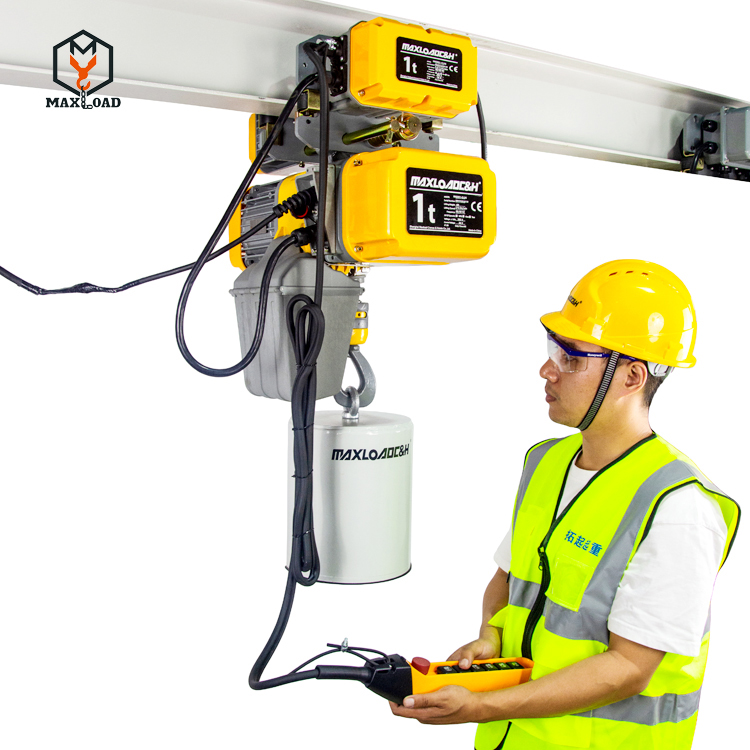
The long-term operation of electric hoists requires scientific maintenance and management. Daily inspections should focus on wire rope/chain wear, brake sensitivity, and limit device reliability. Regular maintenance includes motor bearing lubrication, reducer gear cleaning, and electrical system insulation testing. For frequently used equipment, a comprehensive overhaul is recommended every quarter, focusing on key indicators such as wire rope breakage rate, motor winding resistance, and brake friction pad thickness. Regarding safe operation, the "Ten Do Nots" principle must be strictly adhered to: Don’t lift if overloaded, if the command signal is unclear, if the binding is not secure, if someone is on the load, or if the safety device is inoperative. Operators must undergo professional training and hold certifications to be familiar with the equipment's performance parameters and emergency response procedures. For example, in the event of a power outage, the emergency brake should be immediately activated to prevent the load from falling. When an overload alarm is triggered, the load should be immediately reduced to avoid forcing the equipment and causing damage.
V. Modular Development
With the advancement of the "Dual Carbon" goals, the green transformation of electric hoists is imperative. The use of permanent magnet synchronous motors, energy regenerative devices, and lightweight materials will effectively reduce equipment energy consumption.
Modular design is another development trend for electric hoists. Through standardized interfaces and interchangeable modules (such as motor modules, control modules, and transmission modules), users can flexibly configure equipment parameters according to actual needs, achieving "multiple uses for one machine." For example, the same electric hoist can adapt to lifting needs ranging from 500 kg to 5 tons by replacing motor modules of different capacities. By equipping it with different control modules, it can switch between manual, semi-automatic, and fully automatic operating modes.
Conclusion
From the mechanical lifting equipment of the Industrial Revolution to the intelligent lifting nodes of the Internet of Things era, the evolution of electric hoists mirrors the progress of industrial civilization. They are not only an accelerator of production efficiency but also a guardian of safe production. With the continuous emergence of new materials and technologies, electric hoists will continue to advance on the path of green, intelligent, and modular development, injecting strong impetus into the high-quality development of the global industry.
 0086 156 1824 5535
 0086 156 1824 5535