Electric Hoists: A Silent Revolution in Industrial Lifting
In modern industrial production and logistics, electric hoists, as efficient and precise lifting equipment, are playing an irreplaceable role in promoting both operational efficiency and safety. This seemingly simple piece of machinery embodies the technological essence of multiple fields, including mechanical engineering, electric drive, and intelligent control. Its development and technological innovation are closely intertwined with the evolution of industrial civilization.
I. Technical Principles and Structural Analysis
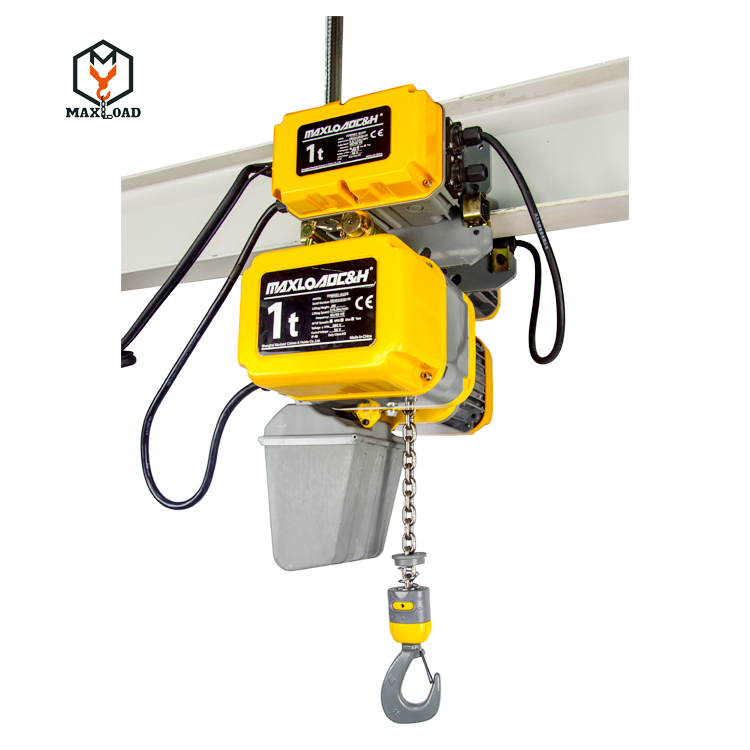
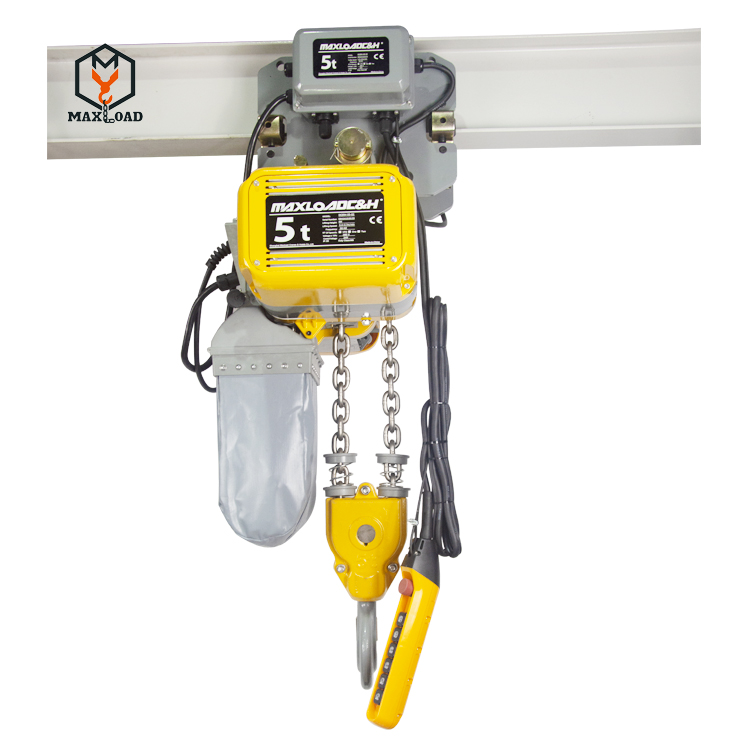
The core structure of an electric hoist can be broken down into four major modules: the drive unit, transmission system, hoisting mechanism, and safety devices. The drive unit typically utilizes a three-phase asynchronous motor or a permanent magnet synchronous motor, converting electrical energy into mechanical energy to drive the drum. The transmission system, comprised of a speed reducer and gear train, achieves torque amplification and speed regulation, ensuring a smooth and controllable lifting process. The core of the hoisting mechanism is the wire rope and hook assembly. The wire rope is wound in multiple layers to enhance load-bearing capacity, while the hook is forged from alloy steel to meet the demands of high-intensity operations. In terms of safety features, modern electric hoists are commonly equipped with dual braking systems, overload limiters, and travel limiters, forming a three-dimensional protective network that effectively eliminates safety hazards such as hook slippage and rope breakage.
Their operating principle follows the basic logic of energy conversion and mechanical transmission: the motor's output torque is amplified by a reducer, driving the drum to wind the wire rope. Force is amplified by the movable pulley system, ultimately achieving vertical lifting or horizontal movement of the load. This design allows a single device to handle a wide range of loads from 0.5 tons to 50 tons, with adjustable lifting speeds from a few meters per minute to tens of meters per minute, meeting the precise demands of various scenarios.
II. Three-Dimensional Expansion of Application Scenarios
In industrial manufacturing, electric hoists are standard equipment in automotive production lines, heavy machinery assembly, and steel structure installation. For example, in automotive manufacturing, the lifting and positioning of large components such as engines and gearboxes requires extremely high precision. Electric hoists, through closed-loop control systems, achieve millimeter-level positioning and, in conjunction with servo motors, achieve "soft landings" to prevent collision damage to delicate components. In the logistics and warehousing industry, high-bay warehouses can store and retrieve goods at heights exceeding 30 meters. Electric hoists, working in conjunction with stacker cranes, utilize technologies such as laser ranging and encoder positioning to achieve precise storage and retrieval, ensuring rapid turnover.
Construction sites are another important battlefield for electric hoists. In high-rise building construction, electric hoists are responsible for the vertical transportation of rebar, formwork, and precast concrete components. Their lightweight design and modular installation capabilities allow them to be quickly deployed on temporary structures such as construction elevators and cantilevered platforms, significantly improving construction efficiency. At port terminals, container loading and unloading operations place stringent demands on equipment's continuous operational capacity and weather resistance. Electric hoists, with their IP55 protection rating and corrosion-resistant coating, are designed to operate reliably in harsh environments such as salt spray, high temperature, and high humidity.
III. Historical Context of Technological Evolution
The advent of the electric hoist can be traced back to the rise of the electric power industry in the late 19th century. Early manual hoists relied on manual operation, resulting in low efficiency and poor safety. With breakthroughs in AC motor and gear reduction technology, the first electric hoist was developed in Germany in the 1920s, marking the beginning of the electric-powered era for lifting equipment. Since then, technological evolution has demonstrated three major trends: First, drive systems have evolved from single-speed motors to dual-speed, variable-frequency motors, enabling stepless adjustment of lifting speeds; second, control methods have evolved from wired remote control to wireless remote control and smart terminal control, significantly expanding the operating radius; and third, safety devices have evolved from passive protection to active early warning systems. For example, IoT sensors monitor parameters such as wire rope wear and motor temperature in real time, providing early warning of potential failures.
Notably, electric hoists have been deeply integrated with Industry 4.0 in recent years. By integrating technologies such as 5G communications, edge computing, and digital twins, equipment can implement remote status monitoring, fault diagnosis, and predictive maintenance. For example, a smart electric hoist developed by one company uses AI algorithms to analyze operating data, automatically optimize lifting strategies, and reduce energy consumption. Furthermore, digital twin technology can be used to construct virtual equipment models, enabling remote training and simulation drills for operations and maintenance personnel.
IV. A Scientific Maintenance System
Reliable electric hoist operation requires a scientific maintenance system. Daily inspections should cover key indicators such as wire rope wear measurement, brake clearance adjustment, and motor insulation performance testing. For example, according to ISO 4309, wire ropes must be replaced immediately when the number of broken wires exceeds 5% of the total number of wires or the diameter decreases by more than 7%. Quarterly maintenance requires a thorough inspection of the reducer oil level and gear meshing to ensure adequate lubrication and no abnormal wear. Annual overhauls require motor disassembly and inspection, stator-rotor clearance measurement, replacement of worn seals, and an overload test to verify equipment performance.
During maintenance, special attention must be paid to safety operating procedures. For example, operators must wear protective equipment such as hard hats and safety belts; personnel are strictly prohibited from entering the hoisting area while the equipment is in operation; overloading is strictly prohibited, and rated load regulations must be strictly adhered to. Furthermore, regular professional training for operators to ensure they are familiar with equipment performance, operating procedures, and emergency response measures is crucial for ensuring safe production.
V. Technological Frontiers for Future Development
Looking ahead, electric hoist technology development will focus on three key areas: intelligence, green development, and modularization. In terms of intelligence, the introduction of technologies such as machine vision and force sensors will enable automated path planning and obstacle avoidance during the lifting process. In terms of green development, designs such as permanent magnet synchronous motors and energy recovery systems will improve energy efficiency and reduce carbon emissions. In terms of modularization, standardized interface designs will enable rapid assembly and disassembly of equipment and functional expansion to meet flexible production needs.
In specific application scenarios, electric hoists will be deeply integrated into emerging industries such as smart factories, smart ports, and green buildings. For example, in smart factories, electric hoists can collaborate with automated guided vehicles (AGVs) and robots to create unmanned logistics systems. In smart ports, electric hoists can be integrated with automated quay cranes and unmanned container trucks to achieve fully automated container loading and unloading. In green buildings, electric hoists can be integrated with prefabricated construction technologies to achieve precise lifting and rapid installation of building components.
As core equipment in the industrial lifting field, the technological advancement of electric hoists and industrial upgrading have consistently kept pace with the development of industrial civilization. From early manual drive to modern intelligent control, and from single functions to diverse applications, electric hoists are driving improvements in both industrial production efficiency and safety through continuous technological innovation. In the future, with the in-depth integration of intelligent, green, and modular technologies, electric hoists will demonstrate their unique value in even more areas, becoming a vital force driving the advancement of industrial civilization.
 0086 156 1824 5535
 0086 156 1824 5535