Electric Hoists: A Revolutionary Force in Lightweight Industrial Lifting
In modern industrial production and logistics systems, lifting equipment, as a core tool for material handling, directly impacts production pace and safety levels with its performance and efficiency. Electric hoists, as one of the most representative lightweight lifting devices, have become indispensable "material handling assistants" in factories, warehouses, docks, and construction sites due to their compact structure, ease of operation, and reliable safety. This article will systematically analyze the core value and future direction of this industrial equipment from five dimensions: technical principles, structural features, application scenarios, safety standards, and development trends.
I. Technical Principles
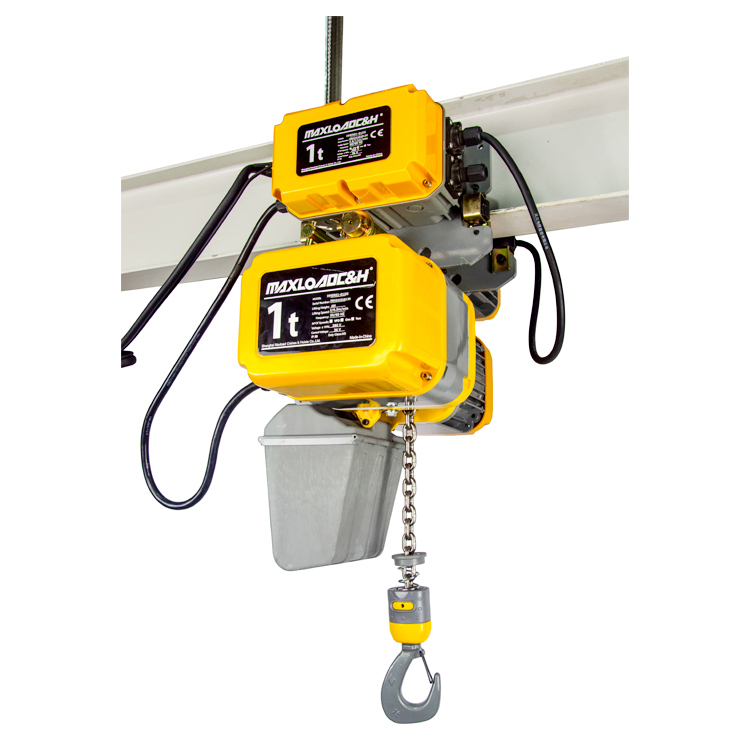
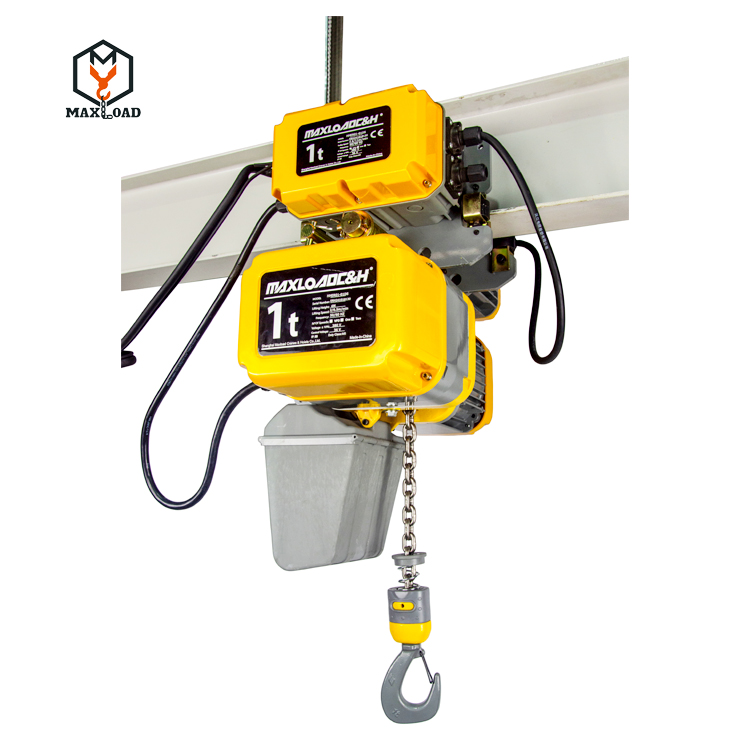
The core working principle of electric hoists is based on the combination of electric drive and mechanical transmission. Its power source is a three-phase or single-phase AC motor, which, through a reducer, converts the high-speed rotation of the motor into the low-speed rotation of the drum, thereby driving the wire rope or chain to lift and lower heavy objects. Some models are also equipped with a traveling mechanism, allowing horizontal movement along I-beam tracks, forming a three-dimensional material handling capability.
Structurally, a standard electric hoist comprises five core modules: the motor module provides the initial power; the reducer module uses multi-stage gear transmission to reduce speed and increase torque; the drum and wire rope/chain module handles load transfer and guidance; the control module enables start/stop, lifting, and emergency stop operations via buttons or a remote control; and the safety protection module integrates overload limiters, upper and lower limit switches, and brakes, forming multiple safety barriers. Among these, wire rope electric hoists use high-strength wire rope as the traction medium and are suitable for large-span, high-lift operations; chain electric hoists use alloy chains, offering advantages such as small size, wear resistance, and easy maintenance, making them more suitable for precision assembly scenarios.
II. Application Scenarios
The wide applicability of electric hoists stems from their flexible installation methods and precise operating characteristics. In factory workshops, electric hoists are often fixed to I-beams or gantry cranes for equipment hoisting and material transfer on production lines. In warehousing and logistics centers, suspended electric hoists can be used in conjunction with single-girder cranes for efficient storage and retrieval of goods. On construction sites, low-headroom electric hoists can adapt to height restrictions, enabling the vertical transport of building materials such as steel bars and formwork. At shipyards, explosion-proof electric hoists can operate stably in humid and salt spray environments, ensuring the safety of container loading and unloading.
Compared to traditional manual hoists, electric hoists offer significant operational advantages: a single unit can replace 3-5 workers, improving efficiency while reducing labor intensity; wireless remote control technology allows operators to precisely control the equipment from a safe distance, reducing the risks of working at heights; frequency conversion control technology ensures smooth transitions during starting and braking, preventing cargo swaying; and intelligent monitoring systems provide real-time feedback on operating status and early warning of potential malfunctions. These characteristics make them increasingly important in automated production lines and intelligent warehousing systems.
III. Safety Regulations
Safety is always the core requirement for lifting equipment. The use of electric hoists must strictly comply with national standards such as the "Safety Regulations for Lifting Machinery". Before the operation, a "three-check" process must be performed: check the equipment itself (wire rope wear, chain slack, brake sensitivity), check the electrical system (grounding protection, leakage detection, remote control signal stability), and check the working environment (obstacle removal, ground load-bearing capacity verification, adequate lighting).
During operation, the "five no-lifting" principles must be followed: do not lift overloaded equipment, do not lift if the command signals are unclear, do not lift if the equipment is not securely bound, do not lift if the equipment is pulled at an angle, and do not lift if the safety device is malfunctioning. It is particularly important to note that the rated load of the electric hoist includes the weight of the hook, lifting gear, and other accessories; the total weight must be accurately calculated during actual lifting. When multiple machines are operating together, synchronization must be maintained to avoid load shifting due to asynchrony. In flammable and explosive environments, explosion-proof equipment must be used, and an electrostatic grounding device must be installed.
IV. Maintenance and Fault Diagnosis
Scientific maintenance is key to extending the service life of the electric hoist. Routine maintenance includes cleaning equipment surfaces, checking lubricant levels, and testing the effectiveness of safety devices. Weekly inspections should focus on checking wire rope/chain wear, brake clearance, and motor insulation resistance. Monthly inspections should disassemble the reducer to observe gear wear and test the trigger accuracy of limit switches. Annual inspections require a comprehensive test by a professional organization, including motor performance testing, steel structure stress analysis, and verification of safety device functionality.
Diagnosis of common faults requires analysis combining phenomena and underlying principles. For example, a motor failing to start may be due to a phase loss in the power supply, a break in the control circuit, or a contactor malfunction. Abnormal noises during lifting may be caused by wear on the reducer bearings, eccentricity of the drum shaft, or chain climbing. Brake failure requires checking brake spring tension, brake pad wear, and hydraulic system leaks. Modern electric hoists are equipped with intelligent fault diagnosis modules that can automatically analyze the cause of faults through sensor data and suggest repair solutions.
V. Technological Innovation
Electric hoists are evolving towards intelligence, green technology, and modularity. In terms of intelligence, the integration of IoT technology enables equipment to have functions such as remote monitoring, fault early warning, and operational data statistics, and can be connected to the factory's MES system for intelligent scheduling. Regarding green technology, the application of permanent magnet synchronous motors and energy feedback technology significantly reduces energy consumption, meeting the energy-saving requirements under the "dual carbon" target. Modular design allows for rapid assembly and functional expansion through standard interfaces, adapting to customized needs in different scenarios.
In the future, electric hoists will also deeply collaborate with AGVs, robotic arms, and other equipment to build flexible and automated material handling systems. For example, in smart warehousing, electric hoists can work with shuttle vehicles to complete "goods-to-person" picking; in automotive production lines, they can collaborate with robots to achieve precise assembly of heavy components such as engines and transmissions. These innovations not only improve operational efficiency but also drive profound changes in industrial production models.
Conclusion
As a classic piece of equipment in the industrial lifting field, the technological evolution of electric hoists has always been closely linked to production needs. From early manual operation to today's intelligent control, from single function to system integration, the development history of electric hoists has witnessed the progress of industrial civilization. In the foreseeable future, with continuous breakthroughs in new materials, new processes, and new technologies, this "lightweight giant" will unleash innovative value in more fields and become an indispensable "invisible force" for promoting high-quality industrial development.
 0086 156 1824 5535
 0086 156 1824 5535