Electric Hoists: The Invisible Cornerstone of Industrial Handling
I. In-depth Analysis from Structure to Classification
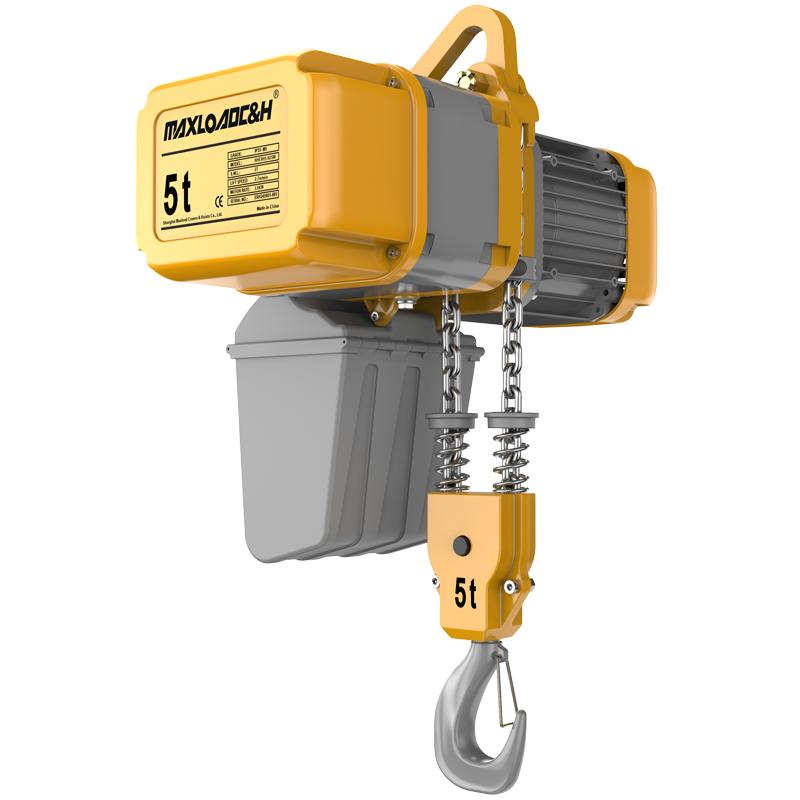
As a core category of light and small lifting equipment, electric hoists operate on the core logic of "motor drive + mechanical transmission," using a drum to wind wire rope or a sprocket to engage a chain. Its core components are arranged in a "pyramid" shape: the bottom layer is the power system, the middle layer is the transmission system, and the top layer is the control and braking system.
The classification system is more scenario-specific: Based on the load-bearing medium, the ring chain type uses high-strength alloy chains, suitable for high and low temperature environments from -20℃ to 60℃, such as cold chain storage and metallurgical workshops; the wire rope type uses 6×37 structural wire rope, which has strong impact resistance and is mostly used in heavy-duty scenarios such as construction and ports. Based on the operating mode, the fixed type has a positioning accuracy of ±5mm, suitable for fixed-point feeding on assembly lines; the mobile type (including single-beam and double-beam walking mechanisms) has an operating speed of 0.5-30m/min, covering a track range of 10-50 meters, meeting cross-regional handling needs.
II. A Dual Guarantee Mechanism for Safety and Efficiency
Its workflow follows the principle of "energy conversion - transmission deceleration - braking protection". Three-step logic: After the electric motor converts electrical energy into mechanical energy, the speed is reduced and the torque is increased by the reducer, driving the drum/sprocket to rotate; simultaneously, the conical rotor motor has a built-in braking device. When energized, the magnetic yoke engages and releases the brake wheel; when de-energized, the spring pushes the brake shoe to clamp, with a braking response time of <0.5 seconds, preventing heavy objects from falling.
Safety protection forms a "triple defense": The fire cut-off limit switch is triggered by a cam structure, cutting off the power when the hook rises to the upper limit or falls 5-10cm before the lower limit; the overload protection device uses a pressure sensor, automatically stopping the machine when overloaded by 10%-15%; the low-voltage control system reduces the risk of electric shock during operation. After intelligent upgrades, some models have added a "stroke memory" function, which can store 10 sets of frequently used working positions, improving repeatability by 40%; the fault self-diagnosis system can monitor motor temperature and brake clearance in real time, and provide audible and visual alarms when abnormalities occur.
III. Application Scenarios:
In traditional fields, its "high-efficiency adaptability" is prominent: In manufacturing workshops, 1 A 10-ton chain hoist, paired with a suspended track, enables rapid replacement of stamping dies; on construction sites, an 8-ton wire rope hoist works in conjunction with a tower crane to complete short-distance transport of precast floor slabs; in ports and docks, a 20-ton hoist assists in container stacking operations.
Demand is rapidly growing in emerging fields: In the new energy industry, explosion-proof hoists are used for handling lithium battery cathode materials (to prevent dust explosions); in rail transit construction, hoists are used for installing subway tunnel segments; breakthroughs are also occurring in agriculture, with mobile hoists used for the assembly and maintenance of large agricultural machinery.
IV. Practical Guidelines for Extending Lifespan
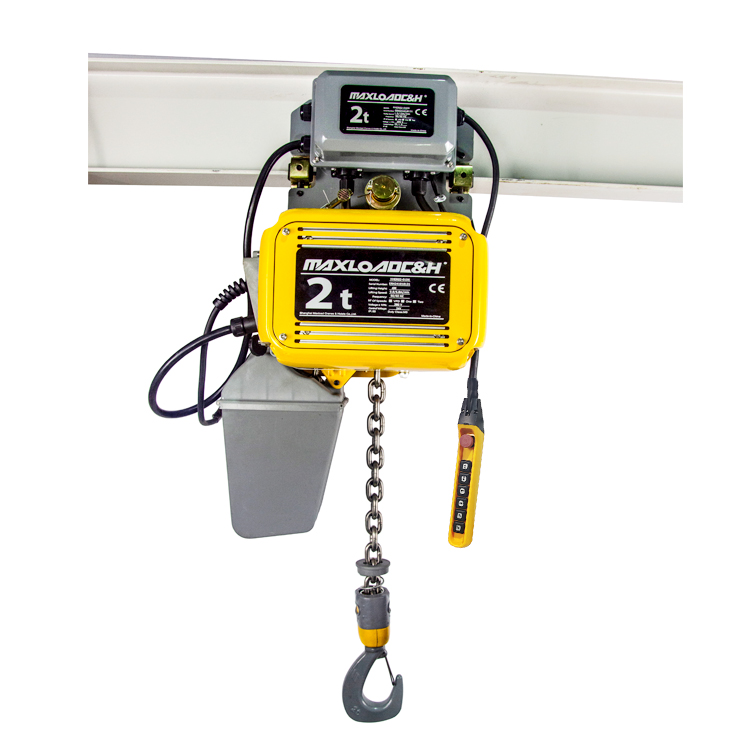
Daily maintenance should follow a "periodic + precise" approach: Daily checks include brake clearance and wire rope/chain wear; weekly cleaning of motor heat sinks and tightening of connecting bolts; monthly testing of limit switch sensitivity.
Troubleshooting includes... Typical solutions: Motor overheating (>120℃) is often due to overload or poor heat dissipation, requiring load reduction or cleaning of heat dissipation holes; brake failure may be due to worn brake pads, requiring replacement of friction plates; abnormal noises during operation are often caused by insufficient gear lubrication, requiring the addition of industrial gear oil. Proper maintenance can extend equipment lifespan from 5 years to 8 years and reduce maintenance costs by 30%.
V. Intelligence, Energy Saving, and Lightweighting in Parallel
In terms of intelligence, intelligent products accounted for 15% in 2024. Regarding energy saving, the application of high-efficiency motors and frequency conversion technology reduced energy consumption by 20%-30% for energy-saving products, and the market share continued to increase to 35%.
Lightweighting is becoming a new direction. A 3-ton hoist with an aluminum alloy shell is 25% lighter than the traditional model, suitable for operation in confined workshop spaces; customized demand is growing, such as radiation-proof hoists developed for nuclear power plants and stainless steel models (corrosion-resistant and easy to clean) designed for the food industry, driving the industry's transformation from "standardization" to "scenario-based" solutions.
 0086 156 1824 5535
 0086 156 1824 5535