Electric Hoists: A New Intelligent Engine for Industrial Lifting
In modern industrial production systems, the efficiency and safety of material handling are always core requirements. As an important branch of lifting machinery, electric hoists, with their electric drive, precise control, and compact structure, have been deeply integrated into various scenarios such as manufacturing, logistics, warehousing, and construction, becoming key equipment supporting industrial upgrading. This article will systematically analyze the innovative secrets of this industrial equipment from four aspects: technical principles, application value, development trajectory, and future trends.
I. Precise Synergy of Mechanical and Electrical Systems
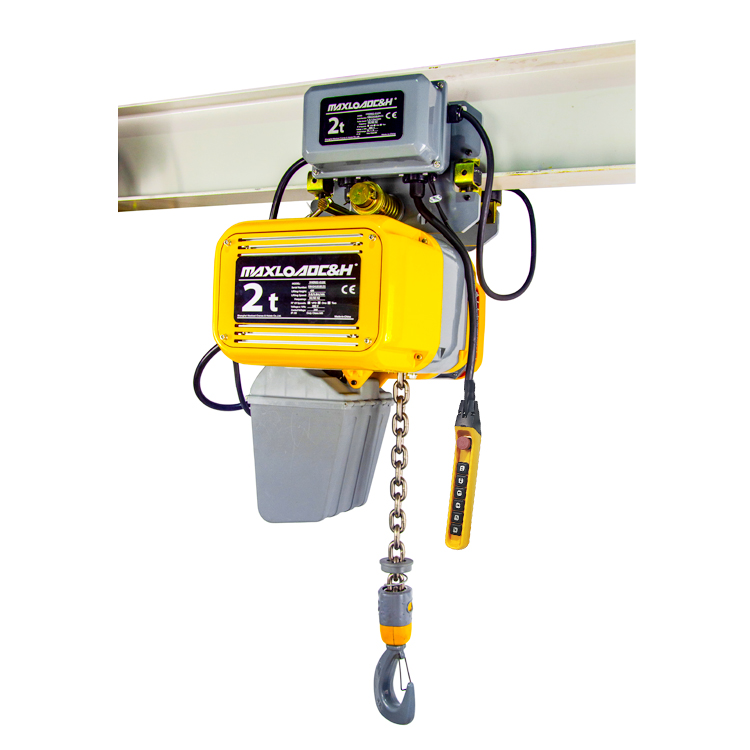
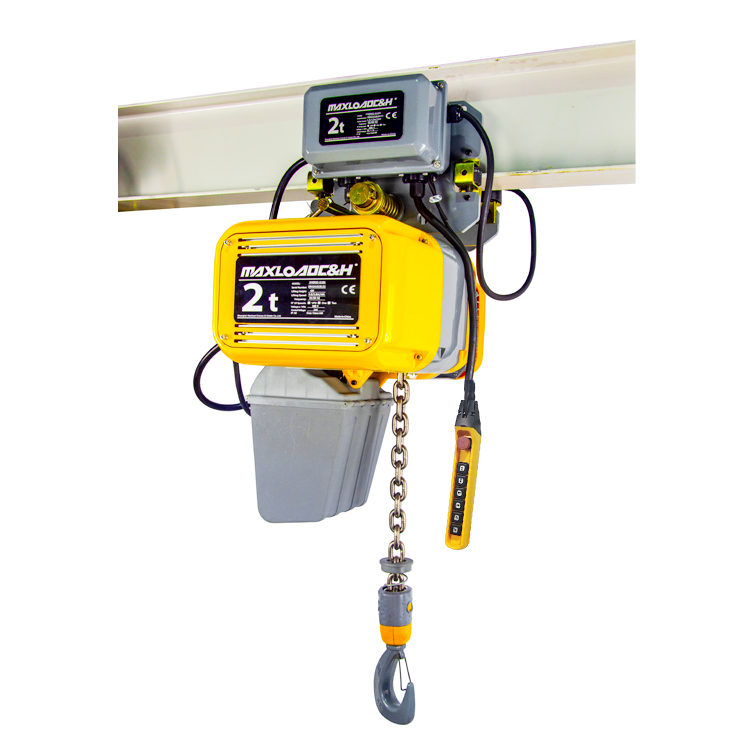
The core structure of an electric hoist consists of four main parts: the drive system, the transmission system, the lifting mechanism, and the control system. The drive system typically uses a three-phase asynchronous motor or a permanent magnet synchronous motor to convert electrical energy into mechanical energy; the transmission system uses a reducer to amplify torque and regulate speed, ensuring the smooth lifting of heavy objects; the lifting mechanism includes a drum, wire rope or chain, and hook assembly, forming a closed-loop traction system; the control system integrates intelligent modules such as limit switches, overload protectors, and remote control devices to build a safety protection network.
Its working principle can be summarized as a coordinated "electric-mechanical-control" process: the operator issues commands via buttons or a remote control, the motor starts and drives the reducer, and the drum rotates to wind up and unwind the wire rope, achieving vertical lifting and lowering of the load. Key safety devices, such as upper and lower limit switches, can automatically cut off the power to prevent overtravel; the overload protection device triggers an alarm and stops the machine when the load exceeds the rated value; and the emergency brake can lock the drum instantly upon power failure to prevent the heavy object from falling. This mechatronic design ensures both operational precision and enhanced safety redundancy.
II. Efficiency Revolution in Multiple Scenarios
In manufacturing workshops, electric hoists are often installed on I-beam rails, forming single-beam or double-beam cranes, used for high-frequency lifting operations such as loading and unloading machine tools and equipment maintenance. Their high efficiency is reflected in: a single unit can complete dozens of lifting cycles per hour, significantly improving the production line cycle time; precise positioning control ensures assembly accuracy and reduces scrap rates. In the logistics and warehousing sector, electric hoists, in conjunction with automated storage and retrieval systems (AS/RS) and AGVs (Automated Guided Vehicles), construct automated warehousing systems, enabling rapid storage, retrieval, and sorting of goods, reducing per-transaction handling costs by more than 60% compared to manual labor.
In construction scenarios, electric hoists are commonly used for steel structure hoisting and precast concrete component installation. Their lightweight design facilitates high-altitude operations, while remote control enables operators to stay out of hazardous areas, improving operational safety. At ports and terminals, electric hoists work in conjunction with gantry cranes to complete container loading and unloading operations. Their 24-hour continuous operation capability and weather-resistant design ensure the smooth operation of the logistics chain.
III. From Mechanical Transmission to Intelligent Evolution
The evolution of electric hoists can be traced back to the breakthroughs in electric technology at the end of the 19th century. Early products used DC motors and worm gear drives, which suffered from high energy consumption and frequent maintenance. In the mid-20th century, with the widespread adoption of AC motors and gear reducers, the reliability and efficiency of electric hoists significantly improved. In the 21st century, advancements in materials science have driven lightweight design. The application of high-strength alloy steel has reduced equipment weight while increasing load-bearing capacity. Developments in electronic control technology have spurred intelligent functions such as variable frequency speed control and PLC programming, enabling stepless adjustment of lifting speed and multi-action linkage.
In recent years, the integration of IoT technology has ushered in a new era of intelligent electric hoists. By installing sensors and communication modules, equipment can upload operational data to a cloud platform in real time, enabling remote monitoring, fault warnings, and predictive maintenance. For example, vibration sensors can monitor the condition of motor bearings and provide early warnings of potential faults; energy consumption monitoring systems can optimize power usage and reduce operating costs. This application of "digital twin" technology has shifted electric hoists from passive maintenance to proactive health management.
IV. Green, Intelligent, and Modular
The green transformation of electric hoists has become an inevitable trend. The application of permanent magnet synchronous motors and energy feedback technology can convert braking energy into electrical energy to feed back to the grid, reducing energy consumption; the use of lightweight materials further reduces equipment weight, lowering transportation and installation costs. In the area of intelligentization, AI algorithms are being introduced into path planning systems. By analyzing the working environment and load characteristics, they automatically generate optimal lifting paths, reducing unloaded travel and collision risks.
Modular design is another area of innovation. Through standardized interfaces and replaceable components, users can quickly customize equipment configurations according to specific needs, such as changing wire ropes of different lengths or adjusting hook capacity. This flexibility not only shortens delivery cycles but also reduces total lifecycle costs.
Conclusion
As a core piece of industrial lifting equipment, every technological innovation in electric hoists profoundly impacts production efficiency and safety standards. From mechanical transmission to intelligent control, from single-function to modular customization, its development trajectory reflects the inherent logic of manufacturing transformation and upgrading. In the future, with the deep integration of new materials, new energy, and digital technologies, electric hoists will evolve towards greater efficiency, intelligence, and greener practices, continuously empowering smart factories and intelligent logistics systems in the Industry 4.0 era. This process requires not only technological innovation but also collaborative cooperation across all links of the industrial chain to jointly build a safe, reliable, and sustainable material handling ecosystem.new energy, and digital technologies, electric hoists will evolve towards greater efficiency, intelligence, and greener practices, continuously empowering smart factories and intelligent logistics systems in the Industry 4.0 era. This process requires not only technological innovation but also collaborative cooperation across all links of the industrial chain to jointly build a safe, reliable, and sustainable material handling ecosystem.
 0086 156 1824 5535
 0086 156 1824 5535