Electric Hoists: A Powerful Light-Duty Lifting Tool in Modern Industry
In modern industry and logistics, lifting equipment is a core tool for improving efficiency and ensuring safety. Among them, electric hoists, with their compact structure, flexible operation, and powerful functions, have become indispensable light-duty lifting equipment in factories, warehouses, construction sites, and other similar settings. They not only replace the heavy labor of traditional manual hoists but also redefine the convenience and safety of material handling with their electrified and intelligent features.
I. The Leap from Mechanical to Electric
The origins of electric hoists can be traced back to the Industrial Revolution of the early 20th century. At that time, with the expansion of manufacturing, traditional manual hoists (such as chain hoists and lever hoists) gradually became unable to meet the demands of large-scale production due to their low efficiency and high labor intensity.
Over the decades, electric hoist technology has undergone continuous iterations:
Power upgrades: from single-phase motors to three-phase motors, and then to variable frequency speed control motors, resulting in more powerful and energy-efficient operation;
Control innovations: from wired control to wireless remote control, significantly improving operating distance and flexibility;
Safety enhancements: the addition of limit switches, overload protection, and emergency braking functions to reduce the risk of accidents;
Materials optimizations: the use of high-strength alloy steel and anti-corrosion coatings to adapt to harsh working conditions and long-term use.
Today, electric hoists have formed a diversified product system, covering stationary, mobile, low-headroom, and explosion-proof types, with load capacities ranging from 0.5 tons to tens of tons, meeting the needs of different scenarios.
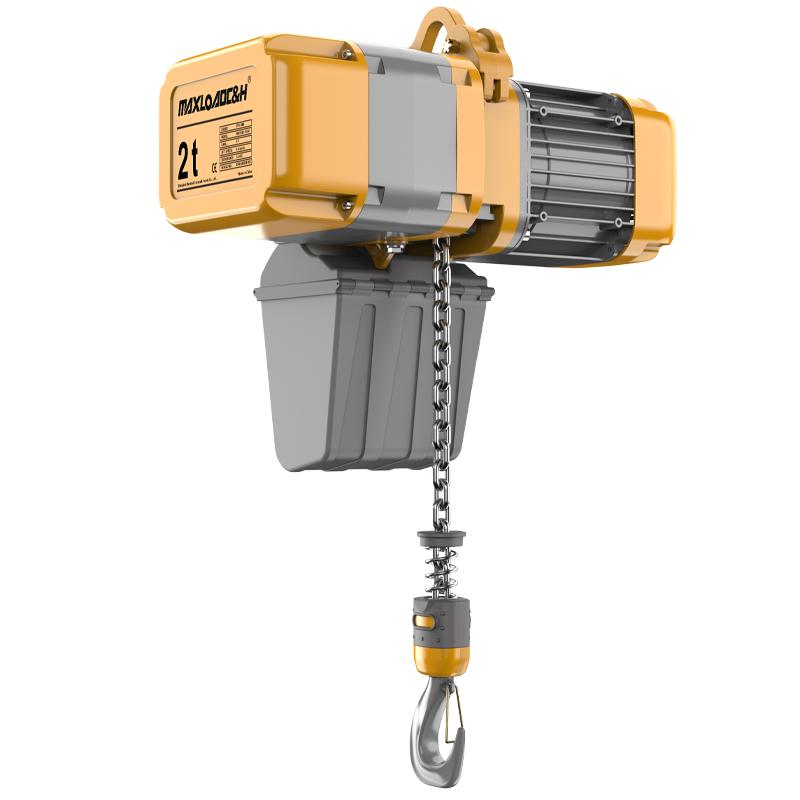
II. Precision-Coordinated Lifting System
Although compact in size, the electric hoist integrates mechanical, electrical, and control technologies. Its core structure includes:
Electric Motor: Provides the power source, converting high-speed rotation into low-speed, high-torque output via a reducer;
Drum Device: Winds the wire rope or chain, achieving lifting and lowering of the load through rotation;
Braking System: Employs electromagnetic or mechanical braking to ensure stable suspension of the load in the event of a power outage;
Transmission Mechanism: Gears, sprockets, and other components transmit power, optimizing torque distribution;
Control Module: Sends commands via buttons or remote control to adjust lifting speed, direction, and trajectory;
Safety Devices: Includes overload limiters, upper and lower limit switches, anti-tilt sensors, etc., providing multiple layers of protection.
Working Principle: The operator starts the motor via the control handle or remote control. Power is transmitted to the drum via the reducer, driving the wire rope/chain to wind up and down. When the load rises to the set height, the upper limit switch automatically cuts off the power; if the load exceeds the rated value, the overload limiter triggers an alarm and stops operation. Some high-end models are also equipped with frequency converters, enabling stepless speed regulation to meet the needs of precision lifting.
III. A Versatile Performer from Factories to Special Environments
The adaptability of electric hoists makes them widely used in multiple fields:
Manufacturing: In automobile assembly and machining workshops, they are used to lift heavy components such as engines and molds, improving assembly efficiency;
Warehousing and Logistics: Used in conjunction with monorail cranes or bridge cranes, they enable rapid loading, unloading, and stacking of goods, optimizing warehouse space utilization;
Construction Sites: Lifting steel bars, concrete, and other building materials to high-rise construction sites, reducing the labor intensity of workers;
Energy Industry: In wind power and nuclear power equipment maintenance, they are used to lift large components to high-altitude work platforms;
Special Environments: Explosion-proof electric hoists can operate safely in flammable and explosive environments such as chemical plants and mines; low headroom designs are suitable for workshops with limited ceiling height.
Case Study: After introducing electric hoists, an automobile manufacturing plant reduced engine lifting time from 15 minutes to 3 minutes, and due to the dual braking system, there were zero accidents during the lifting process, reducing annual maintenance costs by 40%.
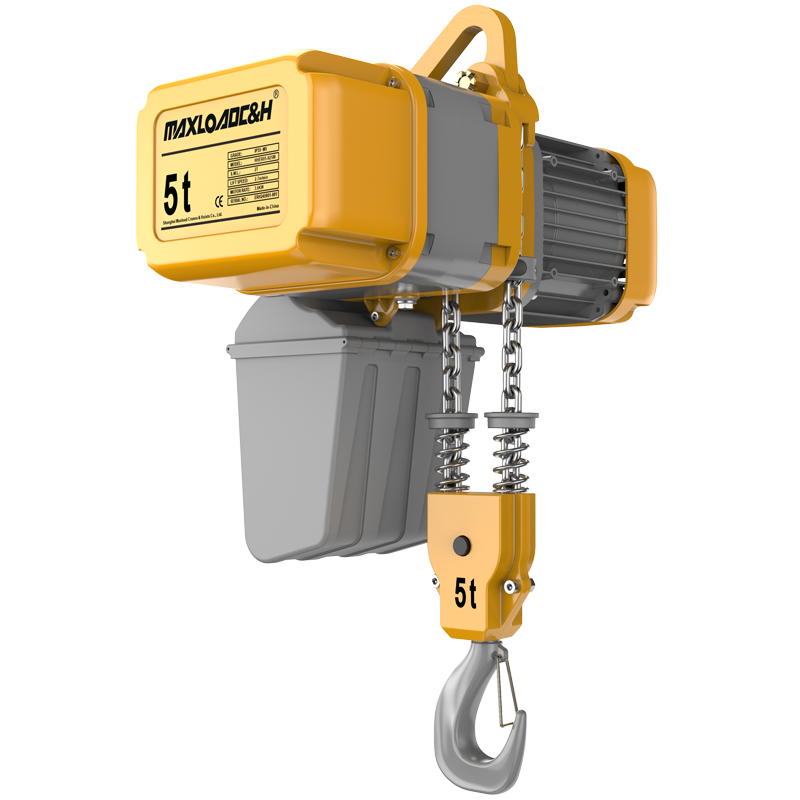
IV. Why is it the preferred choice for light-duty lifting?
Compared to traditional lifting equipment, the core advantages of electric hoists are:
High efficiency and energy saving: Electric drive replaces manual labor, reducing single-operation time by more than 50%; frequency conversion technology further reduces energy consumption;
Easy operation: Wireless remote control allows operators to stay away from heavy objects, avoiding direct contact risks;
Safe and reliable: Multiple protection mechanisms minimize the accident rate, meeting international safety standards;
Low maintenance costs: Modular design facilitates rapid repair, and key components have a lifespan of tens of thousands of hours;
Small space occupation: Compact structure allows installation in confined spaces and even integration into automated production lines.
V. Dual Upgrades in Intelligence and Green Technology
With the advancement of Industry 4.0 and carbon neutrality goals, electric hoists are evolving in the following directions:
Intelligence: Integrating IoT sensors to monitor load and operating status in real time, and predicting maintenance needs through data analysis;
Automation: Collaborating with AGVs (Automated Guided Vehicles) and robots to achieve unmanned logistics;
Green Technology: Adopting permanent magnet synchronous motors, improving energy efficiency by 20%; developing hydrogen fuel cell power to reduce carbon emissions;
Lightweighting: Reducing weight while maintaining strength through high-strength materials and topology optimization design.
Conclusion: Small Equipment, Big Efficiency
The evolution of electric hoists is a microcosm of the development of industrial technology from extensive to intensive. With its "small body" carrying "big energy," it continuously drives innovation and transformation in the lifting industry while improving production efficiency and ensuring operational safety. In the future, with the deep integration of intelligent and green technologies, electric hoists will undoubtedly play a greater role in emerging fields (such as new energy and semiconductor manufacturing), becoming an indispensable "hidden champion" in the modern industrial system.
 0086 156 1824 5535
 0086 156 1824 5535