Electric Stage Hoists: The Core Driving Force of Stage Machinery
In contemporary theaters, concert halls, television studios, and other performance spaces, the precise operation of stage machinery systems often determines the final presentation of a performance. As a core component of stage lifting equipment, electric stage hoists, with their high efficiency, safety, and flexibility, serve as a bridge connecting stage art creativity and technological realization. This seemingly unassuming mechanical device actually bears the heavy responsibility of transforming the director's ideas into dynamic stage visuals. Its technological evolution and deep integration of artistic expression are driving innovation in stage performance forms.
I. Mechanical Structure and Working Principle of Electric Stage Hoists
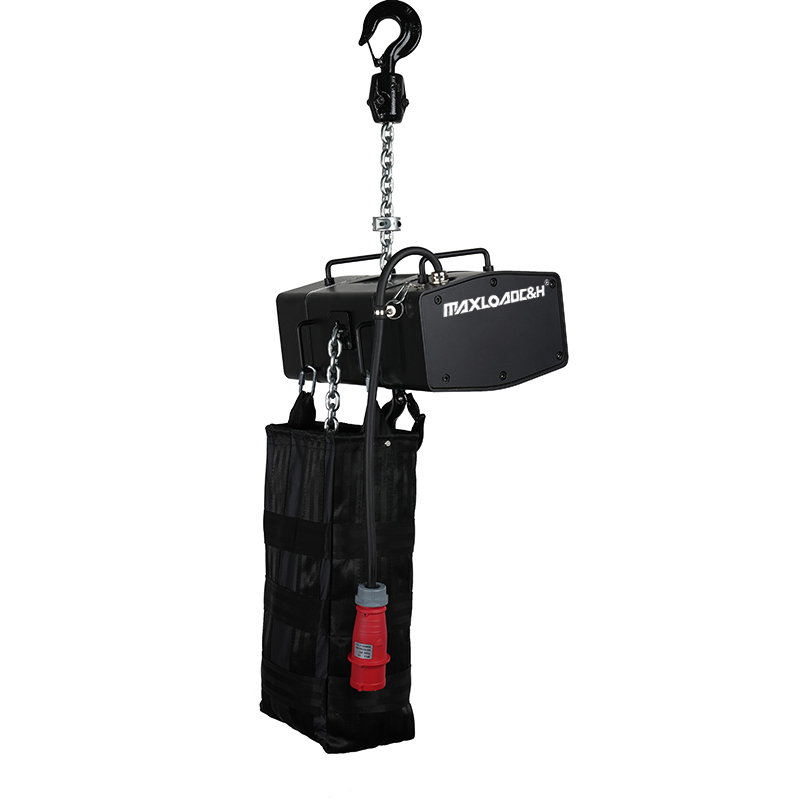
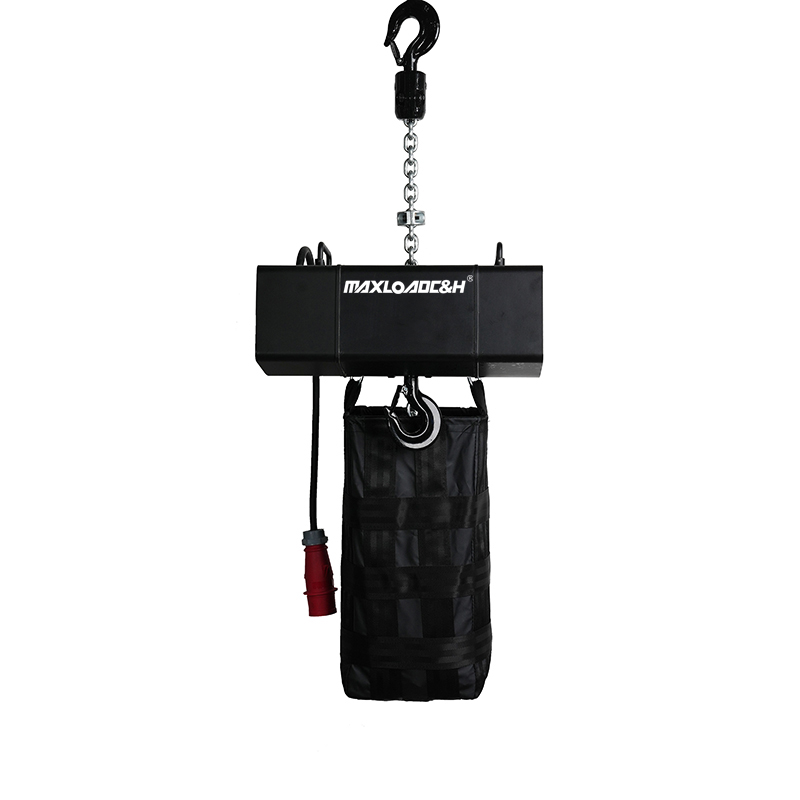
The essence of an electric stage hoist is an electrically driven vertical lifting device. Its mechanical structure consists of four main modules: a drive system, a transmission system, a load-bearing system, and a control system. The drive system typically uses a three-phase asynchronous motor or a servo motor, with a reducer to amplify torque and regulate speed, ensuring stable power output even at low speeds. The wire rope drum in the transmission system employs a multi-layer winding design, working in conjunction with guide pulleys to achieve precise force transmission, preventing swaying and deviation during lifting. The load-bearing system employs a dual safety system of high-strength alloy hooks and anti-fall devices to ensure the stability of the suspended object during lifting and lowering.
The intelligent upgrade of the control system is a key breakthrough in the development of electric stage hoists. Modern equipment commonly uses PLC programmable controllers and variable frequency speed control technology to achieve stepless adjustment of lifting speed and synchronous operation of multiple devices. Real-time position information is fed back by encoders, forming a closed-loop control system with limit switches and overload protection devices, ensuring both motion accuracy and operational safety. Some high-end models also integrate wireless remote control and remote monitoring functions, allowing operators to monitor the equipment status in real time from the control room and achieve precise control.
II. Core Application Scenarios in Stage Art Creation
In theatrical performances, electric stage hoists play a crucial role in scene transitions. Through the coordinated operation of multiple devices, rapid lifting and precise positioning of large-scale scenery can be achieved, enabling the stage space to instantly transform from a palace to a battlefield, from reality to fantasy. This spatial reconstruction capability not only expands the dimensions of theatrical expression but also makes the creative concept of "scene as narrative" possible. In opera performances, electric stage hoists are often used in conjunction with lighting systems to create surreal scenes, such as the "flying" of performers, enhancing artistic expression.
In the field of music performance, electric stage hoists are equally widely used. In large concerts, singers use lifting platforms to achieve dramatic entrances from below the stage to the center; symphony orchestras utilize liftable orchestra pits to adjust the distance between musicians and the audience, optimizing the sound field. In dance performances, electric stage hoists can coordinate with dancers' movements to achieve high-difficulty actions such as hovering and spinning in mid-air, creating stunning visual effects.
In television studios, electric stage hoists play an even more important role with their multi-functional applications. Through the combination of track systems and rotating platforms, hosts can dynamically enter from the audience to the stage; in variety shows, lifting platforms are often used for prop presentation and guest interaction, enhancing the program's appeal. This flexible and versatile application makes electric stage hoists an indispensable technical support for modern television production.
III. Deep Integration of Technical Characteristics and Artistic Expression
There is a profound intrinsic connection between the technical characteristics of electric stage hoists and their artistic expression. Its precise positioning capabilities enable directors to achieve "millisecond-level" scene transitions, enhancing control over the dramatic rhythm, while its powerful load-bearing capacity allows for the design of more complex and impactful stage installations, expanding the boundaries of artistic creation. In terms of safety, modern electric stage hoists generally employ multiple protection mechanisms, including overload protection, limit protection, and emergency braking, ensuring the safety of personnel and equipment even in extreme situations.
The standardization of maintenance directly affects the lifespan and performance stability of electric stage hoists. Regularly checking the motor cooling system, lubricating transmission components, and calibrating the control system are crucial to ensuring the long-term stable operation of the equipment. At the same time, professional training for operators is equally important; only by mastering the equipment's characteristics and operating procedures can its technical advantages be fully utilized.
IV. Future Development Trends and Artistic Innovation Directions
With continuous technological advancements, electric stage hoists are developing towards intelligence and integration. The application of IoT technology enables remote monitoring and fault warning, improving operational efficiency; the introduction of artificial intelligence algorithms can optimize motion trajectory planning, achieving smoother scene transitions. Driven by green and environmentally friendly principles, the adoption of low-energy motors and regenerative braking technology has enabled equipment to improve performance while reducing energy consumption.
On the level of artistic innovation, electric stage hoists are deeply integrating with cutting-edge technologies such as virtual reality and augmented reality. Through precise spatial positioning and dynamic tracking, seamless integration between virtual scenes and real stages can be achieved, creating an immersive performance experience. This technological integration not only expands the expressive dimensions of stage art but also allows audiences to participate in the performance in unprecedented ways.
From mechanical device to artistic carrier, the evolution of electric stage hoists reflects the profound interaction between stage art and technological progress. It is not only a representative of stage machinery but also a bridge connecting artistic creativity and technological realization. In the foreseeable future, with continuous technological innovation and breakthroughs in artistic concepts, electric stage hoists will continue to drive the innovation of stage performance forms, bringing audiences a more stunning and immersive artistic experience. This invisible artistic support is quietly changing our perception and expectations of stage art, writing a new chapter in stage aesthetics for this era.
 0086 156 1824 5535
 0086 156 1824 5535