Electric Chain Hoist: The Silent Industrial Revolutionary
In modern factory workshops, bustling construction sites, or large equipment maintenance areas, a common sight is the unassuming yet indispensable electric chain hoist. Silently suspended beneath steel beams, it uses its robust chain and powerful motor to lift, move, and install tons of weight precisely. This seemingly simple device is not only a thousandfold extension of human muscle strength, but also an epic of silent evolution in modern industrial civilization, an "invisible champion" supporting our vast material world.
I. A Civilizational Leap from Human Power to Electricity
Humanity's desire to lift heavy objects has been almost synchronous with the history of civilization. From the ancient Egyptians using ramps to build the pyramids, to the lever-and-pulley principles of ancient Greece, and then to the large lifting devices in medieval European ports, every innovation in lifting technology has profoundly influenced our ability to transform the world. However, before the invention of the electric motor, the handling of heavy objects remained deeply dependent on human and animal power, with its scale and efficiency facing insurmountable limitations.
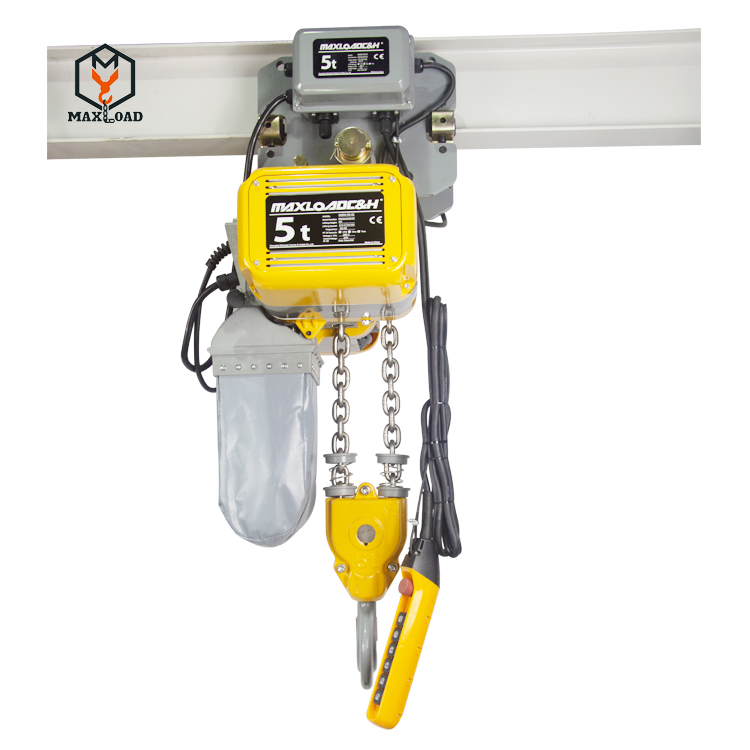
The invention of the electric chain hoist represents a crucial step in "domesticating" electricity to serve the lifting of heavy objects. It transforms the rotational force of the electric motor into the powerful pulling force of the linear motion of the chain through a sophisticated gear system. This transformation is far more than a simple substitution of force. It means that lifting has become effortlessly easy for the first time—the operator can command forces hundreds or even thousands of times greater than their own physical capabilities with just a touch of a button, achieving a perfect balance between control precision and output power. This is not merely an evolution of tools, but a qualitative leap in productivity, making large-scale, high-efficiency modern production and construction possible.
II. The Triangular Harmony of Power, Safety, and Control
The core value of an excellent electric chain hoist lies in achieving a delicate balance between power, safety, and control.
Its "power" originates from a highly efficient transmission system. The electric motor, as the heart, provides the initial power, while the precisely calculated gear set, especially the worm gear structure, acts as an amplifier and regulator of power. This design not only achieves a huge reduction ratio to increase torque but also possesses natural self-locking characteristics, adding a crucial element to safety. The chain itself is made of high-strength alloy steel, and each link undergoes rigorous quality inspection to ensure it will not break even under extreme tensile force, like an indestructible metal spine.
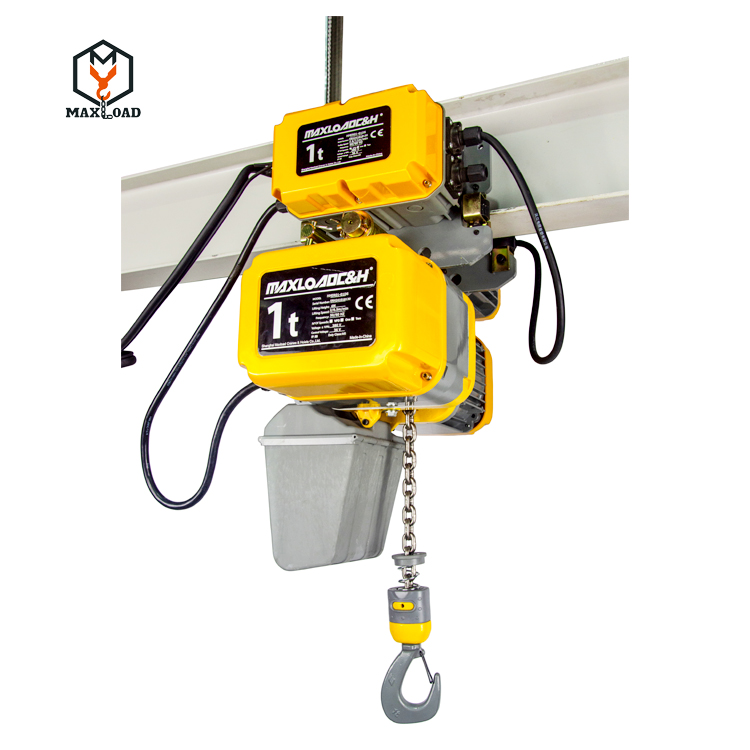
However, possessing power requires understanding restraint, which is the essence of "safety" design. In addition to the self-locking nature of the transmission, modern electric chain hoists are typically equipped with multiple safety barriers: overload protection devices automatically cut off the power when the load exceeds the critical point, preventing the dangerous situation of "a small horse pulling a heavy cart"; mechanical limit switches ensure that the hook automatically stops before reaching the highest or lowest position, avoiding accidents caused by excessive chain entanglement or loosening; furthermore, emergency stop buttons, phase sequence protection, and other electrical protection measures together form a series of life-saving lines, minimizing potential risks.
If power is its muscle, and safety is its skeleton, then "control" is its sensitive nerves. With the development of technology, control methods have evolved from simple push-button operation to wireless remote control and even integrated system control. The introduction of frequency conversion technology allows for smooth acceleration and deceleration during lifting, effectively eliminating violent shaking and impact during startup and achieving rock-solid, precise positioning. This is crucial for lifting precision equipment or operating in complex, confined spaces.
III. Hidden Contributions
The contributions of electric chain hoists are often hidden behind grand scenes, yet ubiquitous. On assembly lines, they deliver parts to their workstations on time, an indispensable part of lean manufacturing; during equipment maintenance, they steadily lift core components, providing support for maintenance and innovation; in warehouse logistics, they assist in high-level stacking, maximizing the use of vertical space. From the final assembly of aerospace vehicles to the installation of giant turbines in hydroelectric power stations, and the magnificent lifting and lowering of large-scale sets in theaters, their application boundaries continue to expand.
Essentially, it is an "empowering" tool. It lowers the threshold and risks of heavy object handling, freeing workers' bodies so they can focus more on creative processes and control. A nation's level of industrialization is, to some extent, reflected in how it entrusts these fundamental, repetitive, and high-intensity labor tasks to reliable and efficient equipment like electric chain hoists. While they don't produce final products, they are the fundamental guarantee for efficient and precise production, a vital force silently flowing in the veins of industry.
IV. The Evolution of Intelligentization and Green Development
Facing the wave of Industry 4.0 and the global consensus on sustainable development, electric chain hoists are also entering a new stage of evolution. Their future development direction is clearly towards intelligentization and green development.
Intelligentization means it is no longer an information silo. By integrating sensors, it can monitor data such as load weight, motor temperature, and operating time in real time, and upload this data to the cloud via IoT technology. This makes predictive maintenance possible—the system can warn of parts that need replacement or maintenance before a failure occurs, minimizing unexpected downtime. Simultaneously, it can better integrate into automated production lines, becoming an intelligent, remotely scheduled, and monitored execution unit in flexible manufacturing systems.
Green development focuses on energy efficiency and environmental friendliness. Employing high-efficiency permanent magnet synchronous motors, optimizing friction loss in the transmission system, using recyclable materials in manufacturing, and even exploring energy recovery technologies for specific scenarios are all paths to reducing its carbon footprint. A more energy-efficient, durable, and quieter electric chain hoist not only reduces long-term operating costs for users but also contributes to building green factories.
Conclusion:
The electric chain hoist, this symbol of power suspended in the air, silently witnesses and participates in the construction of the modern world. It originated from mechanical principles, matured in the electrical age, and is now heading towards an intelligent future. It may not have a glamorous appearance, but with its resilience, reliability, and precision, it has become a true unsung hero in the industrial arena. When we watch it steadily lift heavy loads again, we may feel that it is not just the collaboration of steel and motor, but a magnificent symphony of human wisdom, strength, and relentless pursuit of safety. It reminds us that true industrial power often resides in these fundamental yet crucial pieces of equipment—silent, yet effortlessly powerful.
 0086 156 1824 5535
 0086 156 1824 5535