Electric Chain Hoist: A Compact and Efficient Lifting Tool
In modern factories, warehouses, and construction sites, the electric chain hoist, with its compact size, easily lifts several tons of weight, becoming an indispensable lifting device.
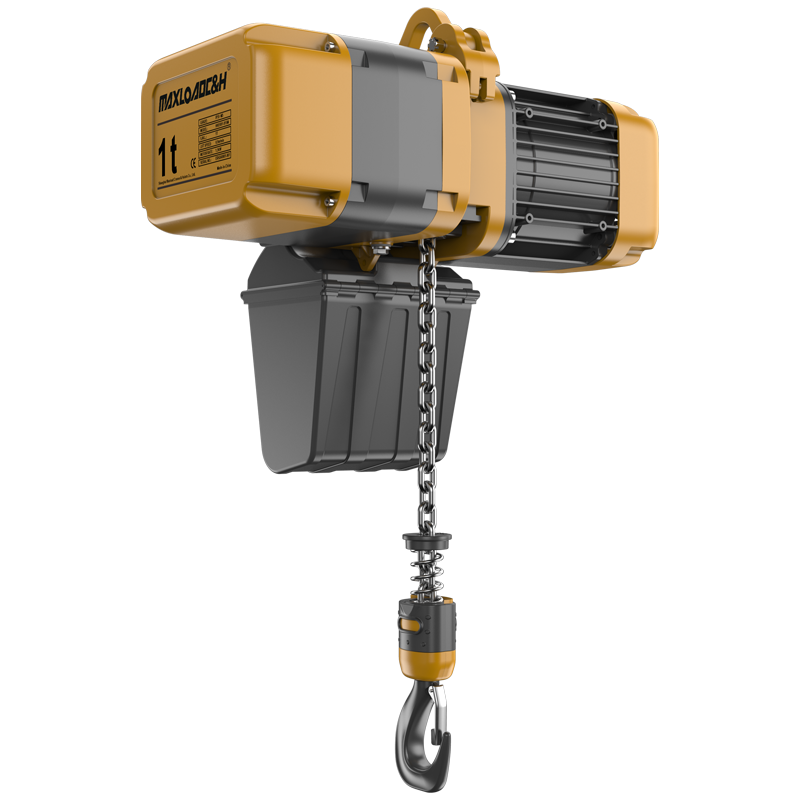
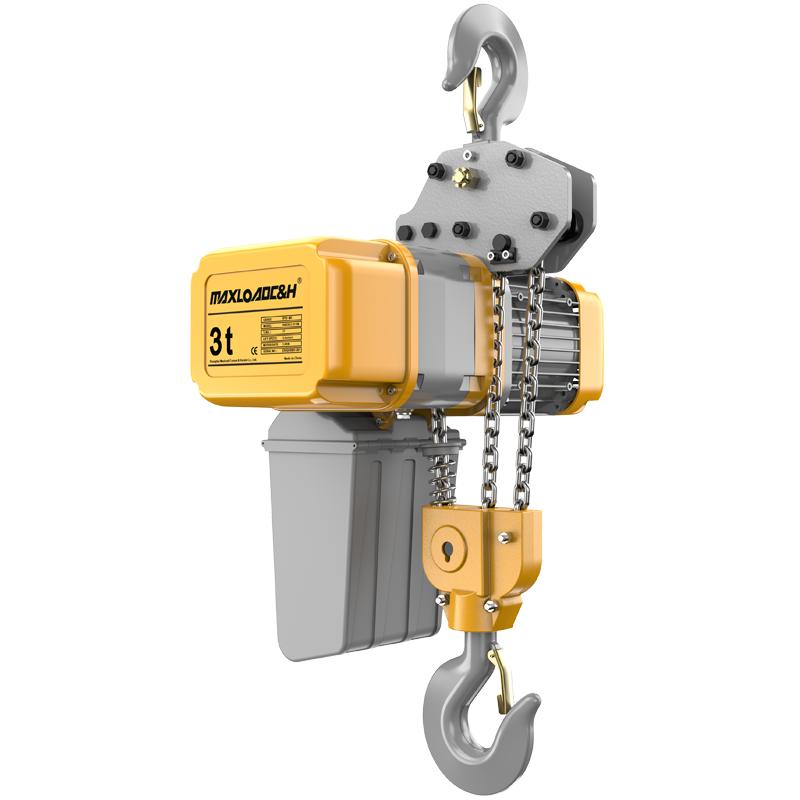
As a lightweight and compact lifting device, the electric chain hoist consists of an electric motor, transmission mechanism, and sprockets, and is widely used in various industries such as factories, warehouses, wind power generation, logistics, docks, and construction.
With its advanced performance structure, small size, light weight, reliable performance, and convenient operation, it provides great convenience for lifting heavy objects, loading and unloading work, equipment maintenance, and cargo transportation.
I. The Technological Essence of Compact Design
The core advantage of the electric chain hoist stems from its ingenious and efficient structural design.
The body is made of a high-strength tensile shell or die-cast aluminum shell, precision-manufactured using a thin-wall extrusion molding process, achieving the characteristics of small size, light weight, and high strength.
All internal gears undergo high-temperature quenching treatment, increasing their wear resistance and toughness.
Standard electric chain hoists feature an independent gearbox system with a sealed two-stage coaxial transmission gear mechanism and a long-life oil bath lubrication system. This cooling effect on the mechanical brakes extends the equipment's lifespan.
A dual-brake system is the safety guarantee for electric chain hoists—the electromagnetic brake responds quickly and provides positive braking force; the mechanical brake works in coordination with the electromagnetic brake to stop the machine at any time.
II. Multi-Scenario Lifting Solutions
Electric chain hoists typically have a lifting capacity of 0.1–60 tons and a lifting height of 3–120 meters.
This wide range of parameters allows them to adapt to various lifting needs.
They can be installed on suspended I-beams, curved tracks, jib crane rails, and fixed lifting points to lift heavy objects.
In factories, mines, ports, warehouses, freight yards, shops, and other locations, electric chain hoists are essential machinery for improving labor efficiency and working conditions.
They are used in conjunction with single-girder cranes, bridge cranes, gantry cranes, etc., and with slight modifications, they can also be used as winches.
The operation is extremely flexible—operators can control it from the ground using buttons, or from a control room, or via wired or wireless remote control.
III. Strict Adherence to Operating Procedures is Crucial
As a special lifting equipment, the safe operation of the electric chain hoist is paramount.
Overloading is strictly prohibited—exceeding the rated load is extremely dangerous; the rated load is indicated on the hook nameplate.
Carrying people on the hoist is absolutely forbidden, and it must never be used as an elevator lifting mechanism to carry people.
No one should be under the lifted object. Operators must fully understand the safe operating procedures, and tilting or lifting at an angle is strictly prohibited.
Newly installed or installed electric hoists after disassembly and inspection should first undergo several no-load test runs, but never test run with power on before installation is complete.
Before normal use, a static load test should be performed at 125% of the rated load, lifting the hoist approximately 100 mm off the ground for 10 minutes to check for normal operation.
After work is completed, the main power switch must be turned off to disconnect the power supply.
IV. Key to Extending Equipment Lifespan
Proper maintenance not only extends the lifespan of the electric chain hoist but also ensures safe operation.
The gearbox oil level should be checked after 500 hours of operation. Thereafter, it should be checked every three months; if insufficient, add oil.
When using the electric chain hoist outdoors, rain protection should be provided.
Chain maintenance is particularly crucial—it should be lubricated regularly. In high-dust factories, foreign objects should be regularly removed from the chain and limit guide assembly to ensure smooth chain operation.
Note: Gears, bearings, and other friction parts should also be lubricated regularly.
For electric chain hoists not used for extended periods, rust prevention treatment and cleaning should be performed, followed by 1-3 minutes of up-and-down operation to maintain performance.
If the chain is found to be bent, deformed, corroded, or broken beyond specified requirements, or if wear is excessive, never operate the hoist.
Conclusion:
With industrial development, the technology of electric chain hoists is constantly advancing. Currently, some high-end models have integrated temperature monitoring, dual-speed lifting, and fault diagnosis functions, achieving an IP55 protection rating and meeting the requirements for operating environments ranging from -40℃ to +60℃.
These technological advancements are enabling their application in special locations such as cleanrooms and explosion-proof environments.
In the future, with the advancement of intelligent manufacturing and Industry 4.0, the seemingly simple lifting equipment, the electric chain hoist, will continue to incorporate new technologies and revitalize itself.
 0086 156 1824 5535
 0086 156 1824 5535