Compatibility Analysis of Electric Chain Hoists and Cranes
In modern industrial production workshops, cranes precisely lift and transport goods, and their key component—the electric chain hoist—plays an indispensable role.
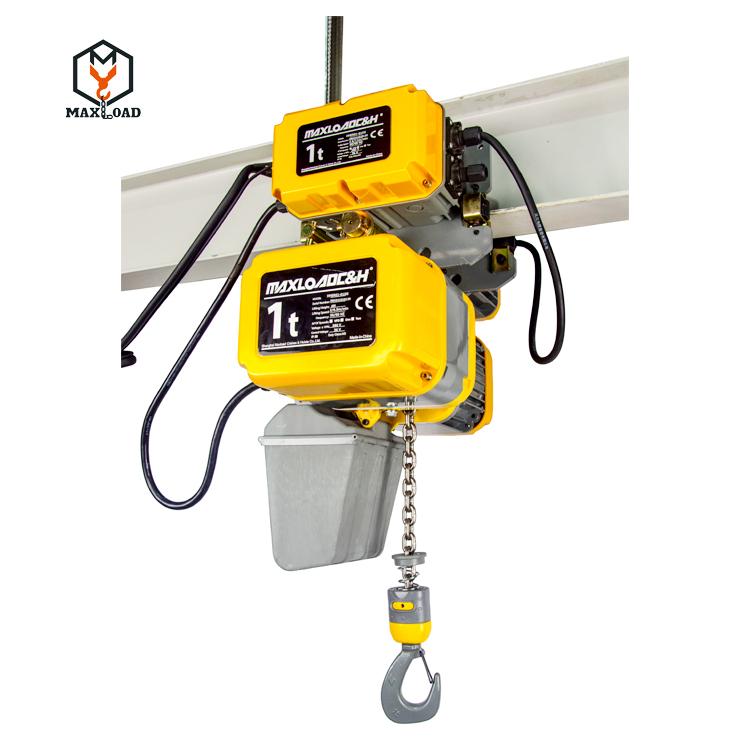
As a small and lightweight lifting device, the electric chain hoist consists of a motor, transmission mechanism, and sprockets, featuring small size, light weight, and simple operation.
It is typically installed on various types of cranes for lifting, pulling, and loading/unloading heavy objects, and is widely used in factories, warehouses, docks, construction sites, and other locations.
I. Working Principle and Unique Advantages of Electric Chain Hoists
The electric chain hoist is a lifting device with advanced performance and structure, small size, and light weight. Its body is mostly made of a high-strength tensile shell or die-cast aluminum shell, precision manufactured through thin-wall extrusion molding.
The core component, the gears, undergoes high-temperature quenching treatment, increasing wear resistance and toughness, making the equipment reliable and easy to operate.
Compared with traditional wire rope electric hoists, chain hoists have the advantage of a more compact structure.
It employs an independent gearbox system with a sealed two-stage coaxial transmission gear mechanism, a long-life oil bath lubrication system, a powder metallurgy clutch as an overload protection device, and a disc-type DC electromagnetic brake, providing high, smooth, rapid braking torque and low noise.
These design features make the chain hoist particularly suitable for locations with high space requirements, such as low-ceilinged factories and locations unsuitable for overhead cranes.
II. Main Types of Compatible Cranes
1. Single-Girder Overhead Cranes
Chain hoists are often used in conjunction with LDA-type electric single-girder overhead cranes to form a rail-mounted, lightweight crane system.
This combination provides an economical and efficient material handling solution suitable for factory workshops, warehouses, and other similar locations.
LX-type electric single-girder overhead cranes can also be used with various models of chain hoists.
This combination is widely used in light and small lifting fields such as machinery, assembly, and warehousing, especially in situations with limited factory space, where it can maximize the effective lifting height.
2. Gantry Cranes
Gantry cranes are another important application platform for chain hoists. Gantry cranes typically have a large span, enabling material handling operations in open-air areas.
Gantry cranes equipped with chain hoists are commonly used in warehouses, docks, and the construction industry for lifting or loading/unloading goods.
The application of chain hoists on gantry cranes leverages their light weight and flexible operation while ensuring sufficient lifting height and handling capacity.
3. Overhead Cranes
Chain hoists can be installed on suspended I-beams, flexible rails, cantilever crane rails, and fixed lifting points to transport goods.
Singing chain hoists in overhead crane systems offer the advantage of flexible layout; the rail layout can be designed according to the needs of the work process, achieving precise material positioning and conveying.
This combination is particularly suitable for production lines, assembly workshops, and other locations requiring frequent lifting operations.
4. Boom Cranes
Chain hoists can also be installed on jib crane rails to form a flexible and efficient local material handling system.
These jib cranes are typically fixed to walls or columns and can lift goods within a certain rotation radius, making them an ideal solution for material handling near workstations.
III. Installation and Configuration Considerations
When installing a chain hoist on a crane, several technical factors need to be considered. The crane design must take into account the installation space, connection method, and operating conditions of the chain hoist.
To ensure the chain hoist does not derail or collide with and damage the hoist body when it reaches the ends of the track, elastic buffers should be installed at both ends of the track.
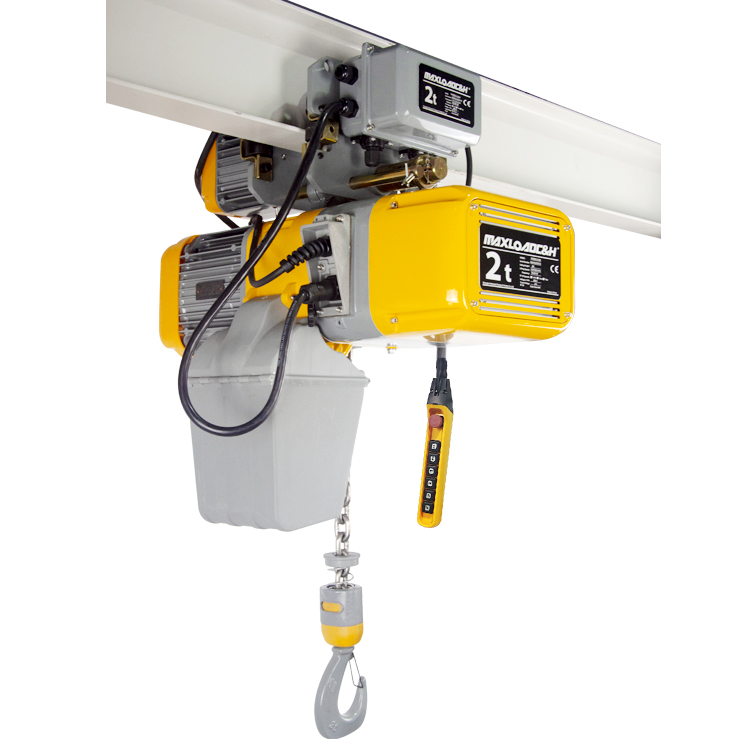
The power supply method for the chain hoist also requires a special design. Common power supply devices include cable guides and flexible cable current introducers. These devices need to be rationally selected and arranged according to the length of the crane's track and its operating range.
Regarding operation methods, chain hoists support multiple control modes, including manual button ground-following operation, operator's cab operation, and wired or wireless remote control.
Users can choose the appropriate control method according to specific application scenarios to achieve efficient and safe operation.
IV. Safety Considerations and Maintenance Considerations
Regardless of the type of crane on which the chain hoist is installed, safe use is always the first principle.
An inspection must be carried out before use to ensure that there are no obstructions or floating objects within the operator's walking range, line of sight, or the path of the load.
Simultaneously, check the accuracy and sensitivity of the manual control buttons' up/down and left/right movements, for any abnormal noises from the motor and reducer, and for the brake's sensitivity and reliability.
Limit devices are crucial for safety; their flexibility and reliability must be rigorously checked.
When the hook reaches its upper limit position, a certain distance must be maintained between the hook housing and the drum housing to ensure safe operation.
For chain hoist maintenance, dedicated maintenance personnel should inspect the electric hoist's main performance and safety status weekly, promptly addressing any faults.
During routine maintenance, pay special attention to the condition of the chain, checking for wear, cracks, etc., to ensure lifting safety.
With the continuous development of automation technology, chain hoist control methods are becoming increasingly diversified, from traditional wired manual control buttons to wireless remote control, and then to integration into overall automated control systems. The adaptability of chain hoists is constantly improving.
Choosing the right crane to match the electric chain hoist not only improves labor efficiency but is also an effective way to improve working conditions.
 0086 156 1824 5535
 0086 156 1824 5535