Electric Chain Hoist: The Silent Arm of Modern Industry
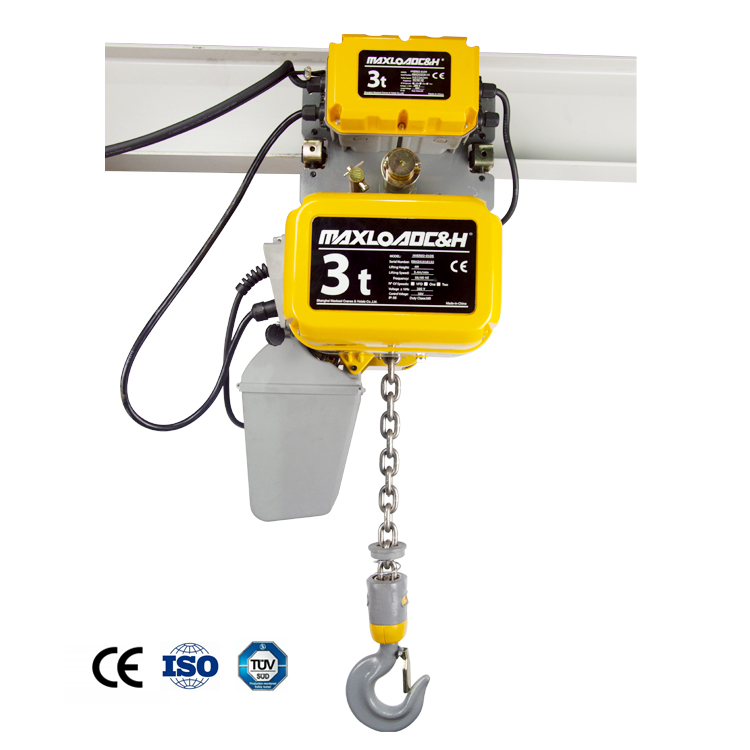
In modern factories, busy construction sites, or large equipment maintenance areas, a seemingly simple yet crucial piece of equipment is frequently seen – the electric chain hoist. Silently suspended beneath I-beam rails, it allows the operator to precisely lift, smoothly move, and safely place loads of hundreds of kilograms or even tens of tons with the touch of a button. This unassuming device is, in fact, an indispensable "silent arm" in the modern industrial system, bearing the dual mission of production efficiency and safety.
I. Core Structure and Working Principle
Although compact in appearance, the electric chain hoist boasts a precise and efficient internal structure. Its core working system mainly includes a power module, transmission mechanism, load-bearing system, and control unit.
The power module typically uses a compact three-phase or single-phase electric motor to provide the initial power for the entire device. The core of the transmission mechanism is a precisely calculated gear system that, through multi-stage reduction, converts the high speed and low torque of the electric motor into the low speed and high torque required by the drum. This conversion process is the mechanical basis for the hoist's ability to lift heavy objects.
The load-bearing system is the lifeline of the hoist's safety, consisting of a lifting chain, sprockets, and a safety brake device made of high-strength alloy steel. The chain undergoes a special heat treatment process, giving it extremely high tensile strength and wear resistance. The mechanical load brake system automatically locks upon power failure, preventing the load from falling; its reliability directly affects life safety.
The control unit is implemented through a lightweight handheld button box, allowing the operator to control the lifting, lowering, and lateral movement of the load from a safe distance. Modern high-end models further integrate intelligent limit switches, overload protection, and phase sequence protection functions, creating multiple safety barriers.
II. Technical Advantages and Application Scenarios
Compared to traditional lifting equipment, electric chain hoists exhibit several significant advantages.
Firstly, they are highly efficient and energy-saving. A 1-ton electric chain hoist requires only the power equivalent of a household vacuum cleaner to complete the lifting work that a strong man would find difficult to sustain, freeing workers from heavy physical labor and increasing efficiency several times over.
Secondly, they offer precise positioning. Electric hoists offer micro-speed capabilities, enabling precise positioning at the centimeter or even millimeter level, which is particularly important in equipment installation and precision instrument hoisting.
Thirdly, they are highly adaptable. From -20°C cold storage to 50°C steel mills, from humid harbors to dry mines, specially designed hoists can operate stably. Explosion-proof models can be used safely in flammable and explosive environments, greatly expanding their application boundaries.
As a result, electric chain hoists have penetrated every corner of industrial production: in manufacturing plants, they form aerial transport systems on assembly lines; in warehouse logistics centers, they lift piles of goods; in auto repair shops, they easily lift engines; on theater stages, they precisely adjust the position of lighting and sound equipment. Behind every successful hoisting operation, this equipment silently bears the weight and responsibility.
III.Safe Use and Standardized Management
As special lifting equipment, the safe use of electric chain hoists is of utmost importance. Standardized operating procedures and regular maintenance are the two pillars ensuring safety.
Pre-operation checks should be a fixed procedure for every use: observe the chain for twisting, cracks, or excessive wear; test the sensitivity and effectiveness of the upper and lower limit devices; confirm the reliability of the brakes. These simple steps often prevent the vast majority of accidents.
Load management is a core aspect of safety. Each hoist has a clearly marked rated load, and overloading is strictly prohibited—this is an inviolable red line. At the same time, the binding and balance of the load and the selection of lifting points are related to the safety of the entire operation.
Regular professional maintenance is equally indispensable. This includes changing the gearbox lubricating oil, checking brake pad wear, and testing the insulation of the electrical system, all of which should be performed by professionals according to a schedule. A complete equipment file, recording each inspection, maintenance, and malfunction, not only complies with regulatory requirements but is also the foundation for predictive maintenance.
IV. Technological Evolution and Future Trends
Looking back at the development history of electric chain hoists, it is a history of continuous technological evolution in pursuit of greater safety, efficiency, and intelligence. From the initial simple lifting to today's intelligent control, technological progress has never stopped.
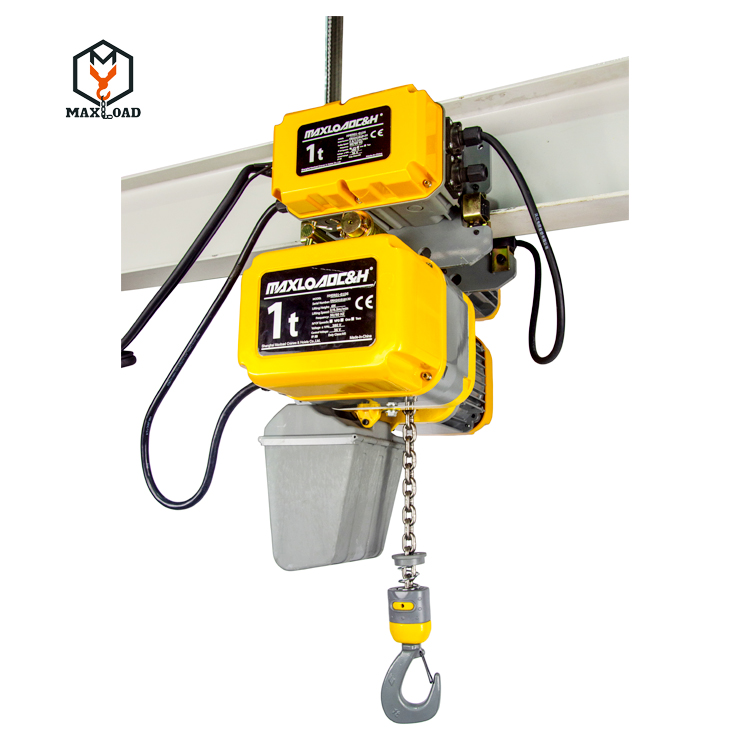
Lightweighting and high strength are direct manifestations of materials science in the hoist field. The application of new high-strength alloy steel has reduced the weight of equipment with the same lifting capacity by more than 30%, while simultaneously improving safety. Modular design significantly shortens maintenance time; replacing a single module often takes only a few minutes.
Intelligentization is the current main theme of development. Modern electric chain hoists are gradually becoming nodes in the Industrial Internet of Things (IIoT), collecting data such as load, running time, and motor temperature in real time through sensors; transmitting equipment status to the central control system wirelessly; and predicting component lifespan through big data analysis, achieving a shift from "scheduled maintenance" to "on-demand maintenance."
Human-centered design is also receiving increasing attention. Low-noise motors make the working environment more comfortable; ergonomically designed controllers reduce operator fatigue; clear status indicator lights and fault self-diagnosis functions make communication between equipment and humans smoother.
Conclusion:
The electric chain hoist, this often-overlooked industrial equipment, is actually one of the solid foundations of modern material civilization. It is not merely a simple lifting tool, but an indispensable link in the process of industrial intelligence and automation. In countless factories, workshops, and docks, it silently undertakes the most arduous tasks, freeing up human resources, ensuring production safety, and propelling industrial civilization forward.
When we witness heavy objects being effortlessly lifted and precisely moved, we might consider this: it is these seemingly ordinary industrial devices that form the material foundation of modern society. The history of the electric chain hoist is, to some extent, a microcosm of the history of industrial technological progress—from fulfilling basic functions to pursuing higher efficiency, and then to achieving intelligence and humanization. Its future will undoubtedly see deep integration with trends such as Industry 4.0 and intelligent manufacturing, continuing to play an irreplaceable and crucial role in humanity's journey of transforming the material world.
 0086 156 1824 5535
 0086 156 1824 5535