Electric Chain Hoists and Crane Applications
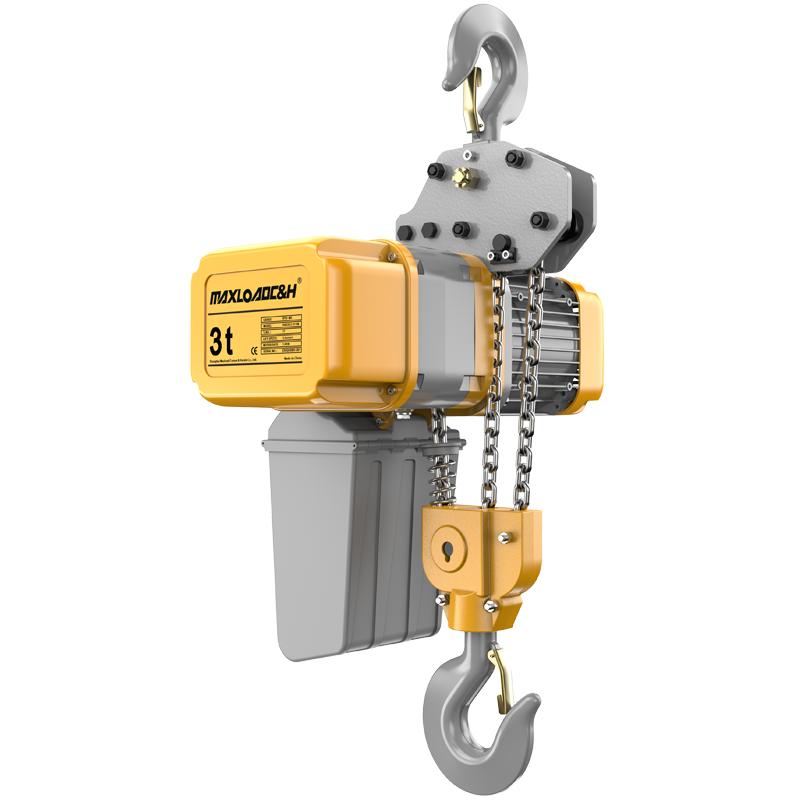
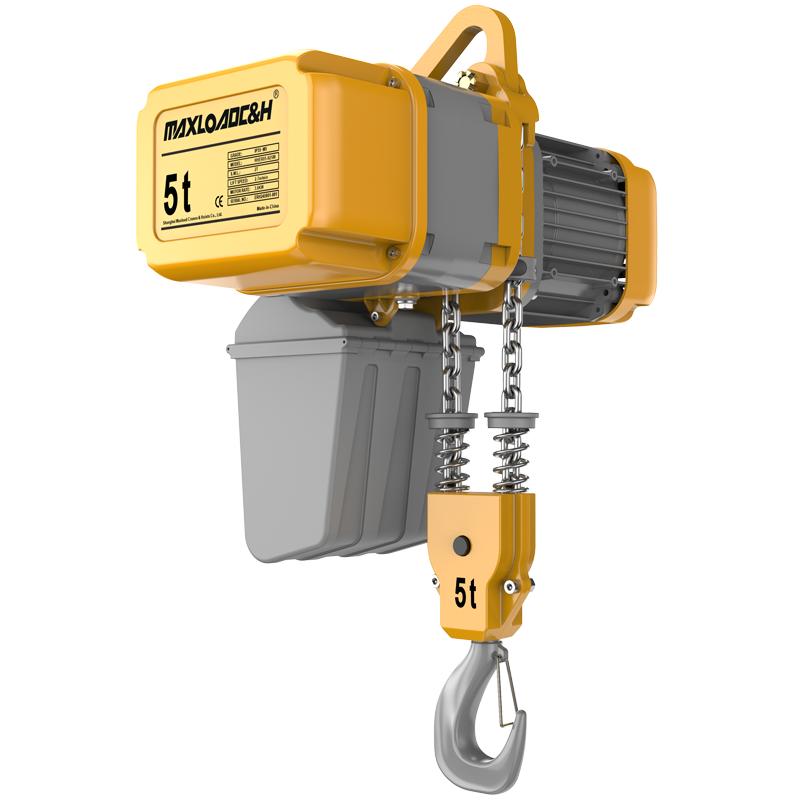
In modern industrial production, material handling is a crucial link affecting overall efficiency. Electric chain hoists, with their small size, light weight, and robust structure, have become ideal lifting equipment in many workshops.
When combined with different types of crane systems, they can achieve unexpected efficiency.
KBK rail cranes, as common lifting equipment, are widely used in combination with electric chain hoists. This combination improves work efficiency while significantly enhancing the safety and flexibility of the working environment.
I. Types of Electric Chain Hoists
Based on function and lifting method, electric chain hoists are mainly divided into fixed, mobile, and low-headroom types.
Based on lifting speed, they can be divided into constant-speed and variable-frequency operating types.
Variable-frequency electric chain hoists, also known as dual-speed electric chain hoists, can achieve high-speed operation as well as low-speed operation depending on the nature of the goods and operational safety requirements.
When lifting simple objects with speed requirements, the remote control can be adjusted for high-speed operation; while for lifting large, heavy objects or requiring precise placement, a slow-speed mode can be selected to ensure safe lifting and accurate operation.
The electric chain hoist's structural design makes it small, lightweight, and robust.
Its main components are maintenance-free, requiring no replacement during safe and standardized use, only routine maintenance.
The high-strength alloy steel sprocket assembly requires no lubrication, and the dual-brake system provides enhanced safety.
II. KBK Rail System and Chain Hoist Combination
The KBK rail system is a modular lifting device, mainly composed of rails, suspension devices, a traveling trolley, and some functional components. All modules are standard components.
While installing an electric chain hoist on a KBK rail may seem complex, it is not difficult to operate. Simply follow the installation instructions strictly and pay attention to safety details.
On the KBK rail, the electric chain hoist needs to be installed on a trolley; a trolley needs to be installed between the two rails.
This type of track can be various in form—straight, curved, or intersecting with other tracks—offering a wide variety of options, all based on convenience, practicality, safety, and efficiency.
KBK combination cranes include various types of lifting equipment such as monorail cranes, single-girder cranes, double-girder cranes, telescopic beam cranes, and stacker cranes, with an extremely wide range of applications.
They are particularly suitable for modern production conveyor lines, characterized by high reliability, high stability, and strong adaptability.
III. Safety Technical Specifications and Operating Requirements
When electric chain hoists are used in conjunction with cranes, strict safety technical specifications must be followed.
Both the chain and the electric hoist should have a safety factor of at least five and be equipped with an automatic locking device that automatically locks the load when the electric hoist stops.
The electric chain hoist should also provide a limit stop device to prevent excessive travel if the operating handle is not released in time.
Workers must not ride on any chain or electric hoist load. If manual load balancing is required, it must be done from a safe distance.
According to relevant regulations, electric chain hoists installed on cranes are not classified as special equipment and do not require special equipment management.
However, this does not mean that safety operation requirements can be ignored; enterprises should still establish strict safety operation procedures.
IV. Advantages and Application Scenarios Analysis
The advantages of using electric chain hoists in conjunction with KBK cranes are significant.
The KBK system is easy to install and debug; the profiles and standard modules only need to be bolted together, saving factory space and area.
It greatly reduces manpower, improves production efficiency, thereby reducing energy consumption and improving enterprise benefits.
The system can be operated manually, as well as automatically or semi-automatically, with high efficiency.
Due to the equipment's light weight and the easy operation of the trolley, operators can move it easily.
Modular design allows for flexible product combinations to quickly meet customer requirements and personalized designs, while also simplifying maintenance.
This combined equipment is widely used in various scenarios: In machining workshops, it can be used to handle processed parts, molds, etc.;
In the electronics industry, it can accurately move electronic components and equipment parts to designated locations;
In the warehousing and logistics industry, it can be used in conjunction with shelving to realize the loading, unloading, handling, and stacking of goods.
V. Maintenance and Troubleshooting
The maintenance of electric chain hoists and crane systems is relatively simple. The main components adopt a maintenance-free design and do not require replacement during safe and standardized use; only routine maintenance is needed.
During daily inspections, workers only need to check for deformation of the rails, the smoothness of the trolley, and the firmness of the connections.
Regularly adding lubricating oil to the rails and bearings and cleaning dust and debris from the equipment surface will ensure normal operation.
When common faults occur, corresponding solutions need to be taken: If the trolley does not move smoothly, check for debris or deformation in the rails and check if the bearings of the trolley are lacking lubricating oil.
If the electric hoist brake fails, stop using the equipment immediately, check if the brake pads of the braking device are severely worn, and check if there is poor contact in the braking circuit. If abnormal noises occur during equipment operation, check all connections for looseness, tighten any loose bolts, and check the track interface for flatness.
With industrial development, the combined application of electric chain hoists with KBK and overhead cranes is expanding from traditional fields to more emerging scenarios.
Whether in the handling of automotive parts or in the sorting process of e-commerce warehousing, this combined equipment demonstrates strong adaptability.
The flexibility brought by modular design allows companies to recombine systems according to production changes, extending equipment lifecycle and achieving long-term return on investment.
The future of lifting equipment lies in the perfect combination of flexibility, safety, and efficiency, and the combination of electric chain hoists and cranes is an outstanding example of this trend.
 0086 156 1824 5535
 0086 156 1824 5535