Synergistic Power: The Efficiency Revolution of Electric Hoists and Cranes
In modern industrial and mining enterprises, warehousing and logistics, assembly workshops, and even port terminals, efficient and safe material handling is the lifeline maintaining the pulse of production. Within this vast system, two types of equipment play indispensable roles through their unique collaborative mechanisms: the structurally robust boom crane and the agile and efficient electric hoist. Their combination is not a simple mechanical addition, but a profound revolution in space utilisation, ergonomics, and production efficiency.
I. Each Performing Its Own Duty—Independent Analysis of the Two Core Components
Boom Crane: The Architect of Space and the Definer of Scope
The core design concept of a boom crane lies in its spatial coverage capability. It typically consists of a sturdy column (fixed or mobile) and a rotatable or non-rotatable boom. This boom, like the arm of a mechanical giant, defines an efficient circular or fan-shaped working area with its length as the radius.
Sturdy Structure and Solid Foundation: Whether it's a column-mounted crane fixed to the foundation, a wall-mounted crane that can move along wall tracks, or even a small "boom" on a bridge/gantry crane capable of covering a larger rectangular area, its primary task is to provide a stable and reliable support structure. This structure determines the boundaries of the "battlefield" for lifting operations, bearing all loads and impacts.
Flexible Degrees of Freedom of Movement: The core movements of a boom crane are rotation (for jib cranes) and linear movement. This allows lifted objects to be easily moved from point A to point B, precisely covering workstations, machine tools, or storage areas, greatly reducing blind spots in horizontal movement.
A Pioneer in Ergonomics: It optimises the handling path of heavy objects to the shortest possible distance. Operators do not need to exert effort to push heavy objects long distances, and it avoids the passageway obstruction and safety risks associated with using ground transportation, fundamentally improving the working environment and reducing operator fatigue and the risk of workplace injuries.
Electric Hoists: Precision Executors in the Vertical Dimension
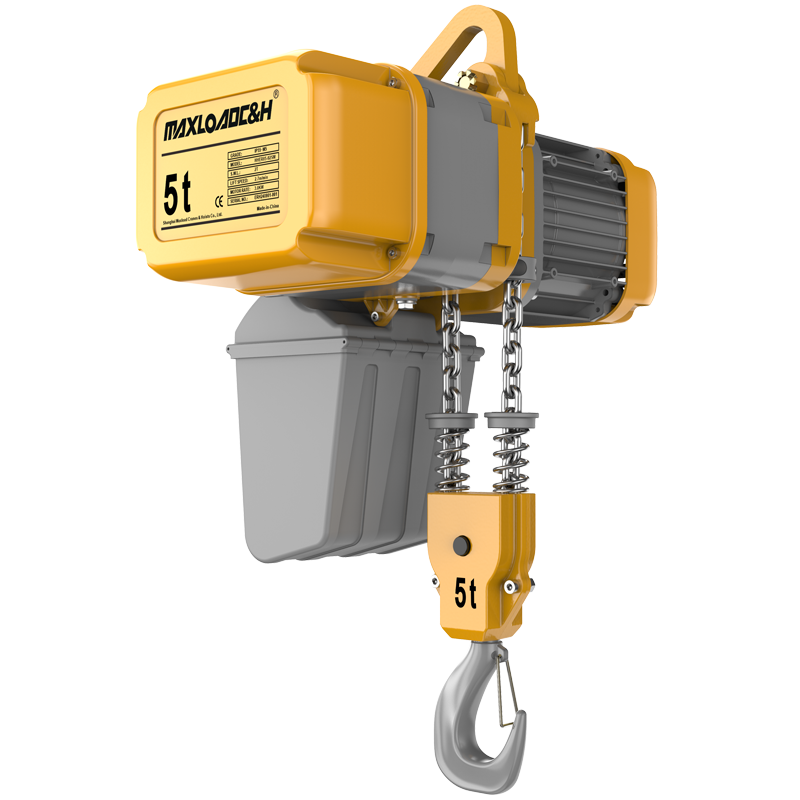
If boom cranes define the horizontal "plane," then electric hoists are the sophisticated tools for vertical "point" operations on that plane. They specialise in the vertical lifting and precise positioning of heavy objects.
Power Source, Efficiency Core: Electric hoists are electrically driven, replacing the laborious operation of traditional manual hoists. Operators can easily control the lifting and lowering of heavy objects via handheld buttons or remote controls, with smooth speed and precise control. This makes frequent, repetitive lifting operations effortless.
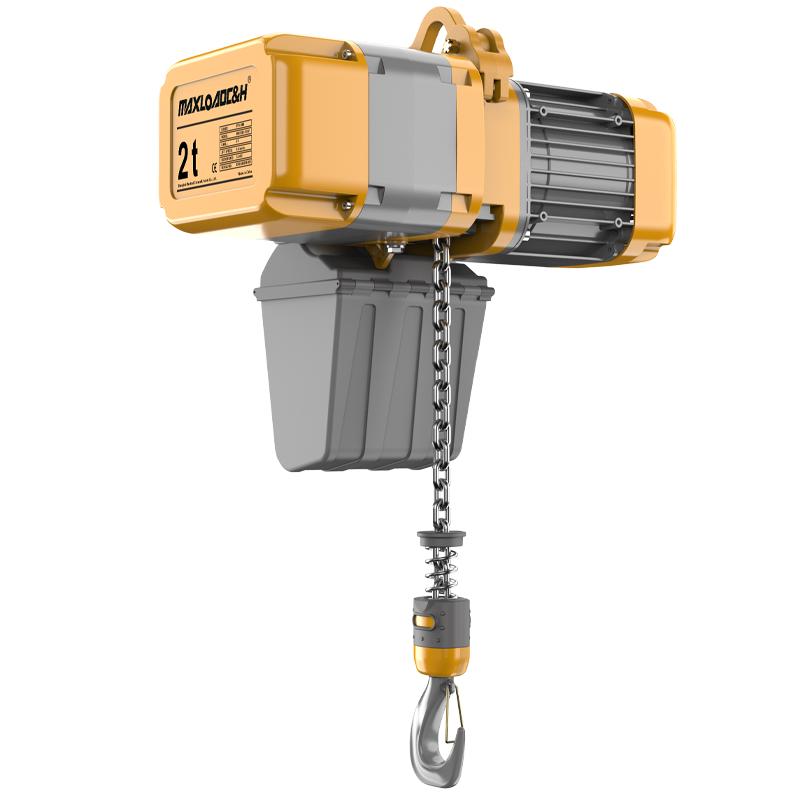
Compact Structure, Powerful Load Capacity: Modern electric hoists are extremely compact in design, achieving astonishing lifting capacity within a limited size and weight. This high power density makes them ideal for space-constrained environments, easily integrating into various support structures.
Safety and Intelligent Protection: Electric hoists typically incorporate multiple safety devices, such as overload protectors, upper and lower limit switches, and emergency braking systems. These devices ensure automatic power cut-off in case of overload or operation to extreme positions, effectively preventing equipment damage and accidents, and are an indispensable safety barrier in lifting operations.
II. Perfect Combination – Synergistic Effect of 1+1>2
Individually, boom cranes and electric hoists each have their advantages. However, when combined, they create a qualitative leap, constructing a highly efficient and flexible "workstation-level" material handling system.
1. Complementary Functions, Covering Three-Dimensional Space
The boom crane provides broad coverage in the horizontal plane (X-axis and Y-axis), while the electric hoist handles precise movement in the vertical direction (Z-axis). Together, they achieve precise arrival at any point in three-dimensional space. The operator can easily remove a part from the warehouse rack, move it horizontally above the machine tool, and then slowly lower it to the precise installation position—the entire process is seamless, smooth, and efficient.
2. Combining Rigidity and Flexibility, Adapting to Diverse Scenarios
This combination demonstrates remarkable adaptability. In the machining workshop, it can serve multiple machine tools, performing mold changes and workpiece loading and unloading; in the assembly line, it can sequentially hoist large components to various workstations; in the maintenance area, it can disassemble and install heavy equipment. The system can be customized according to the specific layout of the workshop, achieving a "tailor-made" solution.
3. Cost Reduction and Efficiency Improvement, Enhancing Overall Benefits
From an economic perspective, this collaboration brings multiple benefits:
Reduced Labor Costs: One person can complete the heavy object handling that previously required multiple people, significantly improving per capita efficiency.
Reduced Operation Time: Rapid positioning and movement shorten the production cycle and accelerate material flow.
Optimized Space Utilization: Fully utilizes the upper space of the factory, freeing up valuable ground area for production or warehousing.
Ensuring Production Safety: Significantly reduces accidents such as product bumps and personnel sprains caused by manual handling, improving the overall operational safety level.
III. Selection and Application – Considerations for Building an Efficient System
To fully realize the potential of this system, scientific selection and planning are crucial.
Demand analysis is fundamental: First, core parameters such as maximum lifting capacity, operating frequency, coverage area, lifting height, and working environment (e.g., whether explosion-proof or corrosion-resistant requirements exist) must be clearly defined.
Structural matching is crucial: The structural form and load-bearing capacity of the boom crane must match the weight and workload of the selected electric hoist. The requirements for structural rigidity and drive system differ drastically between light-load, high-frequency, and heavy-load, low-speed conditions.
Evolution of control methods: In addition to traditional wired control handles, the widespread adoption of wireless remote control technology has brought unprecedented freedom and safety to operation. Operators can select the optimal viewing angle to direct hoisting, staying away from potentially hazardous areas.
Installation and maintenance: Professional installation is essential for safe operation. Regular inspection, lubrication, and maintenance of key components such as wire ropes (or chains), brakes, and limit switches are essential for extending equipment life and eliminating potential safety hazards.
Conclusion: Towards an Intelligent Future
The combination of electric hoists and boom cranes has long transcended the realm of mere tools; it has become a classic energy unit in modern industrial logistics. By integrating sensors, IoT modules, and automated control systems, these devices can upload operational data in real time, predict maintenance needs, and ultimately integrate into the overall smart factory's scheduling system, achieving fully unmanned automated hoisting and handling.
In short, the synergy between electric hoists and boom cranes is a perfect fusion of mechanical engineering and human ingenuity. With simple principles, they construct complex spatial handling capabilities; with reliable performance, they safeguard production safety and efficiency. In the foreseeable future, this "golden duo" will continue to be a crucial component of the industrial backbone, driving various industries steadily towards greater efficiency, safety, and intelligence.
 0086 156 1824 5535
 0086 156 1824 5535