The Safe and Efficient Use of Electric Hoists and Overhead Cranes
In modern factory workshops, bustling construction sites, and vast logistics warehouses, we often see a giant steel arm moving smoothly in the air, effortlessly lifting, shifting, and precisely placing tons of heavy objects. This indispensable lifting system typically consists of two core components: the electric hoist and the overhead crane. Like a perfect combination of power and precision, they are the "muscles" and "nerves" of industrial production, and their correct use directly affects production efficiency, cost control, and even personal safety.
I. A Perfect Partner with Dedicated Functions
To use these tools effectively, one must first understand their principles. Although electric hoists and overhead cranes work together, their functional roles are distinct.
Electric Hoist: The Execution End of Power
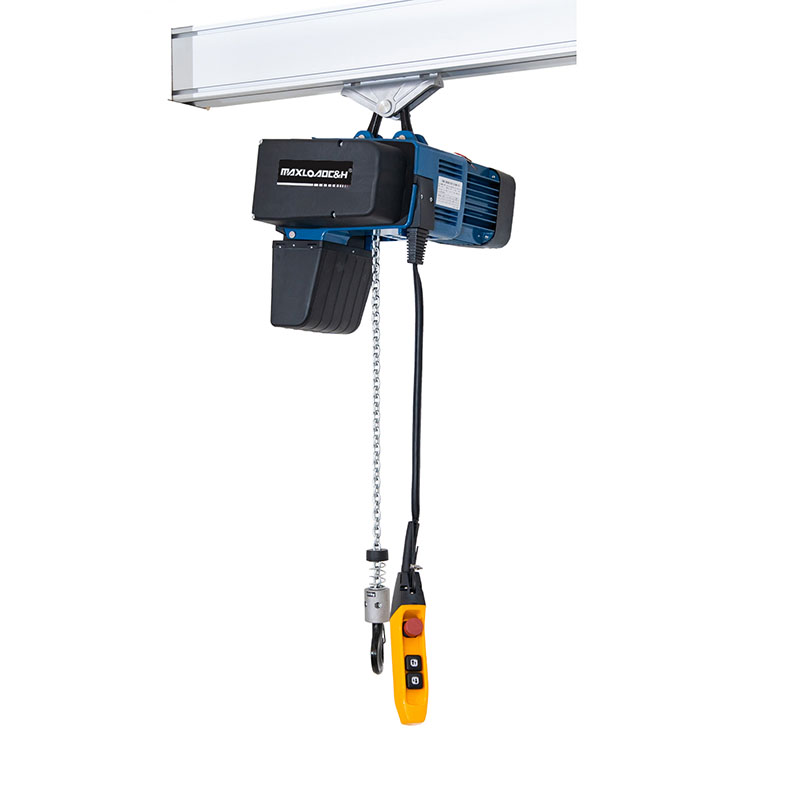
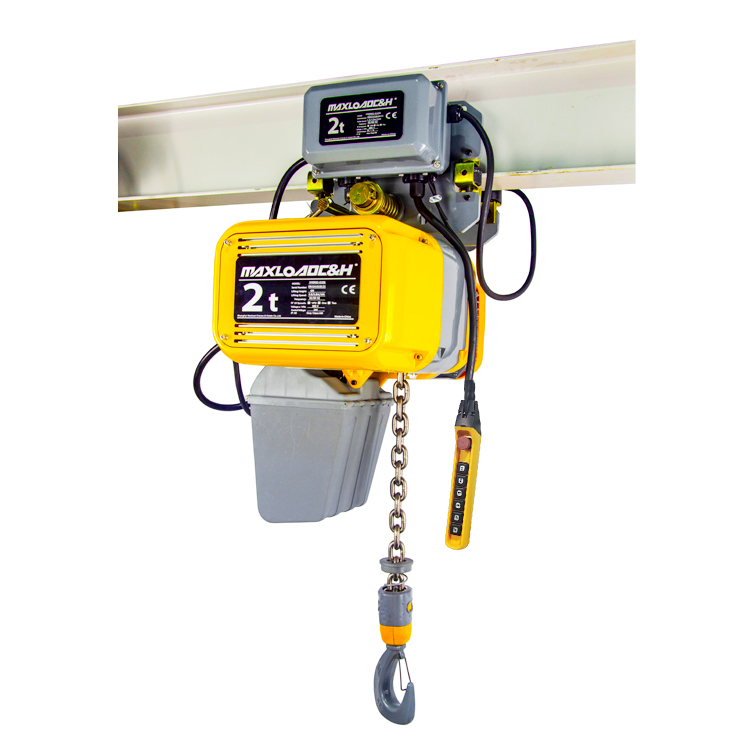
The electric hoist is the part that directly contacts the heavy object in lifting operations; it can be understood as a highly integrated "vertical lifting mechanism." It is usually suspended from a support point, and a motor drives a drum to raise and lower the wire rope or chain, thereby achieving the lifting and lowering of the heavy object.
Core Function: Pure vertical lifting. It lacks the ability to move horizontally over long distances.
Key components: Hoisting motor (provides power), reducer (reduces speed and increases torque), drum (winds the wire rope), hook (connects the load), control system (receives and executes operating commands).
Overhead Crane: A Moving Aerial Rail An overhead crane, also known as a bridge crane, provides a broad platform for the electric hoist. It is a large metal structure spanning the workshop or site, consisting of a main beam, end beams, and a traveling mechanism.
Core Function: Provides the electric hoist with the ability to move in the X-axis (left-right) and Y-axis (front-back) directions. The "main carriage" of the overhead crane runs longitudinally along the tracks on both sides of the workshop, while the "secondary carriage" runs laterally on the main beam track. Together, they cover the entire working area from a single point (the electric hoist's hook).
Cooperative Mode: The electric hoist is mounted on the "secondary carriage" of the overhead crane. During operation, the crane's movement is controlled to precisely position the unloaded hook above the load; then, the electric hoist vertically lifts the load; finally, the crane's movement transports the load to the target location.
In short, the crane determines "where the load can go," while the electric hoist determines "how high to lift and how low to lower." They complement each other, forming a complete three-dimensional material handling solution.
II. Rigorous Standards are the Lifeline of Safety In lifting operations, safety is always the top priority. Any negligence can lead to equipment damage, product scrapping, or even serious personal injury accidents. Therefore, operations must follow a rigorous set of procedures and standards.
1. Pre-operation "Triple Check"
Environmental Check: Observe the crane track and surrounding area for obstacles to ensure the operating area is unobstructed. Check if the work area lighting is sufficient and if personnel on the ground are in safe positions.
Equipment Inspection (Daily Inspection):
No-load Test Run: Start the overhead crane and electric hoist, and perform small-scale, no-load lifting, lowering, left-right, and forward-backward movements to check for smooth operation and any abnormal noise or vibration.
Safety Device Verification: Check the sensitivity and effectiveness of the limit switches (lifting, lowering, left-right, and forward/backward limits). The emergency stop button must function reliably. Observe whether the brakes can reliably engage when the power is off.
Visual Inspection of Key Components: Carefully inspect the hook for cracks, wear, or deformation; the wire rope for broken strands, kinks, flattening, or other defects; and the chain for elongation, rust, or cracks.
2. Eight Rules of Conduct During Operation
Overloading is Strictly Prohibited: This is an ironclad rule for lifting operations. Each piece of equipment has a clearly defined rated load, which must be strictly adhered to. Overloading can lead to structural deformation, wire rope breakage, and catastrophic consequences.
Smooth Lifting, Avoiding Oblique Lifting: Before lifting, ensure that the hook is perpendicular to the center of gravity of the load. When lifting, first slightly tension the wire rope or chain by intermittently tightening it to ensure a secure hoisting before lifting smoothly. Diagonal lifting generates significant horizontal forces, which can easily lead to equipment instability, load swaying, or even disengagement.
Follow commands and use unified signals: In complex operations with obstructed visibility or involving multiple personnel, a single person must be designated as the commander, and unified, clear hand signals or whistle signals must be used. Operators must be fully focused and only obey the instructions of the designated commander.
Avoid pedestrians and sound warning bells: When moving heavy objects, ensure that there is no one below or in front of the path. Sound the warning bell before starting the crane or passing through someone else's work area.
Keep heavy objects low and move smoothly: During handling, lift the heavy object to a height just above ground obstacles, not too high. Move smoothly and slowly, avoiding sudden starts and stops to prevent the heavy object from swaying significantly in the air.
Do not leave suspended in the air: It is strictly forbidden to leave heavy objects suspended in the air for extended periods. If operators need to leave their posts, they must lower the load to the ground and disconnect the main power supply to the equipment.
Be wary of special materials: When hoisting molten metal (such as molten steel), flammable, explosive, or toxic substances, specialized lifting equipment must be used, and a more stringent safety plan must be in place. Extra caution is required during operation.
In emergencies, stop immediately: If any abnormal noise, control system malfunction, or potential collision occurs, immediately press the emergency stop button and report to superiors.
3. Post-operation "Return and Handover"
After work, the electric hoist should be raised to its maximum position, the crane parked in the designated location, the main power supply turned off, and a shift handover record filled out, accurately recording the equipment's operating status and any abnormalities.
III. The Wisdom of Prevention
"To do a good job, one must first sharpen one's tools." Regular maintenance is key to ensuring the long-term stable operation of the electric hoist and crane, and extending their service life.
Daily maintenance: Performed by the operator, mainly involving cleaning, lubrication, and confirmation of daily inspection items.
Regular Inspections (Weekly/Monthly): Conducted by professional maintenance personnel, these inspections include measuring brake pad wear, checking motor insulation resistance, tightening all connecting bolts, and testing the reliability of all safety devices.
Comprehensive Maintenance (Annual Inspection): Following the equipment's instruction manual and relevant national safety regulations, a comprehensive disassembly, inspection, adjustment, and replacement of vulnerable parts (such as brake rings, wire ropes, rope guides, etc.) and performance testing are performed, culminating in a formal maintenance report.
Establishing comprehensive equipment files to record each inspection, maintenance, repair, and malfunction is crucial for predictive maintenance and preventing unexpected downtime.
Conclusion: Electric hoists and overhead cranes, this "golden duo" in the industrial field, with their powerful strength and precise control, greatly liberate manpower and drive production progress. However, behind this power lies a heavy responsibility for safety. Only through systematic understanding, standardized operation, and meticulous maintenance can we truly master this power, ensuring that the steel's dance is both powerful and beautiful, imbued with the wisdom of safety, ultimately safeguarding the safe production and efficient operation of enterprises. Every smooth lift and every precise landing is the best testament to skill, responsibility, and discipline.
 0086 156 1824 5535
 0086 156 1824 5535