Standardized Use and Safety Management of Electric Hoists and Overhead Cranes
In modern factory workshops, bustling construction sites, and huge logistics warehouses, we can always see them: some small and compact, suspended from steel beams; others massive, spanning the entire workshop. These are electric hoists and overhead cranes (also known as bridge cranes), indispensable lifting equipment in modern industrial production. Like the "arms" of industry, they undertake key tasks such as material handling, equipment installation, and product assembly, playing a vital role in improving production efficiency and achieving automated processes. However, this powerful force, if not properly managed, can instantly transform into enormous risks. Therefore, a deep understanding of their working principles, strict adherence to operating procedures, and the establishment of a strong safety management system are essential courses for every practitioner.
I. Understanding the "Twin Brothers"
Although often mentioned together, electric hoists and overhead cranes are conceptually distinct yet closely related.
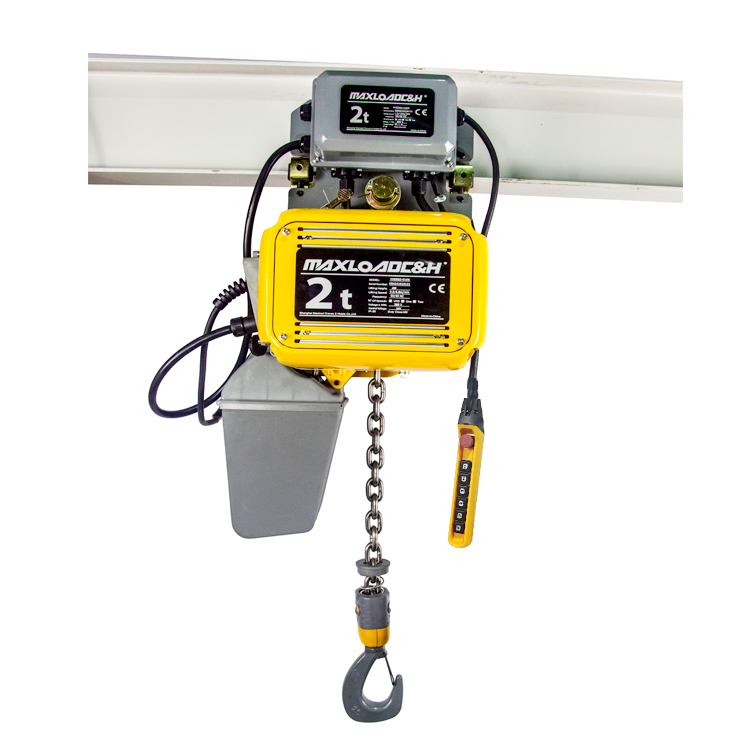
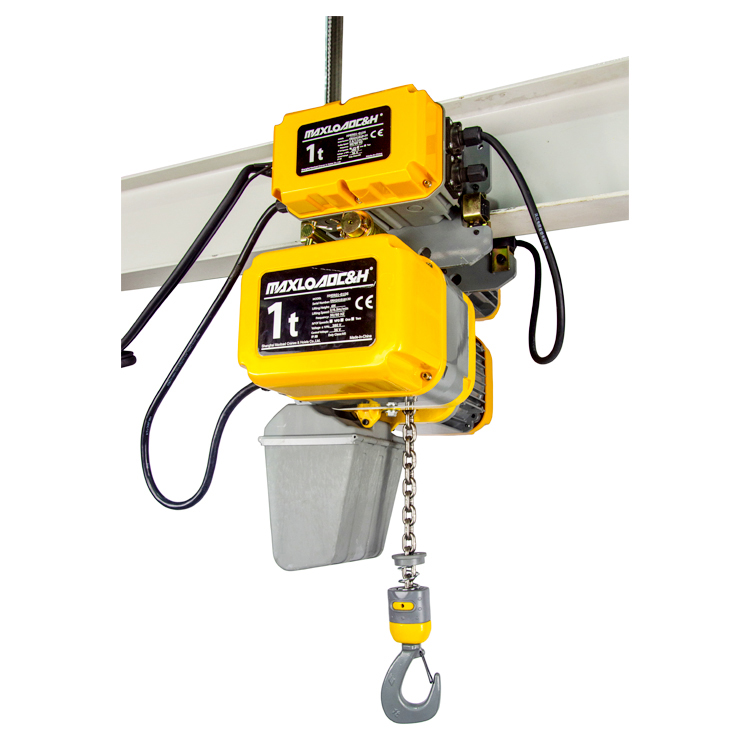
An electric hoist can be seen as the "execution terminal" of lifting operations. It is a small and lightweight lifting device whose core function is to complete a single "vertical lifting" action. Electric hoists, depending on the design, can be individually fixed to a support point and used as a simple lifting device.
Overhead gantry cranes, on the other hand, are a more complex "system." They are typically a large metal structure, consisting of a bridge frame made up of main beams and end beams, erected on elevated tracks on both sides of the workshop. The "heart" and "arm" of the overhead gantry crane are the electric hoists mounted on it. A complete overhead gantry crane not only allows the electric hoist to move laterally on the bridge frame but also allows the electric hoist itself to move longitudinally along the bridge frame. This constitutes a three-dimensional material handling space covering the entire workshop's working area.
In short, the electric hoist is the core lifting component of the overhead gantry crane, while the overhead gantry crane is the functional extension and integration platform of the electric hoist. Their relationship is like that of an arm and a fist; the electric hoist provides the skeleton for the crane's movement and support, while the electric hoist provides the gripping and lifting power.
II. Mastering the "Industrial Arm"
To safely and efficiently master this "industrial arm," a rigorous set of operating procedures must be followed. This is not only a technical issue but also a manifestation of responsibility and discipline.
1. Comprehensive Pre-Operation Inspection
Pre-operation inspection is the first line of defense against accidents and must not be a mere formality.
Environmental Inspection: Observe the track and the surrounding area for obstacles to ensure a clear travel path. Check that the lighting in the work area is adequate.
Structural Inspection: Visually inspect the main beam, end beams, and other metal structures of the hoist for obvious deformation, cracks, or corrosion.
Mechanical Inspection: Focus on checking the electric hoist's wire rope (or chain) for broken strands, kinks, deformation, or excessive wear; check the hook for cracks, increased opening, or other defects; and ensure the brakes are sensitive and reliable.
Electrical Inspection: Confirm that safety devices such as limit switches and emergency stop switches are effective. Listen for any abnormal sounds during equipment operation and smell for any burning odors.
2. Focus and Caution During Operation
Clear Signals and Designated Commander: A single, standardized commander must be designated, and uniform hand signals or whistle signals must be used. Operators must strictly follow the signals; multiple operators giving conflicting commands are strictly prohibited.
The dialectical unity of stability, accuracy, and speed: Lifting operations strive for stability while seeking accuracy, and accuracy while seeking speed. Starting, running, and braking must all be smooth to avoid significant swaying of the load. Precise positioning and accurate landing are essential. However, speed must be built upon a foundation of safety and stability; sacrificing safety for speed is strictly prohibited.
Adhere to the "Ten Don'ts" golden rule: This is an ironclad rule summarized from countless painful lessons in lifting operations. Its core contents include: Don't lift if the command signals are unclear; don't lift if the load is overloaded or the weight is unclear; don't lift if people or floating objects are on the load; don't lift if safety devices are malfunctioning; don't lift in dim lighting or with poor visibility; don't lift if the load is not securely secured; don't lift if the load has sharp edges without protective measures; don't lift objects buried underground or solidified on the ground; don't lifan angle; don't lift flammable or explosive materials without safety measures.
Avoid these taboos: It is strictly forbidden to pass under or linger under the load; it is strictly forbidden to directly pull people or objects with the hook; it is strictly forbidden to engage in activities unrelated to the work during operation (such as making or receiving phone calls). 3. Post-Operation Storage and Maintenance
After work, it's not enough to simply leave. The overhead crane should be parked in the designated location, the electric hoist raised to its upper limit, the hook securely retracted, and the main power supply disconnected. A detailed operation log should be filled out, accurately reflecting the equipment's condition and any problems found, providing a basis for subsequent maintenance.
III. Building a Strong "Lifeline"
Relying solely on the operator's individual awareness is far from sufficient for safety; a systematic safety management system must be established.
Certified Operation and Continuous Training: Overhead crane operators and signalmen are special operations personnel and must undergo rigorous professional training and assessment, obtaining the corresponding qualification certificates before being allowed to work. Furthermore, safety training requires regular refresher courses to continuously strengthen safety awareness and skills.
Regular Inspection and Daily Maintenance: According to national regulations, overhead cranes must undergo regular supervision and inspection by legally authorized inspection agencies. Simultaneously, the company itself must implement daily, weekly, monthly, and annual inspection systems, immediately rectifying any identified hazards and never allowing equipment to operate with defects. Maintenance is not a cost, but an investment in life and property.
Clearly define responsibilities and strengthen supervision: Clearly define the respective responsibilities of equipment management personnel, operators, and maintenance personnel, and establish a clear accountability mechanism. The safety management department should fulfill its supervisory responsibilities, using methods such as inspections and spot checks to ensure that all safety measures are implemented effectively.
Cultivate a safety culture: The highest level of safety management is to create a cultural atmosphere where "everyone talks about safety, everything is for safety, and safety is always on everyone's mind." Encourage employees to proactively report safety hazards and stop violations, making safety an intrinsic need and conscious action for everyone.
Conclusion:
Electric hoists and overhead cranes, as representatives of industrial power, are silent yet powerful. They can lift heavy loads and propel industry forward, but they can also cause irreparable tragedies due to momentary negligence. The key to transforming this power from "good" to "evil" lies in the hands of everyone who designs, manages, operates, and maintains it. Only by treating safety with reverence, implementing procedures with rigor, and building defenses with a systems mindset can we truly tame this powerful force, ensuring it always operates on a safe track, continuously empowering human production activities, and becoming a reliable cornerstone for driving social development, rather than a Damocles' sword hanging over our heads.
 0086 156 1824 5535
 0086 156 1824 5535