Leveraging Power: A Guide to Electric Hoists and Jib Cranes
In modern industrial production workshops, warehousing and logistics centers, and even construction sites, two seemingly simple but crucial pieces of equipment are ubiquitous: the electric hoist, which moves flexibly along a fixed track or wire rope, and the jib crane, which covers a specific circular working area with its unique rotating arm. Although inconspicuous, they form the backbone of vertical and horizontal material movement, playing an irreplaceable role in improving efficiency and ensuring safety. Understanding the technical core and applicable scenarios of both is a key prerequisite for scientific equipment selection and optimizing production processes.
I. Electric Hoists: The Precision Power Core for Vertical Lifting
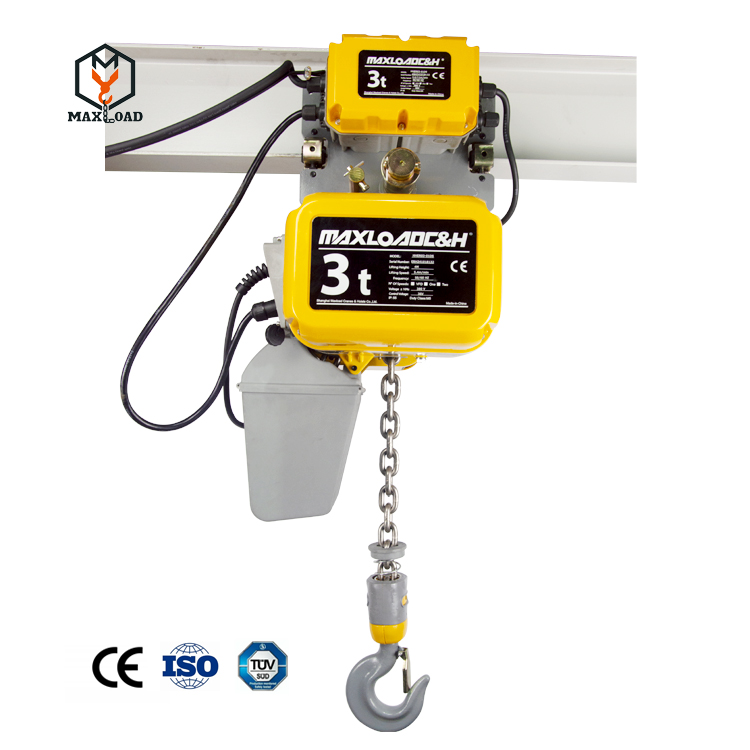
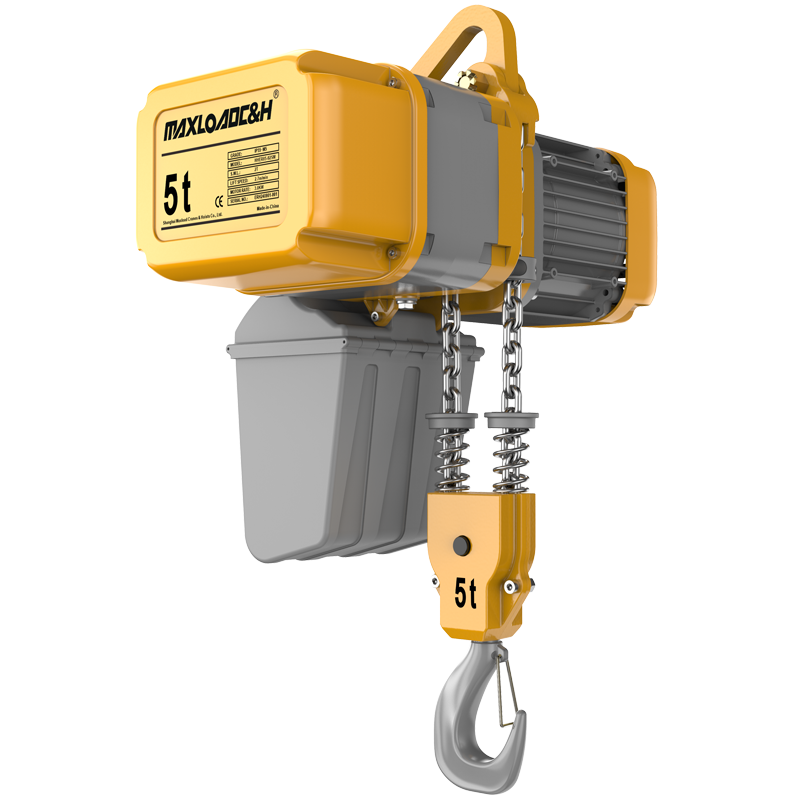
An electric hoist is essentially a highly integrated electrically driven lifting unit. Its core structure typically includes a motor, reduction gear mechanism, drum or sprocket, and hook device. The motor provides power, which is then significantly increased in torque by a precision reducer, driving the drum to wind the wire rope or the sprocket to drive the lifting chain, thus achieving the vertical lifting and lowering of the load. Based on the lifting medium, they are mainly divided into two categories: wire rope type and chain type. The former, with its high strength and large load-bearing potential, is suitable for medium to heavy loads and larger lifting heights; the latter has a more compact structure, lighter weight, and is easier to install, performing flexibly in frequent lifting and medium to low load conditions.
In addition to the basic lifting function, electric hoists are often combined with various traveling mechanisms to expand their operating range. It can be installed on an I-beam track to form a simple beam crane, enabling linear or curved path movement; it can also serve as the lifting mechanism for the trolley of a gantry crane or bridge crane, precisely positioning materials in two or even three dimensions. Its control methods have evolved from traditional button-type wired control to wireless remote control, and even integration into fully automated material handling systems, achieving a higher degree of automation and intelligence.
The technical advantages of electric hoists lie in their specialization and high efficiency. They modularize the lifting function, making design, manufacturing, and maintenance more focused, and typically feature adjustable lifting speed, sensitive and reliable braking, and comprehensive overload protection. Its limitations primarily lie in the fact that a simple hoist unit only covers a vertical line at a single "point"; even with a traveling mechanism, its working area is usually limited to the linear path of the track. For scenarios requiring coverage of a "surface" or multi-directional delivery at a fixed point, its flexibility is somewhat insufficient.
II. Jib Crane: A Flexible Arm for Local Material Handling
The jib crane offers another approach to solving this problem. Its basic form consists of a rotating cantilever beam mounted on a sturdy column (fixed type) or base (mobile type). The front end of the arm is equipped with a lifting mechanism (often an electric hoist), and the rear end is usually fitted with a counterweight to balance the load moment. This classic mechanical structure allows the hoist installed at the end of the arm to easily cover a circular or fan-shaped working area centered on the column and with a radius equal to the arm length.
The appeal of the jib crane lies in its excellent spatial accessibility and intuitive operation. By rotating the cantilever and operating the hoist, the operator can easily lift and move workpieces to any position within the working area, like a dexterous mechanical arm. It is particularly suitable for distributing materials from a central supply point to multiple surrounding workstations, or for frequent loading and unloading operations next to machine tools or assembly lines. Fixed-column jib cranes are structurally stable and suitable for long-term fixed workstations, while mobile types (such as wall-mounted or wheeled base types) offer the flexibility to change the work location as needed.
However, the capabilities of the jib crane are strictly limited by its structural mechanics. Its lifting capacity depends not only on the rated load of the lifting mechanism, but more importantly on the bending and overturning resistance of the cantilever structure (especially the column and slewing bearing). Therefore, with the same arm length, its rated lifting capacity is usually far less than that of a bridge crane of the same specifications. Furthermore, its working range is strictly limited to the fan-shaped area of the cantilever's rotation, and it cannot achieve the coverage of the entire workshop span like a bridge crane.
III. Collaboration and Selection: Scene-Based Rational Decision-Making
Electric hoists and jib cranes are not mutually exclusive competitors; in practice, they often work together, complementing each other's strengths. For example, on a large assembly line, an overhead bridge crane (equipped with a high-tonnage electric hoist) might be responsible for lifting large components from the warehouse across different assembly areas, while next to each specific workstation, a lightweight jib crane is configured for precise operation by workers to accurately position and fine-tune components on jigs and fixtures. This combination achieves an efficient integration of "large-scale rough positioning" and "small-scale precise operation."
When selecting suitable equipment for a specific application scenario, the following dimensions should be systematically evaluated:
1. Load Characteristics and Operating Range: Clearly define the maximum lifting capacity, the usual load range, the required lifting height, and whether the horizontal area to be covered is linear, fan-shaped, or a large rectangular area. For fixed points and multi-directional delivery in a fan-shaped area, jib cranes have a clear advantage; for long-distance linear transportation or large-area coverage, bridge/gantry cranes with hoists are more suitable.
2. Usage Frequency and Process: Analyze whether material handling is continuous and frequent, or intermittent. Workstations with frequent use require higher reliability, ease of operation, and ergonomics from the equipment. The intuitive operation of jib cranes significantly reduces the labor intensity of workers.
3. Space Constraints and Installation Conditions: Evaluate the factory building height, the load-bearing capacity of columns or walls, floor space, and whether there are existing tracks that can be utilized. Fixed jib cranes require a solid foundation or wall; electric hoist cranes require a reliable track support structure.
4. Control and Automation Requirements: Consider whether direct manual control is needed, or whether integration into a more advanced automatic control system is desired. Both have the potential for automation, but the integration methods and complexity differ.
Electric hoists and jib cranes, as two classic forms of industrial arms, transform electrical power into precise and controllable mechanical force with their ingenious structural designs. They are often overlooked, yet they are indispensable cornerstones of modern production and logistics systems. Going beyond a simple comparison of individual equipment performance parameters and understanding their principles and strengths from a system process perspective is essential for making the most rational choices in practical applications. This allows these silent forces to truly serve the harmonious integration of efficiency, safety, and cost, continuously driving the refinement and intelligent transformation of industrial production.
 0086 156 1824 5535
 0086 156 1824 5535