Electric Hoists: The Modern Industrial "Load Bearers"
In modern factory workshops, busy construction sites, or large logistics warehouses, a compact and powerful piece of equipment silently undertakes the most demanding material-handling tasks – the electric hoist. As the core of light and small lifting equipment, the electric hoist uses an electric motor to drive a transmission mechanism, which in turn drives a drum or sprocket, enabling the vertical lifting and horizontal movement of heavy objects. Thanks to its small size, light weight, and ease of operation, it has evolved from a simple "handling tool" into an indispensable "intelligent load bearer" that supports industrial production, engineering construction, and even special operations. Its technological content and application boundaries are continuously expanding.
I. Engineering Solutions Adapting to Diverse Needs
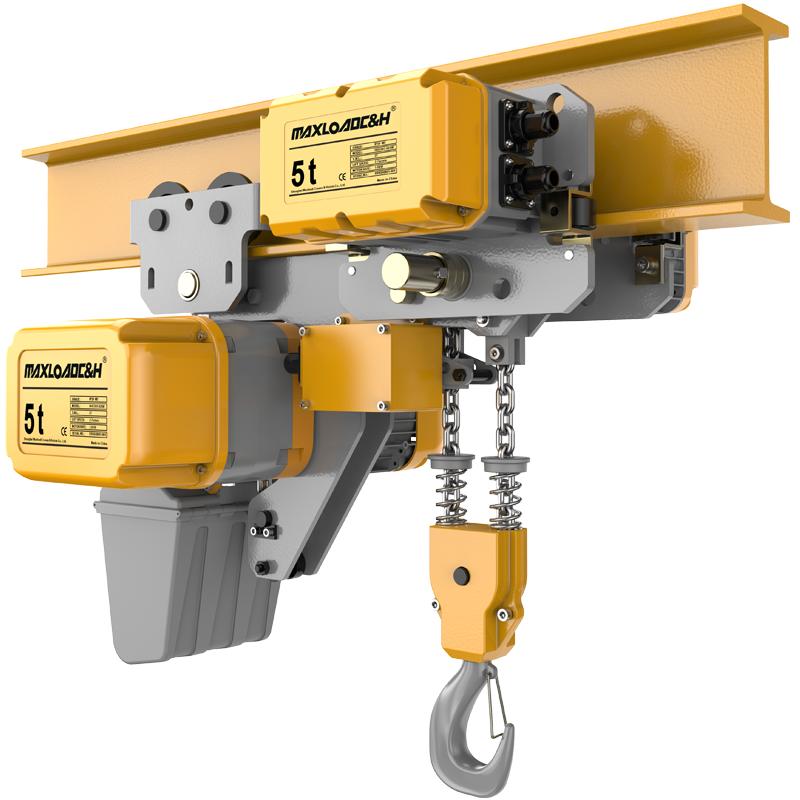
From a technical perspective, electric hoists mainly consist of three parts: a motor, a transmission mechanism, and a drum or sprocket. Based on the different core load-bearing components, they are mainly divided into two categories: wire rope electric hoists and chain electric hoists. The former usually has a wide lifting capacity range, a large lifting height, and stable operation, and is widely used in various workshops and warehouses; the latter is lighter and more compact, especially suitable for low-speed, precise lifting operations in confined spaces.
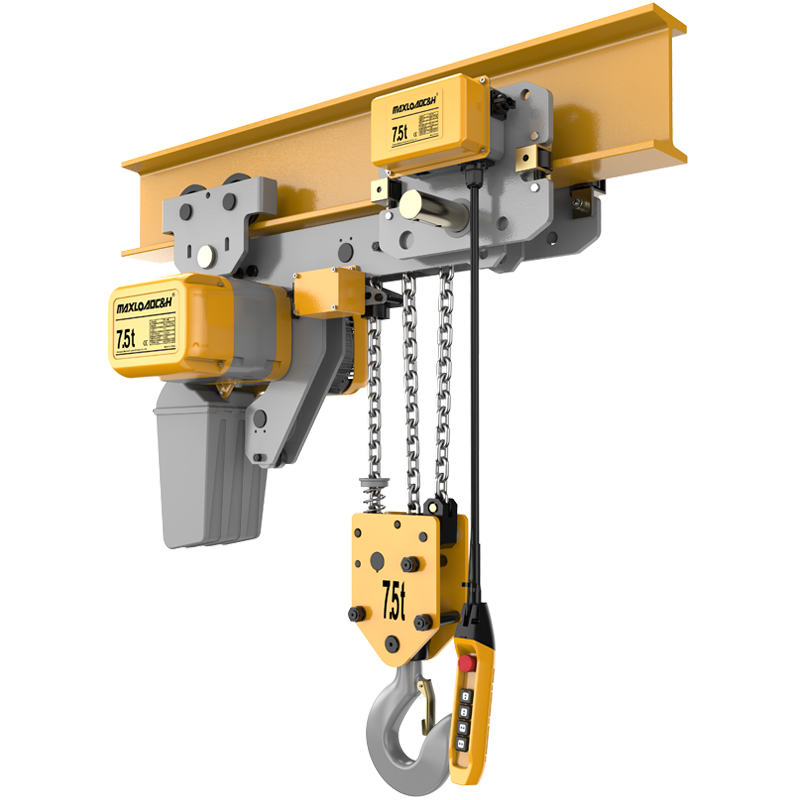
To cope with complex actual working conditions, engineers have developed a variety of specialised machines. For example, the climbing frame electric hoist for construction uses a low-speed design, featuring a lightweight body and low wear. It is specifically designed for the synchronous lifting of climbing frames in high-rise buildings and the group lifting of large oil tanks, achieving coordinated, stable, and low-speed lifting operations with multiple devices. Explosion-proof hoists are specifically designed for hazardous environments with flammable and explosive gases, such as those in the petroleum, chemical, and military industries. Their key components are made of special materials to ensure that no mechanical sparks are generated during operation, providing a solid guarantee for safe production. In addition, there are low-headroom electric hoists designed for factory buildings with limited height, which, through optimised structure, can effectively increase the lifting height under the same conditions, making full use of the available space.
II. From Basic Handling to System Integration
The basic applications of electric hoists cover all aspects of industrial production. In manufacturing, it is used for loading and unloading machine tools and transporting components on assembly lines; in warehousing and logistics, it enables rapid stacking and handling of goods; and in repair workshops, it assists in the disassembly and relocation of heavy equipment. Its value lies in freeing manpower from heavy and dangerous manual labour, greatly improving operational efficiency and safety.
However, its contemporary value is more evident in its role as a key execution unit in automated and intelligent production systems. It rarely exists independently, but is often integrated and installed on large lifting equipment such as single-beam cranes, bridge cranes, and gantry cranes, forming a flexible three-dimensional material handling system. For example, on an automobile manufacturing assembly line, an intelligent lifting trolley driven by an electric hoist can accurately move engines or body assemblies to the next workstation. The entire process can be controlled by programming or remote control, becoming a seamlessly integrated part of the intelligent manufacturing process.
A more revolutionary application is reflected in solving specific pain points through creative integration. A vivid example comes from the operating site of the Liaohe Oilfield. Faced with the problem of needing five people to carry and lift large safety valves weighing over 80 kilograms during calibration and handling, the technicians did not stop at simply using an electric hoist. They innovatively designed an intelligent rail system with "modular splicing + adaptive adjustment," embedding the electric hoist into the rail network. After the modification, a 90-kilogram safety valve can be smoothly moved along the track and precisely positioned with only one person operating a button. The personnel requirement was reduced from five to two, and the labour intensity and safety risks were significantly reduced. This device, known as the "intelligent handling box," perfectly illustrates how an electric hoist, as a core power unit, can be integrated with rails and control systems to create customised and efficient solutions.
III. Intelligent Evolution for the Future
Currently, technological innovation in the field of electric hoists is moving towards three dimensions: intelligence, specialisation, and ultimate reliability. Intelligence is the core trend, and the integration of Internet of Things technology makes remote monitoring, fault warning, and usage data statistics possible. Some advanced products are already equipped with operating cycle monitoring systems, which help to achieve predictive maintenance and avoid unexpected downtime.
Specialised innovation focuses on solving subtle but critical pain points. For example, one patented technology focuses on optimising the arrangement and maintenance of steel wire ropes. By designing special guiding and lubrication mechanisms, it reduces bending, wear, and oil dripping during the winding process, thus extending the wire rope's service life. Another patent focuses on equipment maintenance in harsh environments, designing an automatic cleaning device that moves with the steel wire rope. This device can scrape off dirt and wipe away dust online, making it particularly suitable for environments with severe dust pollution, such as metallurgy and mining, ensuring the reliable operation of core components.
Safety is always a non-negotiable priority for lifting equipment. Besides traditional limit switches and overload protection devices, operating procedures are the ultimate safety barrier. This includes: checking the condition of critical components such as brakes, steel wire ropes, and hooks before use; strictly prohibiting overloading and oblique lifting; completely cutting off the power supply after work; and having dedicated personnel perform regular inspections and maintenance. These rigorous procedures, combined with technological advancements, form the cornerstone of safe production.
Conclusion
From simple lifting tools that replaced manual labour to automated solutions integrated into intelligent tracks, and then to smart terminals with self-sensing capabilities, the technological evolution of electric hoists reflects the upgrade path of modern industry from mechanisation to automation and even intelligence. It is no longer an isolated piece of equipment, but a key node connecting physical handling and digital management in the era of Industry 4.0 and the Internet of Things. In the future, with the further integration of technologies such as artificial intelligence and digital twins, electric hoists will become even "smarter" and more "autonomous," continuing to silently support a more efficient, safe, and intelligent industrial world with their powerful lifting capabilities.
 0086 156 1824 5535
 0086 156 1824 5535