Electric Hoists and JIB Cranes: The Dual Pillars of Modern Industrial Lifting Operations
In modern industrial production and logistics operations, efficient lifting and handling systems are key to automating production processes and improving operational efficiency. Electric hoists and jib cranes, as two widely used basic lifting devices, each possess unique technical characteristics and application scenarios. Like two main characters on the industrial stage, they complement each other, jointly supporting the material flow of modern manufacturing and logistics systems.
I. Electric Hoists: Lightweight and Efficient Vertical Lifting Experts
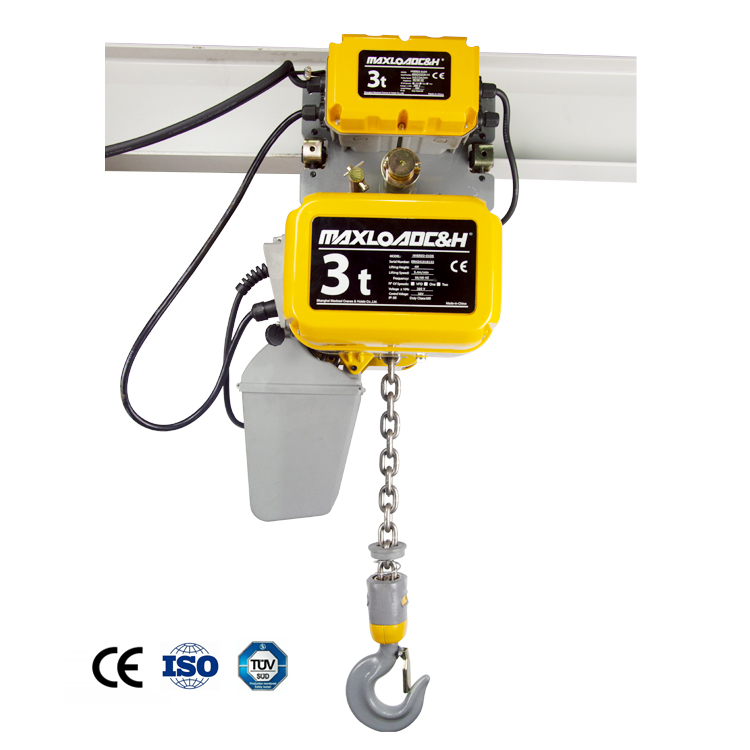
Electric hoists are lightweight and compact lifting devices driven by electricity. They typically consist of a motor, reduction gear, drum or sprocket, and control system. The design philosophy of this equipment is to achieve efficient and precise vertical lifting operations.
From a technical perspective, the most significant advantages of electric hoists are their compact structure, light weight, and ease of operation. Modern electric hoists mostly adopt modular designs, facilitating maintenance and ensuring high reliability. Depending on the lifting medium, electric hoists can be divided into two main types: wire rope and chain hoists. Wire rope hoists offer high lifting heights and smooth operation, while chain hoists are more compact and suitable for space-constrained environments.
In terms of performance parameters, electric hoists have a wide range of lifting capacities, sufficient to meet the needs of most industrial scenarios. Lifting speed can be adjusted according to operational requirements. Modern high-end electric hoists are also equipped with frequency converter control systems, achieving smooth start-up and stopping transitions and precise position control.
Safety performance is a crucial consideration in the design of electric hoists. Standard configurations typically include overload protection, upper and lower limit switches, emergency stop devices, and a dual braking system (combining electromagnetic and mechanical braking) to ensure operational safety under various conditions. Furthermore, explosion-proof electric hoists are specifically designed for use in special environments with explosion risks, such as petroleum, chemical, and mining industries.
II. Cantilever Cranes: Flexible Positioning Experts in Spatial Operations
Cantilever cranes are lifting devices with a horizontal cantilever, their core feature being the ability to transport materials in three-dimensional space within a certain radius. Unlike electric hoists, which focus on vertical lifting, cantilever cranes excel in their horizontal movement capabilities and the flexibility of their operating range.
Cantilever cranes come in various structural forms, commonly including column-mounted, wall-mounted, mobile, and counterbalanced types. Column-mounted cantilever cranes are fixed to the ground, with the cantilever rotating around the column to cover a circular work area. Wall-mounted cantilever cranes are installed on walls or structural columns, saving floor space. Mobile cantilever cranes are equipped with a traveling mechanism at the bottom, allowing them to move along a track and further expand their work area. Counterbalanced cantilever cranes use a parallelogram linkage mechanism, making them extremely easy to operate and suitable for frequent handling of small, light materials.
Cantilever cranes have a wide range of load capacities, from tens of kilograms for light equipment to several tons for heavy-duty industrial applications. Cantilever length is also a key parameter, typically ranging from 1 to 6 meters. Regarding rotation angle, most cantilever cranes can achieve 180° to 360° rotation, providing broad work coverage.
In terms of control, cantilever cranes often use ground control or remote control operation, allowing operators to observe the lifting process from the optimal position, improving operational accuracy and safety. High-end cantilever crane systems also integrate intelligent positioning and anti-sway technology, further improving handling efficiency.
III. Synergistic Application of Electric Hoists and Cantilever Cranes
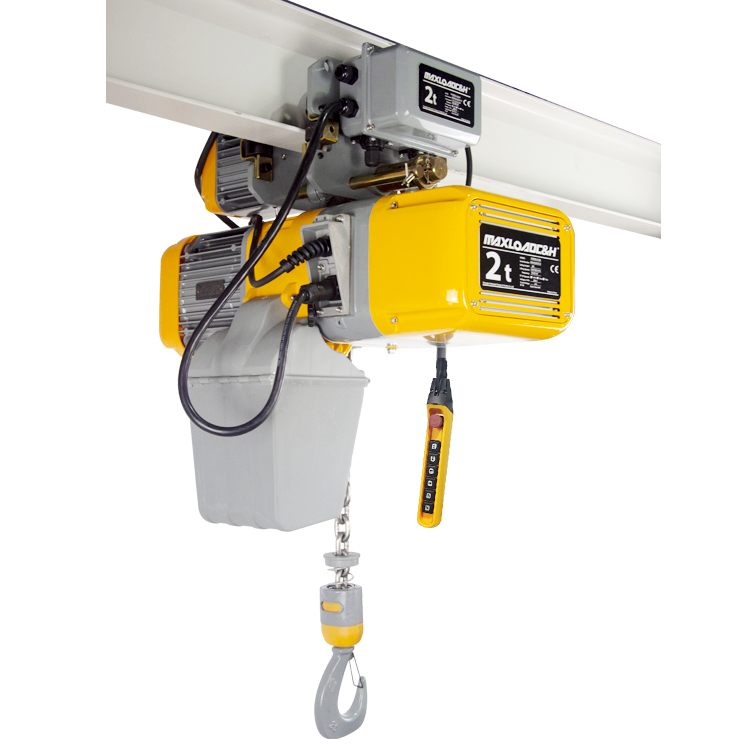
In practical industrial applications, electric hoists and cantilever cranes are not mutually exclusive choices, but often work together to form a complementary material handling system. The most common approach is to use the electric hoist as the lifting mechanism of the cantilever crane, leveraging both the spatial coverage advantage of the cantilever crane and the vertical lifting capability of the electric hoist.
The advantages of this combined system are significant: the cantilever's rotation and movement provide horizontal positioning, while the electric hoist handles precise vertical lifting. Operators can easily move materials from point A to point B within the fan-shaped or circular area covered by the cantilever, without complex ground handling equipment or extensive manual intervention. This system is particularly suitable for material transfer between workstations, machine tool loading and unloading, and assembly line feeding.
In more complex material-handling systems, the combination of cantilever cranes and electric hoists can be expanded further.
IV. Selection and Application: Key Considerations for Matching Needs
When faced with specific application scenarios, how to make a reasonable choice between electric hoists and jib cranes? This requires careful consideration of several factors:
1. Workspace Analysis: First, assess the size and shape of the available space. For locations with ample height but limited horizontal space, a standalone electric hoist may be a more economical choice; while for scenarios requiring flexible handling within a certain radius, a jib crane is more advantageous.
2. Material Characteristics Considerations: The weight, size, shape, and handling frequency of materials are all important parameters. Frequent small-batch, multi-variety handling is suitable for jib crane systems, while large-batch, fixed-point lifting of single materials may be more suitable for simple electric hoist configurations.
3. Process Integration: Equipment selection must be integrated with the production process. On assembly lines, parts may need to be transferred between multiple workstations, where the flexibility of a jib crane becomes apparent; while in warehouses, where vertical stacking operations are the primary focus, electric hoists with simple rail systems can meet the needs.
4. Economic Benefit Assessment: In addition to initial investment costs, long-term operating costs must also be considered, including energy consumption, maintenance, and labor requirements. Typically, cantilever crane systems have a higher initial investment, but they significantly reduce manual handling, improve operational efficiency, and may be more economically beneficial in the long run.
5. Safety and Compliance Requirements: Different industries have specific safety standards and regulations. The food and pharmaceutical industries require easily cleanable equipment; hazardous environments, such as chemicals and mines, require explosion-proof designs; and precision manufacturing workshops have higher requirements for equipment stability and positioning accuracy.
6. Future Scalability: Considering changes in future production needs, choose equipment systems that can be flexibly expanded or adjusted. Modularly designed electric hoists and cantilever cranes with adjustable boom length and height have advantages in this regard.
Conclusion: Electric hoists and cantilever cranes, these two seemingly simple industrial lifting devices, are actually indispensable infrastructure in modern industrial production systems. They each solve the core problem of material handling in different ways—electric hoists excel in efficient vertical lifting, while cantilever cranes excel in flexible spatial positioning. The combination of the two creates a synergistic effect of "1+1>2".
With the advancement of Industry 4.0 and intelligent manufacturing, electric hoists and cantilever cranes are also constantly evolving. Intelligent control systems, IoT integration, and predictive maintenance are being gradually applied to these traditional devices, making them more intelligent, efficient, and safe. Regardless of future technological advancements, electric hoists and jib cranes, as fundamental equipment for industrial lifting operations, will continue to play their unique role, supporting the flow of materials in modern industrial production and providing a solid guarantee for improved manufacturing efficiency.
In the grand narrative of industrial development, it is these seemingly ordinary devices that silently undertake the heavy task of material handling, transforming raw materials into products and turning ideas into reality. They may not be eye-catching, but they are undoubtedly indispensable pillars of modern industrial civilization.
 0086 156 1824 5535
 0086 156 1824 5535