How Electric Hoists Shape the Fabric of Modern Industry
In the grand panorama of modern industry, the scorching heat of giant blast furnaces, the rhythmic precision of assembly lines, or the imposing presence of gantry cranes in ports often capture people's attention more readily. However, there is a type of equipment, not necessarily large in size or noisy in operation, that acts like "miniature muscles" and "flexible tendons" throughout the industrial body, silently and efficiently performing the lifting, handling, and precise positioning of countless materials—this is the electric hoist.
I. The Exquisite Synergy of Electromechanical Integration
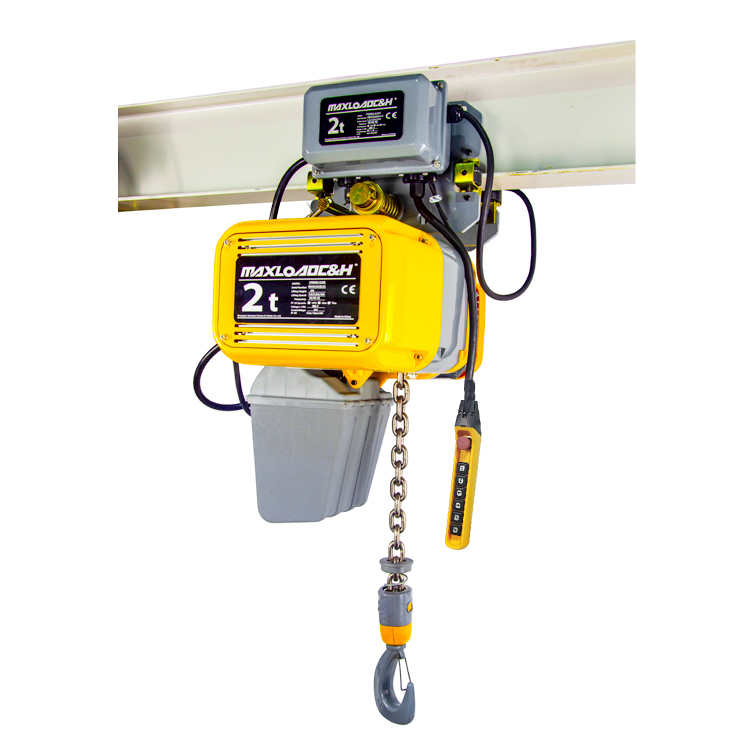
Although compact in form, the electric hoist integrates the exquisite synergy of mechanical transmission, electric drive, and automatic control, making it a typical mechatronic system. Its core working principle can be briefly described as "winding" and "traveling" under electric power.
Typically, a standard electric hoist mainly consists of the following core components:
1. Drive and Transmission System: This is the "heart" and "muscles" of the hoist. The electric motor provides power, and its special design allows for rapid braking, ensuring safety. The power is transmitted through a gear reduction mechanism to significantly increase torque and reduce speed, ultimately driving the drum to wind or unwind the steel wire rope (or chain). The gears are usually enclosed in an oil bath environment to ensure lubrication, heat dissipation, and long service life.
2. Lifting and Bearing System: This includes the drum, steel wire rope (or lifting chain), and hook device. The steel wire rope, with its high strength and flexibility, bears the entire load; the hook is often equipped with a safety latch to prevent the load from falling off. Chain hoists use high-strength alloy chains, resulting in a more compact structure.
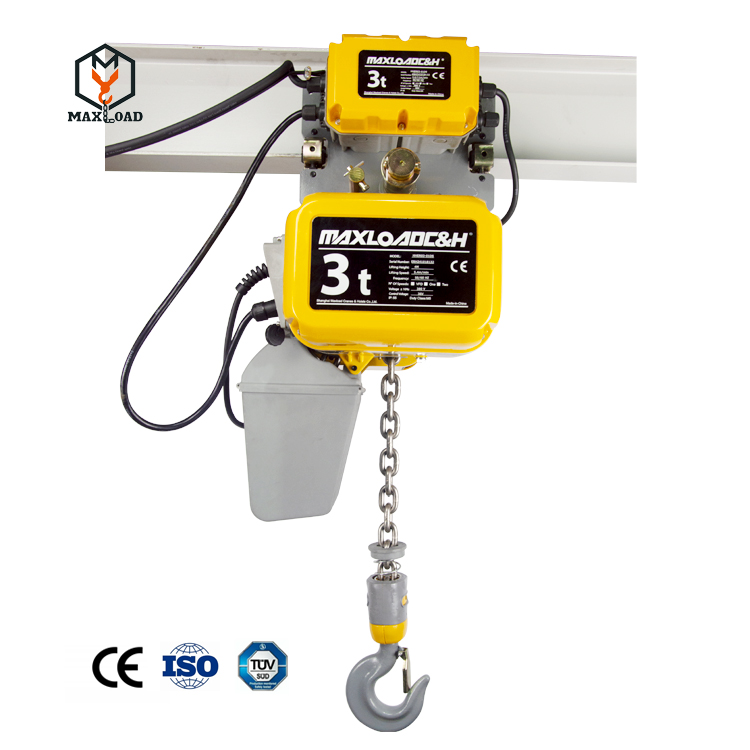
3. Traveling Mechanism: For traveling electric hoists, an additional independent drive and wheel system is configured, allowing them to travel along I-beam tracks in a straight line or curve, expanding the operating range.
4. Electrical Control System: This is the "nerves" of the hoist. Through the control box, button station (ground operation or moving with the hoist), or remote control, the operator can conveniently control the forward and reverse rotation of the motor, thereby achieving the lifting and lowering of the hook, as well as the movement and stopping of the hoist trolley. The advanced hoist also integrates limit switches (upper and lower limits), overload protection devices, phase sequence protection, etc., forming a multi-layered safety barrier.
5. Braking System: The key to safety. In addition to the motor's built-in power-off brake, it may also be equipped with a mechanical load brake and emergency brake to ensure reliable braking under any circumstances and prevent load falling.
The entire system responds quickly and is highly responsive, placing powerful lifting capabilities under precise fingertip control.
II. Technological Evolution and Diversified Product Range
With the continuous refinement of industrial demands and technological advancements, electric hoists have developed into a vast and specialized product range to adapt to different scenarios.
By structural form: There are two main categories: wire rope electric hoists and chain electric hoists. The former has a large lifting height, high speed, and strong load capacity, suitable for most medium and heavy-duty applications; the latter has a compact structure, light weight, and low installation space requirements, making it more suitable for light-duty frequent lifting or space-constrained situations.
By operating mode: Divided into fixed type (installed on a fixed support point) and traveling type (with a trolley, which can move along a track). The traveling type is further divided into manual trolley type and electric traveling type, the latter having a higher degree of automation.
By performance and application: Numerous specialized models have been developed. Such as: low headroom hoists, optimized design to obtain maximum lifting space within a limited height; explosion-proof hoists, all electrical components use special explosion-proof structures, suitable for environments with explosive gases such as petroleum and chemical industries; metallurgical hoists, with higher working levels and heat resistance characteristics, suitable for steel smelting workshops; dual-speed/variable frequency hoists, which can achieve micro-speed lifting and precise positioning of the load, meeting the needs of precision assembly, mold closing, and other fine operations.
By technical level: From traditional hoists controlled by AC contactors to intelligent hoists using variable frequency speed control technology. The application of variable frequency technology makes starting and braking smoother, reduces impact on the power grid and mechanical structure, achieves positioning accuracy of millimeters, and significantly saves energy. Modern high-end electric hoists can integrate sensors, encoders, and communication interfaces to achieve operational status monitoring, fault diagnosis, data recording, and even access to industrial Internet of Things (IoT) systems, providing support for predictive maintenance and intelligent logistics.
III. Wide Application and Core Value
The value of electric hoists is fully demonstrated in their wide and in-depth applications:
Manufacturing: In the welding, assembly, and material handling processes of industries such as automotive, machinery, and home appliances, it is a powerful assistant alongside the assembly line, enabling efficient distribution and assembly of components.
Warehousing and Logistics: In automated warehouses and distribution centers, combined with stacker cranes or manual/automatic overhead conveyor systems, it facilitates rapid inbound and outbound handling and sorting of goods.
Equipment Repair and Installation: In factory maintenance and equipment installation sites, it is a core tool for lifting engines, disassembling large molds, and installing heavy equipment, ensuring operational safety and precision.
Infrastructure Construction and Energy Sector: It provides flexible and reliable lifting solutions for temporary lifting on construction sites, maintenance of power plant engine rooms, and maintenance of wind turbine units.
Specific Special Environments: Explosion-proof hoists serve chemical safety, anti-corrosion hoists cope with humid marine climates, and cleanroom hoists meet the dust-free requirements of the electronics and pharmaceutical industries.
Its core value lies in: improving efficiency, transforming heavy manual handling into efficient electric drive; ensuring safety, greatly reducing lifting operation risks through multiple braking and protection devices; saving space, with a compact design suitable for various factory layouts; reducing labor intensity and improving working conditions for workers; and enabling automation, as a terminal actuator integrated into automated production lines and intelligent logistics systems.
IV. Safety Regulations
Safety is the eternal lifeline of lifting operations. The installation and use of electric hoists must strictly comply with national and industry safety regulations (such as China's GB/T 3811, GB 6067, etc.). Operators must be trained and certified before starting work. Safety checks should be performed before daily operations, and overloading and oblique lifting are strictly prohibited. Regular inspections and maintenance should be carried out by professional organizations to ensure that the equipment is always in good condition. Selecting the appropriate electric hoist is crucial and requires comprehensive consideration of several factors: rated lifting capacity, lifting height, working class (frequency of use), operating speed, installation environment (temperature, humidity, explosion-proof and corrosion-resistant requirements, etc.), power supply conditions, and control method. Accurate selection is the prerequisite for maximizing its efficiency, ensuring safety, and achieving cost-effectiveness.
Conclusion
The electric hoist, a device embodying electromechanical intelligence and industrial practice, silently supports the daily operations of modern industry with its robust lifting power and precise control. It is not only an extension of power but also a guardian of efficiency and safety. From bustling workshops to quiet warehouses, from magnificent construction sites to precise laboratories, every reliably operating electric hoist tells a story about the timeless industrial themes of lifting, handling, and innovation. On the path towards a more intelligent, green, and efficient industrial future, the continuously evolving and refined electric hoist will undoubtedly continue to drive the wheels of productivity forward with its irreplaceable fundamental functions.
 0086 156 1824 5535
 0086 156 1824 5535