The Powerful Tool for Efficient Material Handling – Electric Hoists
In many fields such as modern industrial production, warehousing and logistics, equipment maintenance, and construction, efficient and safe material handling is a crucial link in ensuring smooth workflow and improving work efficiency. Among the numerous lifting and handling equipment, electric hoists and jib cranes are widely used due to their compact structure, flexible operation, and strong adaptability, becoming indispensable assistants in many workplaces. A thorough understanding of the characteristics, correct usage methods, and safety regulations of these two types of equipment is essential to maximize their effectiveness and ensure operational safety.
I. Electric Hoists: Lightweight and Flexible Vertical Lifting Experts
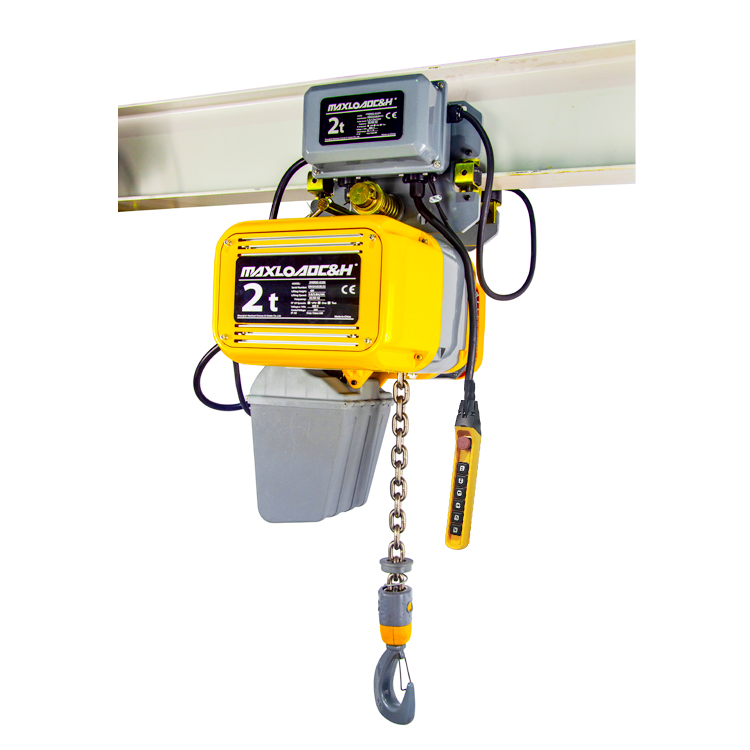
Electric hoists, often called "electric lifting machines," are small and lightweight lifting devices that use electric power to wind steel wire ropes or chains around a drum or sprocket, thereby achieving the vertical lifting and lowering of heavy objects. Their core advantages lie in their powerful vertical lifting capacity and relatively compact structure.
From a technical perspective, electric hoists typically consist of a drive motor (lifting motor and traveling motor), a reduction mechanism, a drum device, a hook or grab, and an electrical control system. Based on the load-bearing component, they are mainly divided into two categories: wire rope electric hoists and chain electric hoists. The former has a greater lifting height and stronger load capacity, suitable for a wider range of industrial applications; the latter has a more compact and lightweight structure, operates smoothly, and is particularly suitable for situations with limited space or requiring precise operation. Modern electric hoists generally integrate multiple safety devices such as overheat protection, phase protection, upper and lower limit switches, and overload protection, and can be conveniently controlled via remote control or a pendant control station.
In terms of usage procedures, a thorough inspection must be performed before operating an electric hoist, including checking whether the power lines and control buttons are functioning properly, whether the steel wire rope or chain has any broken strands, kinks, or wear, whether the hook has cracks or deformation, whether all safety devices are effective, and whether the running track (if any) is unobstructed. Only after confirming everything is in order can the power be switched on. During operation, the operator should stand in a safe position, clearly observe the movement path of the heavy object, and smoothly issue lifting or moving commands through the controller. Slanted pulling or lifting and sudden reverse operation are strictly prohibited. The load must be securely suspended at the center of the hook, and the weight must never exceed the rated lifting capacity of the hoist. After completing the lifting operation, the empty hook should be raised to a safe height of more than 2 meters above the ground, and the main power supply should be switched off.
To ensure long-term reliable operation, regular maintenance is essential. The equipment should be kept clean daily, especially the lubrication of the chains and wire ropes; the braking effect of the brakes, the tightness of electrical connections, and any damage to all structural components should be checked regularly. Any abnormal noise, vibration, or performance degradation should be investigated immediately by stopping the machine.
II. Jib Crane: A Flexible and Efficient Local Handling Solution
A jib crane is a lifting device with a rotatable or non-rotatable jib, usually fixed to a wall or column. Its core function is to lift, move, and precisely position materials within a certain cylindrical or sector-shaped space around a fixed pivot point. It compensates for the shortcomings of traditional bridge cranes in localized, frequent, and fixed-point handling.
A jib crane mainly consists of a column (or wall support), a jib beam, a slewing mechanism, a lifting mechanism (often equipped with an electric hoist as a lifting device), and an electrical system. According to its structure, it can be divided into column-mounted jib cranes, wall-mounted jib cranes, and balance cranes (also known as manipulators). Its main feature is its flexible working area coverage, enabling efficient service in specific areas such as machine tool loading and unloading, transfer between production line workstations, and equipment
assembly and maintenance, without occupying ground passageways.
Safe operation of a jib crane begins with a clear understanding of its working range. Before the operation, check whether the jib structure has any obvious deformation or cracks, whether the rotation is smooth and without jamming, whether the accompanying electric hoist is in good condition, and whether the rotation limit device is effective. During operation, the operator should use the rotation of the jib and the horizontal movement of the hoist to smoothly guide the hook above the material and lift it vertically. When moving heavy objects, the jib should be rotated slowly, paying close attention to the swing of the heavy object and whether it will interfere with surrounding equipment or personnel. Dragging or forcibly pulling heavy objects with the jib crane is strictly prohibited, as is overloading. After the operation is completed, the jib should be rotated to a safe position that does not affect other operations, and the hook should be lowered. The maintenance of a jib crane focuses on its load-bearing structure and moving parts. Regular inspections of the welds and connecting bolts of metal structures, such as the column and jib, are necessary; the slewing bearing or rotating mechanism must be kept well-lubricated; and the electric hoist must operate smoothly and without abnormalities on the jib track.
III. Collaborative Use and Comprehensive Selection
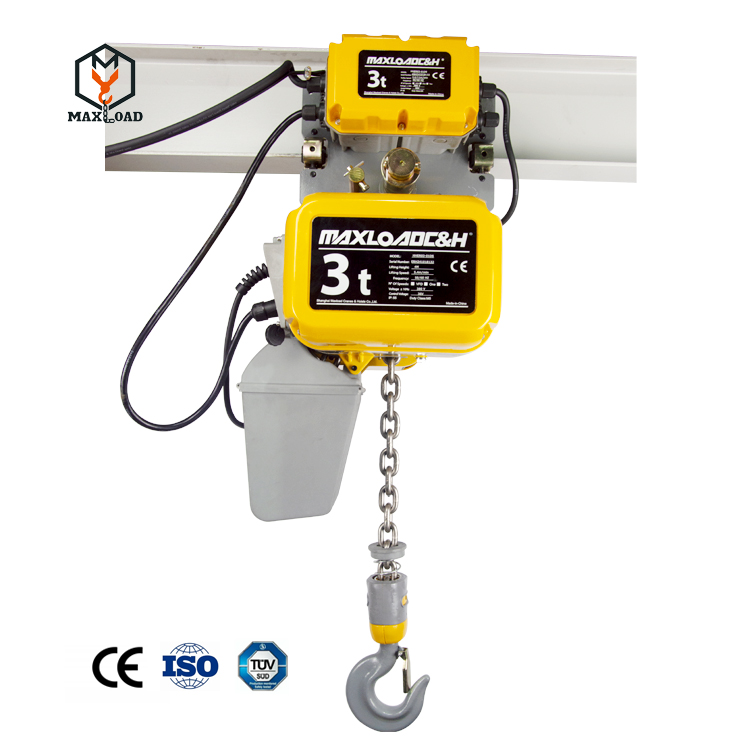
In practical applications, electric hoists and jib cranes are often a "golden combination"—the electric hoist, as the lifting mechanism, is installed on the jib crane's track. The combination of the two provides the equipment with both vertical lifting and horizontal slewing capabilities, enabling material handling in three-dimensional space and greatly improving operational flexibility and efficiency.
When choosing which equipment or combination to use, several factors must be considered: firstly, the operational requirements, including the required spatial coverage (whether it's simply vertical lifting or requires horizontal movement), lifting capacity, lifting height, and workload. Secondly, the installation environment, considering the factory structure, spatial dimensions, and whether there are columns or load-bearing walls available for installation. Finally, economic efficiency and cost-effectiveness are evaluated by considering the initial investment cost and the efficiency improvements and value brought by long-term use.
Regardless of the equipment chosen, safety is always the top priority. Operators must receive professional training and be familiar with equipment performance and safety procedures; management must establish a comprehensive equipment inspection and maintenance system and create independent safety technical files for each piece of equipment. Only by combining advanced equipment, standardized operation, and rigorous management can electric hoists and jib cranes, these efficient material handling tools, truly safeguard production and construction, improving work efficiency while building a solid defense line for safe production.
 0086 156 1824 5535
 0086 156 1824 5535