The Golden Combination – Enhancing Industrial Material Handling Efficiency
In the vast workshops of modern factories, an overhead crane, resembling a steel behemoth, sits quietly on its high-altitude rails. Suddenly, upon command, it smoothly starts, gliding to a predetermined position. Next, the electric hoist suspended beneath it descends with precision, its steel "arm" firmly grips a component weighing several tons, lifts it effortlessly, and transfers it with the crane to the destination. The entire process is seamless, quiet, steady, and highly efficient. This scene is a daily performance by the classic duo of the electric hoist and the overhead crane on the modern industrial stage. They are not merely a simple stacking of equipment; rather, through deep synergy, they form an indispensable "golden combination" in modern material handling systems, jointly building the "aerial arteries" of industrial production and greatly enhancing the efficiency, safety, and flexibility of handling operations.
I. Strength Meets Finesse: Combined Advantages and Synergistic Principles
The overhead crane, also known as a bridge crane, with its robust bridge structure and powerful longitudinal and transverse movement capabilities, creates a three-dimensional movement space covering a vast operational plane. It acts like a "handling giant" with immense strength and steady strides, excelling at large-scale, long-distance material transfer. However, the crane itself is typically not primarily designed for fine vertical grasping and lifting, or even if equipped with a hook, its precision and flexibility are often limited.
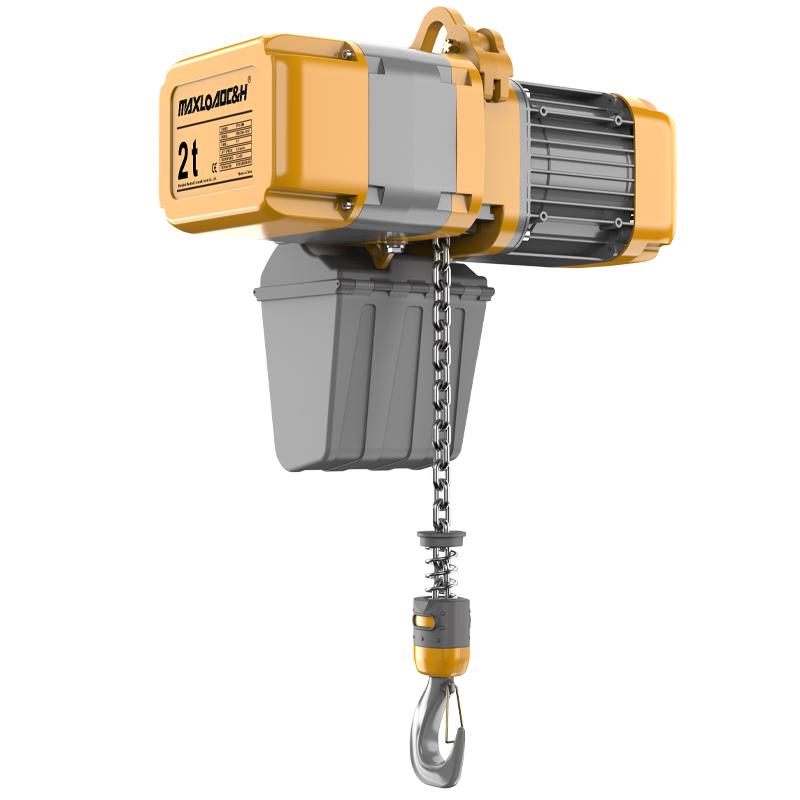
This is where the electric hoist plays a crucial role. As an independent lifting device, the electric hoist integrates a motor, reduction gear, drum or chain, and hook into a compact unit, specializing in vertical lifting operations. Its characteristics include sensitive control, smooth lifting, precise positioning, and the availability of different types such as wire rope or chain hoists.
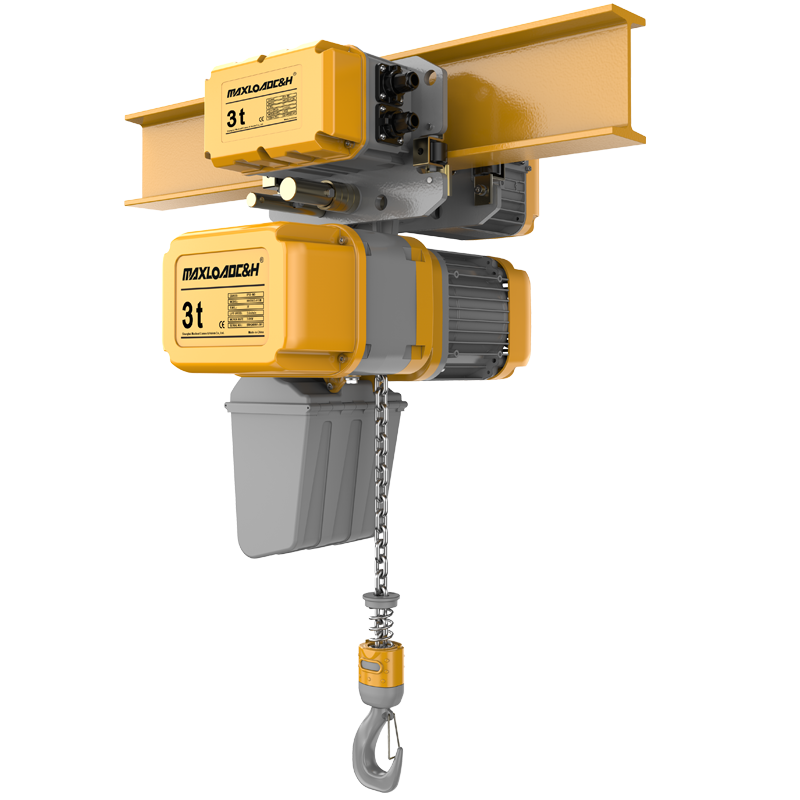
When the electric hoist is mounted under the crane's trolley, the advantages of both are perfectly merged and multiplied:
Full Spatial Coverage: The crane provides planar movement capabilities along the X-axis (bridge travel) and Y-axis (trolley travel), while the hoist contributes vertical movement along the Z-axis (lifting/ lowering). Together, they enable full utilization and precise access to the three-dimensional workshop space.
Specialized Functions and Multiplied Efficiency: The crane is responsible for "transporting," performing rapid, large-scale displacement; the hoist handles "hoisting," executing precise and safe lifting and lowering. This division of labor makes the workflow smoother, avoiding efficiency losses from using a single device for generalized tasks. It is particularly suitable for processes requiring frequent lifting, shifting, and assembly.
Enhanced Operational Flexibility and Precision: Electric hoists typically offer finer speed control and position-holding capabilities, and can even be equipped with dual-speed or variable frequency control for precise positioning. This allows for final centimeter or even millimeter-level fine adjustments via the hoist after the crane delivers the material to the general area, greatly meeting the requirements of high-standard tasks like precision assembly and mold closing.
Increased Safety and Reliability: Modern electric hoists commonly integrate safety devices such as overload protection, limit switches, and phase protection. Combined with the crane's own safety systems, they form a dual safety assurance system, effectively reducing risks like overloading, over-hoisting, and operational errors.
II. A Mighty Arm: Combined Applications in Diverse Scenarios
In Automated Production Lines and Warehousing/Logistics Centers, raw materials, semi-finished, or finished product pallets need rapid circulation between different process lines, storage areas, and loading docks. The overhead crane and hoist combination, equipped with intelligent control systems (like wireless remote control, coordinated programming), can achieve automated, high-cycle material transfer, becoming a key component of flexible manufacturing systems and smart logistics.
In Equipment Maintenance and Overhaul, whether replacing a large power plant's engine rotor or maintaining a chemical enterprise's core reactor vessel, safely lifting and moving heavy components to the maintenance area is essential. The stable lifting and smooth movement provided by the crane-hoist combination form the foundation for safe and efficient maintenance operations.
In Special Environments such as clean rooms or laboratories, where requirements for dust prevention, anti-static properties, or precise control exist, specialized hoists (low-dust, smooth-running, or precision-controlled) can be selected and paired with cranes to meet specific process needs.
III. Steady as a Rock: Key Technical Considerations and Safety Regulations
To fully leverage the effectiveness of this "golden combination," scientifically sound technical configuration and strict adherence to safety regulations are indispensable:
Compatibility Design: The crane's main girder structure, rail load capacity, and motor power must match the electric hoist's self-weight, rated lifting capacity, duty class, and dynamic loads during operation. The hoist's mounting method also needs to be designed according to the crane's specific structure.
Integration of Control Systems: Achieving coordinated control of the crane's bridge travel, trolley travel, and the hoist's lifting/lowering is crucial. Common control methods include cabin operation, floor-following remote control, and more advanced automated programming control. The control system must be responsive, have reliable interlocks, and prevent misoperations.
Core Safety Configurations:
Overload Protection Device: Ensures the lifting load does not exceed the rated capacity.
Dual Limits: Reliable travel limit switches should be installed for all crane travel directions and at the hoist's upper/lower limits to prevent "over-hoisting" or "running off the rails."
Braking Systems: Both the crane and hoist require well-performing brakes to ensure reliable and prompt stopping upon power loss or stop command.
Electrical Protection: Includes short-circuit protection, loss of voltage protection, emergency stop switches, etc.
Regular Inspection and Maintenance: According to national special equipment safety regulations, the crane and electric hoist combination falls under lifting machinery and must undergo periodic supervised inspections by professional bodies. Daily checks, maintenance, lubrication, and condition monitoring of key components like wire ropes/chains and hooks are equally essential.
Operator Qualifications: Operators require specialized training and must pass assessments before being allowed to work. They must be familiar with equipment performance, operating procedures, and emergency response measures.
IV. Intelligence Leads the Future: Technology Integration and Development Trends
With the deepening advancement of Industry 4.0 and smart manufacturing, the combination of electric hoists and overhead cranes is evolving towards greater intelligence, integration, and environmental sustainability:
Advancements in Drive and Control Technology: The widespread application of variable frequency speed control technology makes crane and hoist starting/stopping smoother, positioning more precise, and energy consumption lower. Efficient drive technologies like permanent magnet synchronous motors are also being adopted to improve energy efficiency.
Lightweight and Modular Design: Using new materials and optimized designs reduces equipment weight while ensuring strength. This means smaller cranes can handle the same lifting capacity, or the structural load on the workshop can be reduced. Modular design facilitates installation, maintenance, and functional expansion.
Ergonomics and Enhanced Safety: Improving operator interfaces, developing more ergonomic remote controls, and applying active safety technologies like laser anti-collision and zone safety scanning further protect personnel and equipment.
From traditional production workshops to modern smart factories, the seamless cooperation between electric hoists and overhead cranes continuously provides powerful and reliable solutions for industrial material handling. They are not merely a combination of steel and motors but represent the perfect unity of strength and precision, range and depth, efficiency and safety. As technology continuously iterates and integrates, this classic combination will undoubtedly continue to evolve. With a more intelligent and greener posture, it will support the backbone of future industrial logistics, playing an increasingly irreplaceable key role in enhancing overall operational efficiency and ensuring safe production.
 0086 156 1824 5535
 0086 156 1824 5535