Selection of Electric Hoists for Overhead Crane Applications
Electric hoists, as the core lifting mechanism of overhead cranes, play a vital and irreplaceable role in modern industrial material handling. From factory workshops to warehousing and logistics, from equipment installation to production line maintenance, electric hoists, with their compact structure, flexible operation, and high efficiency, have become a key piece of equipment for achieving vertical lifting in crane systems. However, faced with diverse application scenarios and complex working conditions, selecting the right hoist scientifically is a crucial issue for ensuring work efficiency, guaranteeing operational safety, and achieving economically sound investment.
I. Classification and Structural Characteristics of Electric Hoists
Structural Type Analysis:
1. Wire Rope Electric Hoist: Uses a drum to wind the wire rope for lifting, characterized by a wide range of load capacity and large lifting height. Its structure is relatively simple and easy to maintain, suitable for most general lifting applications.
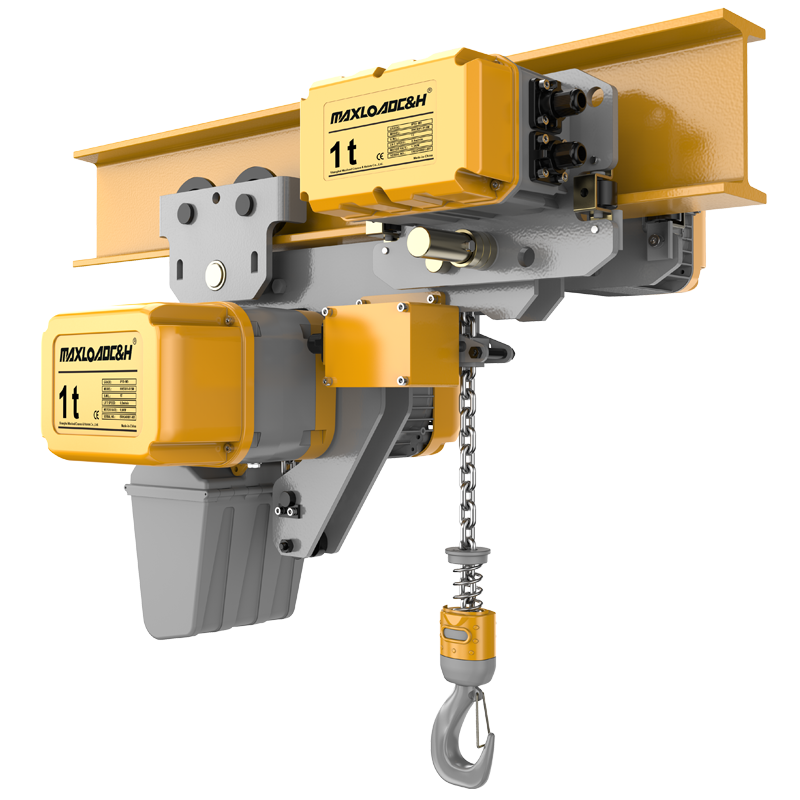
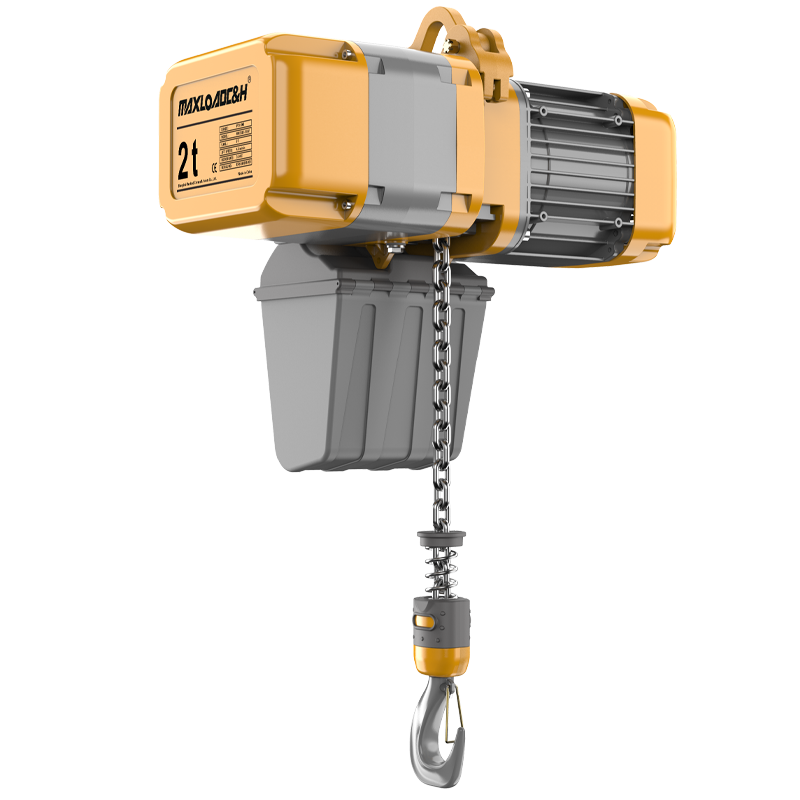
2. Chain Electric Hoist: Uses high-strength alloy chains as the load-bearing component, with a more compact structure and lighter weight, suitable for space-constrained applications. Its lifting capacity is generally smaller, but it offers better operational stability, especially suitable for precision lifting and frequent operation environments.
Comparison of Driving Methods:
Traditional conical rotor motors have the characteristic of self-braking upon power failure, offering higher safety, while the new planar braking motors provide smoother starting and braking performance. The application of variable frequency control technology enables electric hoists to achieve significant advantages such as adjustable speed, low starting and braking impact, and precise positioning, making them particularly suitable for precision assembly and handling of fragile materials.
II. Application Scenario Analysis: Key to Matching Working Condition Requirements
Workshop Production Line Applications:
On assembly lines, electric hoists require frequent starting and stopping and precise positioning, demanding extremely high operational stability and control accuracy. Models with micro-motion functions and smooth starting and braking should be selected, and consideration should be given to appropriately increasing the work class. For high-frequency applications with more than 20 operations per hour, special attention should be paid to the heat dissipation performance of the motor and the durability of the mechanism.
Warehousing and Logistics Environment:
In warehouse material handling, the operating frequency is relatively low, but the single working time may be longer, and the lifting height is usually greater. In this case, the focus should be on the rope winding performance of the wire rope to prevent rope entanglement; at the same time, consider equipping with dual-speed or variable frequency control to improve efficiency and reduce swinging. Outdoor and Special Environments:
For outdoor operations, products with a protection rating of at least IP54 must be selected. The motor should have a moisture-proof heating function to prevent damage caused by condensation. In dusty environments, a fully enclosed structure and higher insulation class should be used; for explosion-proof areas, specialized products conforming to the corresponding explosion-proof rating must be selected.
Heavy-Duty and Precision Lifting:
Industries such as metallurgy and heavy machinery manufacturing often require lifting large workpieces. In this case, not only the rated lifting capacity but also the impact load should be considered, and the safety factor should be appropriately increased. For precision equipment installation, variable frequency-controlled hoists with smooth operation and precise positioning should be prioritized and equipped with weighing and anti-sway functions.
III. Core Parameter System for Selection: Building a Scientific Selection Framework
Basic Parameter Matching:
1. Lifting Capacity Selection: The maximum weight of the lifted object, including the weight of the lifting gear, must be clearly defined. Considering the dynamic load in actual work, it is recommended to add a 10%-15% safety margin to the maximum working load, but it should not exceed 90% of the rated lifting capacity. For irregular or off-center loads, the rated usage value should be appropriately reduced.
2. Lifting Height Determination: Accurately calculate the vertical distance between the highest and lowest working positions of the hook, plus an appropriate over-winding protection safety distance. For multi-story factories, the possibility of working on intermediate floors should also be considered, and dual lifting points or increased lifting height should be selected if necessary.
3. Working Class Classification: According to national standards, electric hoists have eight working classes from M1to M8, determined by the frequency of use and load conditions. Hoists used on continuous production lines are usually no lower than M5 class, while those occasionally used in repair workshops can be selected from M3-M4 class. Incorrect working-class selection will significantly shorten the equipment's lifespan.
Operating Speed Considerations:
Lifting speed directly affects work efficiency, but the higher the speed, the more difficult it is to control positioning accuracy. For precision assembly operations, dual-speed or variable frequency stepless speed control is recommended; for long-distance vertical transportation, high-speed models can be considered. The operating speed should also be coordinated with the lifting speed. Environmental Adaptability Parameters:
The operating ambient temperature range is typically -20℃ to +40℃; special design is required outside this range. Enhanced insulation protection is needed when the relative humidity exceeds 85%.
IV. Key Configuration Points of Safety and Control Systems
Multiple Safety Protection Devices:
Essential safety devices include: overload limiter, upper and lower limit switches, emergency stop button, phase sequence protection, etc. For lifting heights exceeding 12 meters or in critical locations, it is recommended to add a second independent height limiter for redundant protection.
Advanced Control Function Options:
Depending on actual needs, the following control functions can be considered: weighing display function, pre-tensioning function, anti-sway control, and precise positioning system. While these functions increase initial investment, they can significantly improve operational efficiency and safety.
Human-Machine Interface:
Modern electric hoists should be equipped with clear status indicators, fault diagnosis displays, and load displays. The application of wireless remote control systems greatly improves operational flexibility and safety. When selecting, attention should be paid to the protection level, signal stability, and anti-interference ability of the remote control.
V. Comprehensive Considerations for Installation and Maintenance
Installation Space Limitations:
When selecting an electric hoist, the installation space of the crane must be accurately measured, including the distance from the bottom of the track to the highest point of the factory building, the width of the track beam, etc. Compact design is especially important for low-height factory buildings.
Maintenance Convenience Design:
Modularly designed hoists are easy to disassemble and repair; external brake adjustment devices allow adjustment without disassembly; lubrication points should be easily accessible. For high-altitude working environments, ease of maintenance should be an important selection factor.
Total Life Cycle Cost Analysis:
In addition to the initial purchase cost, the energy consumption level, expected maintenance frequency, cost of replacing wear parts, and service life should be comprehensively evaluated. High-quality bearings, specially treated gears, and wear-resistant steel wire ropes, although increasing initial investment, can significantly extend the maintenance cycle.
Conclusion: The Importance of Systematic Selection Thinking
The selection of an electric hoist in a crane system is a multi-factor, comprehensive decision-making process, not simply a comparison of parameters. Ideal selection should be based on an in-depth analysis of specific working conditions, balancing technological advancement, safety and reliability, economic rationality, and ease of maintenance. With the development of intelligent control and condition monitoring technologies, electric hoists are evolving towards intelligence and networking. Future selection criteria will place greater emphasis on equipment connectivity, data acquisition capabilities, and predictive maintenance functions. It is recommended that users assemble a cross-functional professional team during the selection process and consult professional organizations when necessary to ensure that the chosen solution meets current needs and possesses sufficient foresight, providing reliable, efficient, and safe lifting solutions for the company's production and operations.
 0086 156 1824 5535
 0086 156 1824 5535