Electric Hoists: Indispensable Lifting Equipment in the Industrial Sector
In the vast landscape of modern industrial production, whether it's busy construction sites, well-organized manufacturing workshops, or large logistics warehouses, one piece of equipment can always be seen silently undertaking heavy material handling tasks – the electric hoist. As an important component of modern lifting equipment, the electric hoist, with its efficiency, safety, and convenience, has long become an indispensable and powerful assistant in industrial production.
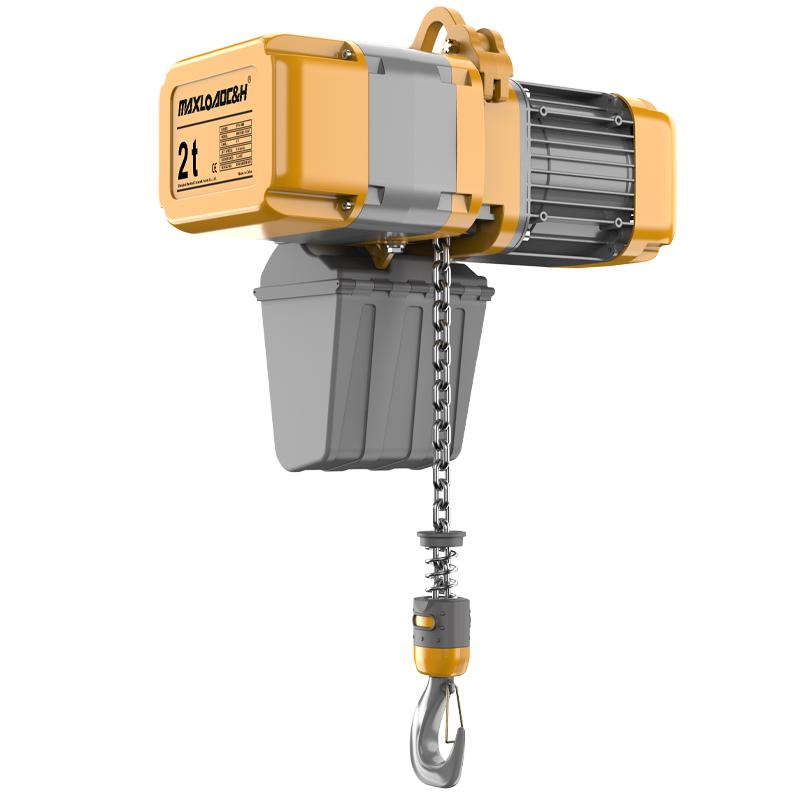
An electric hoist is a light and small lifting device driven by electricity. It integrates core components such as an electric motor, transmission mechanism, drum, and hook, enabling various material handling functions such as vertical lifting and horizontal movement. Compared with traditional manual hoists, electric hoists not only significantly reduce the labor intensity of workers but also significantly improve work efficiency and operational safety.
I. How Electric Hoists Work
To understand the value of electric hoists, it is necessary to understand their internal structure and working principles. A typical electric hoist mainly consists of the following core parts:
The electric motor is the "heart" of the electric hoist, providing power to the entire device. Depending on the operating environment and requirements, electric motors are divided into single-speed and double-speed types, and some special designs are also equipped with a soft start function to ensure smooth lifting of the load and reduce the impact on the power grid. The transmission mechanism acts as a "converter," converting the high-speed rotation of the electric motor into a low-speed, high-torque output suitable for lifting operations. Common forms include gear transmission and worm gear transmission.
The drum and wire rope constitute the core of the lifting system. The electric motor drives the drum to rotate through a reducer, causing the wire rope to wind or unwind in an orderly manner, thereby achieving the lifting and lowering of heavy objects. The diameter and length of the drum and the specifications of the wire rope need to be carefully designed according to the rated lifting capacity and working level. The hook assembly is the part that directly contacts the load and must have sufficient strength and safety. It is usually equipped with an anti-unhooking device to prevent accidental detachment of the lifted object.
The control system is the "brain" of the electric hoist, including various operating methods such as button control and remote control. Modern electric hoists are increasingly integrating intelligent control functions, such as overload protection, limit protection, and phase sequence protection, to ensure that the equipment operates safely and reliably under various working conditions.
II. The Role of Electric Hoists in Industrial Production
Electric hoists have a wide range of applications, covering almost all industrial scenarios requiring material handling.
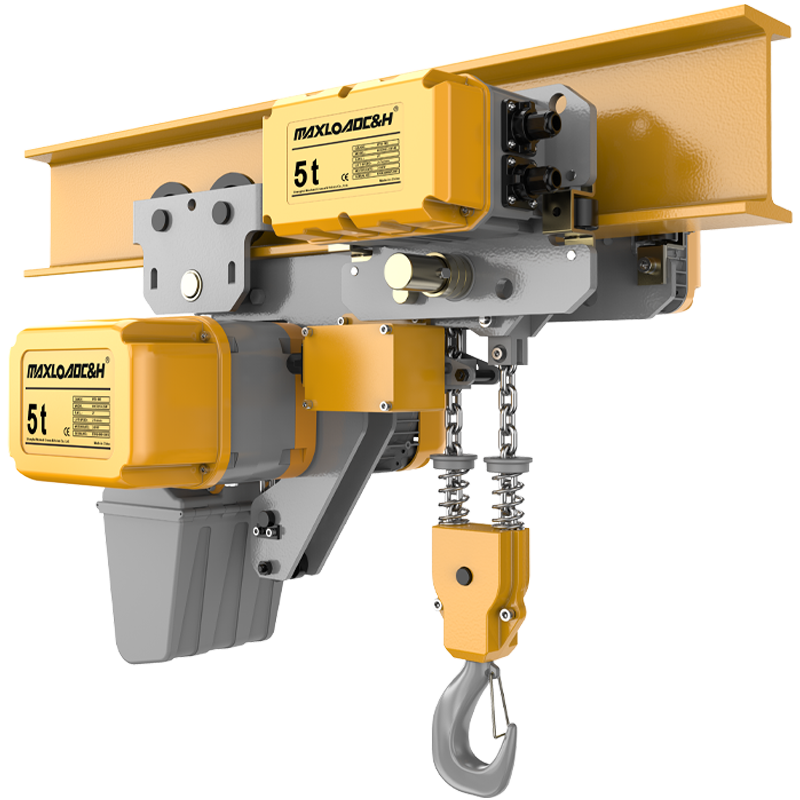
In manufacturing, electric hoists are often installed on I-beam tracks above workshops, forming bridge or single-girder crane systems, used for loading and unloading machine tools, material handling on assembly lines, and mold changes. Their precise positioning capabilities and adjustable lifting speed significantly improve production efficiency and operational accuracy.
The construction industry is also a major application area for electric hoists. On construction sites, they are used to lift rebar, formwork, concrete, and other building materials, saving a significant amount of labor and shortening construction cycles. The flexibility of electric hoists is particularly advantageous in confined spaces or areas where traditional large cranes cannot access.
In warehousing and logistics, electric hoists are combined with racking systems to achieve vertical storage and retrieval of goods, maximizing warehouse space utilization. In repair workshops, they are used to lift heavy equipment, facilitating inspection and maintenance. Furthermore, in special environments such as power plants, mines, and ports, specially designed electric hoists meet specific requirements for explosion-proof, corrosion-resistant, and high-temperature applications.
III. How to Choose the Right Electric Hoist
With the wide variety of electric hoist products on the market, how do you choose the right equipment for your needs? The following key factors need to be considered:
The lifting capacity is the primary parameter and must be determined based on the maximum load to be lifted, with an appropriate safety margin. The lifting height determines the length of the wire rope and the capacity of the drum, and needs to be determined based on the actual working space. The working class reflects the frequency of use and load variations of the equipment; light-duty, medium-duty, heavy-duty, and extra-heavy-duty correspond to different usage intensities.
Operating speed includes both lifting speed and travel speed. For precision assembly or handling of fragile goods, low-speed or variable-speed functions are often required, while for large-volume material transfer, high efficiency is more important. The installation method is also a factor to consider when purchasing; electric hoists can be divided into fixed, suspended, and traveling types, and the choice should be based on site conditions and process requirements.
Power supply conditions should not be overlooked; it is necessary to confirm that the site's power supply voltage and frequency match the equipment. Special environmental requirements, such as explosion-proof, waterproof, and corrosion-resistant features, must also be clearly stated during the selection process. In terms of safety configuration, it should at least include basic functions such as overload protection, upper and lower limit switches, and an emergency stop. More advanced equipment may also be equipped with intelligent systems such as load display and fault diagnosis.
IV. An Important Line of Defense for Protecting Life and Property
Safety is an eternal theme in material handling operations, and the correct use and maintenance of electric hoists is crucial.
Operators must undergo professional training and be familiar with the equipment structure, performance, and safety regulations. Routine inspections should be performed before each use to confirm that the wire rope is undamaged, the hook rotates freely, the limit switches are working properly, and the brakes are reliable and effective. During operation, overloading is strictly prohibited, lifting personnel is strictly prohibited, and standing or passing under the suspended load is strictly prohibited. When lifting, a test lift should be performed first to confirm balance and reliability before officially lifting; when moving, ensure that the path is clear to avoid collisions.
Daily maintenance is equally important. The equipment should be cleaned regularly, and all connecting parts should be checked for looseness, and lubrication points should be checked for sufficient lubrication. The wire rope must be replaced according to the specified cycle, and severely worn hooks must be scrapped immediately. The electrical system should be kept dry and clean, and the cable insulation and wiring connections should be checked for integrity and tightness. Electric hoists that are not used for a long time should be treated with rust prevention and stored in a dry and ventilated place.
With the advancement of industrial automation and intelligence, electric hoist technology is constantly innovating and developing. Advanced technologies such as wireless remote control, variable frequency speed regulation, and intelligent positioning are becoming increasingly popular, making operation more convenient and precise. The application of IoT technology makes remote monitoring of equipment status and preventive maintenance possible, further improving equipment reliability and efficiency. Environmental protection and energy saving are also important development directions; efficient motors and energy recovery systems reduce equipment operating energy consumption.
From simple manual assistance to intelligent material handling solutions, the development of electric hoists reflects the trajectory of industrial progress. When selecting and using these devices, we need to focus not only on their technical parameters and price, but also on their safety, reliability, and suitability for actual work requirements. Only through scientific selection, standardized operation, and careful maintenance can these industrial "powerhouses" truly become guardians of safe production while improving production efficiency. In the future, with continuous breakthroughs in new materials, new processes, and intelligent control technologies, electric hoists will inevitably evolve towards being lighter, more intelligent, and more user-friendly, providing safer and more efficient material handling solutions for industrial production and continuing to play an indispensable and important role in the grand symphony of industrial development.
 0086 156 1824 5535
 0086 156 1824 5535