Electric Hoists: The Efficient Engine of Modern Industrial Lifting
In the roaring workshops of modern factories, beneath the towering gantry cranes of busy ports, and in the core construction areas of large infrastructure projects, a seemingly compact yet incredibly powerful device operates silently and efficiently, lifting tons of materials – this is the electric hoist. As an important member of the lifting machinery family, the electric hoist, with its compact structure, simple operation, and reliable performance, has become an indispensable key piece of equipment for improving material handling efficiency, reducing labor intensity, and ensuring operational safety, deeply integrated into the bloodstream of modern industrial production.
I. Unveiling the Core: The Working Principle and Structure of Electric Hoists
Electric hoists are not mysterious; their efficient operation is based on a precise mechanical and electrical collaborative system.
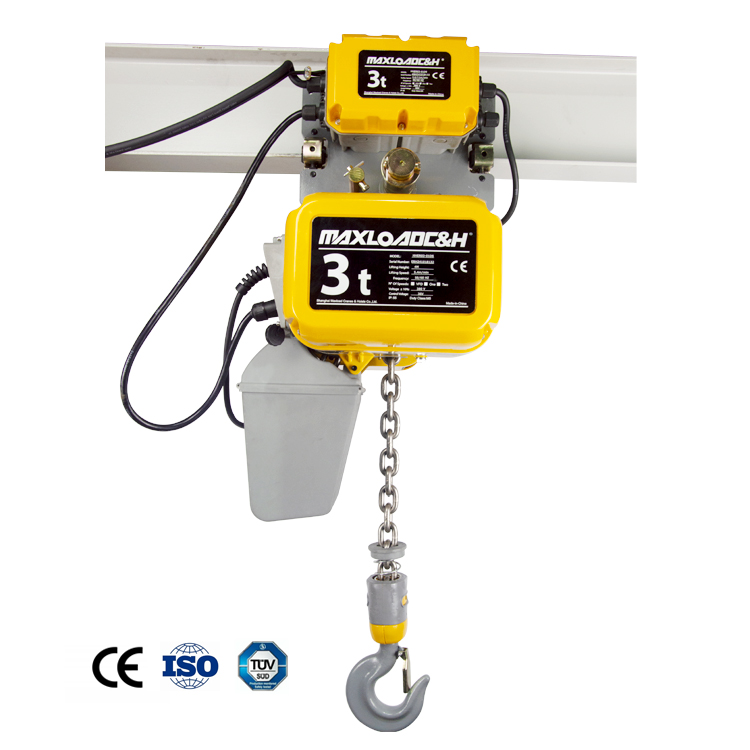
Core Working Principle: The electric hoist converts electrical energy into mechanical energy through an electric motor, driving the drum to wind or unwind the wire rope (or chain), thus achieving the vertical lifting and lowering of the hook and load. Horizontal movement is usually achieved by the hoist running on an I-beam track, driven by a separate travel motor or manually pushed. The entire system is controlled by the operator via a pendant control station or remote control, enabling precise positioning and handling of heavy objects.
Main Components:
1. Power Core – Electric Motor: Typically uses a conical rotor motor or a dual-speed motor, with a power-off self-braking feature to ensure lifting safety. The motor is the "heart" of the hoist, providing power for lifting and traveling.
2. Transmission Mechanism: Includes a gear reduction box, which converts the high-speed, low-torque output of the motor into the low-speed, high-torque required by the drum to smoothly lift heavy objects.
3. Load-Bearing and Execution Components:
Drum and Wire Rope/Chain: The drum is used to orderly wind the wire rope or chain. Wire rope hoists are suitable for medium to high altitudes and large lifting heights; chain hoists are more compact and suitable for medium to low altitudes and confined spaces.
Hook Device: Directly connects to the load, usually equipped with a safety latch to prevent the rigging from coming loose.
4. Braking System: In addition to the motor's self-braking mechanism, a mechanical load brake or electromagnetic brake may also be included, forming multiple safety barriers to prevent accidental slippage.
5. Limit Protection Device: A crucial safety component, including upper and lower limit switches, which automatically cut off the power in the corresponding direction to prevent over-lifting or excessive lowering.
6. Running Mechanism: For traveling hoists, this includes the traveling motor, wheels, and tracks, enabling horizontal movement.
7. Electrical Control System: Includes a control box, push-button switches, contactors, circuit breakers, etc., used to receive commands and safely distribute power.
II. Diverse Applications: Main Types and Selection of Electric Hoists
Based on different designs and characteristics, electric hoists are mainly divided into the following categories to meet diverse needs:
Wire Rope Electric Hoist: This is currently the most widely used type. Its features include a large lifting height, fast operating speed, relatively light weight, and wear-resistant and easily inspected wire rope. Widely used in workshops, warehouses, docks, power plants, and other places requiring frequent lifting at medium to high altitudes.
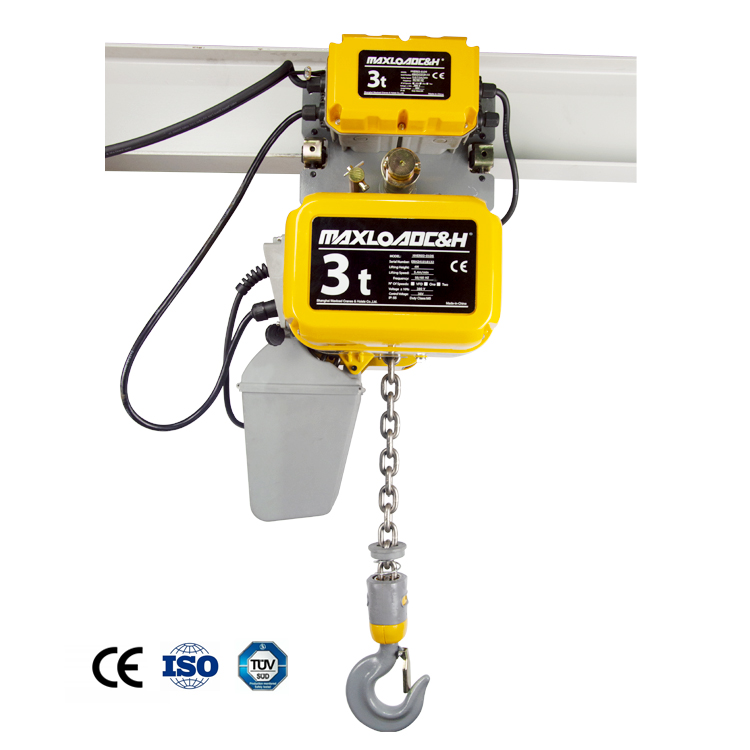
Chain Electric Hoist: Uses high-strength alloy chains as the load-bearing medium. It has a very compact structure, light weight, and is economical, suitable for places with relatively low lifting heights and non-extreme working frequencies, such as installation and maintenance, fixed-point lifting on production lines, and small warehouses. Its chain storage method sometimes offers advantages in deep lifting capabilities.
Explosion-Proof Electric Hoist: Specifically designed for hazardous environments with flammable and explosive gases, dust, etc., such as petroleum, chemical, coal mining, and gas stations. Its motor, electrical box, and all components that may generate sparks are specially treated to be explosion-proof, ensuring safe operation.
Low-Headroom Electric Hoist: Optimized design for situations with limited effective headroom in factories. Through a unique structural layout, it minimizes the clearance between the hook's limit position and the track, making full use of valuable vertical space.
Multi-functional Electric Hoist: In addition to basic lifting and running functions, it may also integrate functions such as rotation, trolley swing suppression, intelligent variable frequency speed control, and precise positioning, meeting the high-end needs of automated production lines and precision assembly. III. Ubiquitous: The Wide Range of Applications for Electric Hoists
Electric hoists are found throughout various pillar industries of the national economy:
Manufacturing and Assembly Workshops: Used on production lines in industries such as automotive, machinery, and steel structures, for lifting parts, molds, and semi-finished products, enabling rapid workflow and precise assembly between processes.
Warehousing and Logistics Centers: Used in conjunction with racking systems or single-girder cranes for loading, unloading, stacking, and sorting goods, forming a crucial part of modern intelligent warehousing.
Ports, Docks, and Freight Yards: Used for loading and unloading bulk cargo in containers and for equipment maintenance, serving as a powerful assistant for efficient operation of freight yards.
Construction Engineering and Infrastructure Development: Used for lifting construction materials such as rebar, formwork, and pipes, serving factory construction, bridge construction, subway projects, etc.
Energy and Power Industry: Used in thermal power plants, hydropower stations, and wind farms for the installation and maintenance of large equipment such as generators, turbines, and heavy-duty valves.
Maintenance and Repair Field: Used in machine repair workshops of various factories for disassembling and installing large equipment, making them essential tools for maintenance operations.
Specific and Special Environments: Such as low-dust hoists for clean rooms, low-temperature hoists for cold storage, and high-temperature hoists for metallurgical workshops.
IV. A Smart Choice: How to Select an Electric Hoist Based on Your Needs
Choosing the right electric hoist is a prerequisite for ensuring efficiency, safety, and cost-effectiveness. The following key parameters should be considered during procurement:
1. Rated Lifting Capacity: Must be greater than or equal to the maximum single-piece weight required for daily lifting, and a certain overload margin should be considered, but exceeding the rated load is strictly prohibited.
2. Lifting Height: Determined by the maximum lifting distance required for actual work, with a certain safety margin reserved.
3. Working Class: Reflects the hoist's workload and load status. It is determined by both the frequency of use and the load rate. For frequent, heavy-duty operations, a higher working-class product should be selected to ensure durability.
4. Operating Speed: Includes lifting speed and traveling speed. Should be selected based on the required work cycle and precise positioning needs. Variable frequency control can achieve stepless speed regulation and smooth starting and stopping.
5. Power Supply Conditions: Confirm that the voltage and frequency at the work site match the hoist's requirements.
6. Installation Method and Track Matching: Determine whether it is a fixed or mobile type. For mobile types, the track model, track length, and installation conditions must be specified.
7. Operating Environment: Consider the ambient temperature, humidity, presence of corrosive media, explosion risk, dust, or moisture, and select the appropriate protection level and special model.
8. Safety Devices: Ensure that the product is equipped with complete and reliable safety devices, such as double limit switches, overload protection, and phase protection.
9. After-Sales Maintenance: Consider whether the supplier can provide timely spare parts support, technical guidance, and repair services.
Conclusion
From improving workshop productivity to accelerating logistics turnover, from ensuring the progress of major projects to safeguarding safety in special industries, electric hoists, with their solid technical foundation and continuous innovation, continue to empower modern industry. Understanding their principles, clarifying their types, knowing their applications, and mastering their selection and maintenance points means that we are not only choosing a piece of equipment but also building a solid defense line for production efficiency, cost control, and workplace safety. In the future process of moving towards intelligent manufacturing and smart logistics, electric hoists will continue to play an indispensable and important role as a reliable "force multiplier."
 0086 156 1824 5535
 0086 156 1824 5535