Electric Hoists: The Core Power of Industrial Transportation
In modern industrial production, construction, warehousing and logistics, and even ports and docks, the vertical lifting and horizontal movement of heavy objects are frequent and critical processes. The weight and high-frequency operation demands that are beyond human capabilities have given rise to efficient and reliable lifting equipment. Among these, the electric hoist, as a compact, easy-to-operate, and powerful light-duty lifting tool, has long permeated every corner of national economic construction, becoming an indispensable "muscle" and "arm" for improving efficiency and ensuring safety. It not only conquers gravity but also acts as a precise and powerful force transmitter in fast-paced work environments.
I. Understanding Electric Hoists: Definition and Core Classification
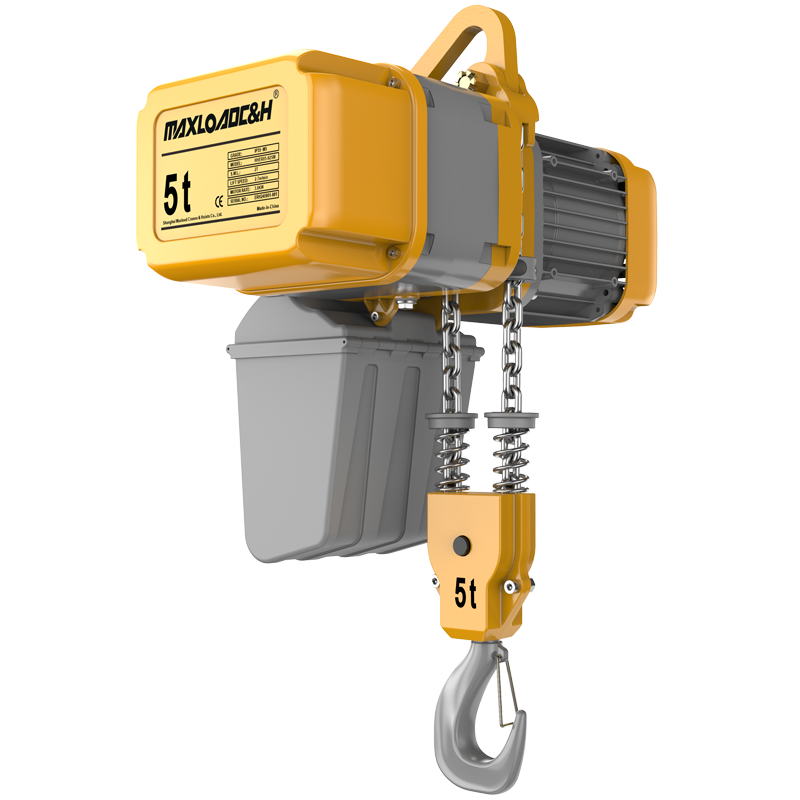
An electric hoist is a mechanical device driven by electricity, using a motor, reduction gear, drum or sprocket, etc., to drive a steel wire rope or lifting chain, thereby lifting, lowering, and potentially horizontally moving heavy objects. It is usually used in conjunction with a trolley, allowing it to travel along I-beams or other tracks, expanding its operating range.
Based on the different core lifting components, electric hoists are mainly divided into two categories:
1. Wire Rope Electric Hoist: Uses a steel wire rope wound on a drum as the load-bearing and traction medium. Its characteristics include a large lifting height, relatively light weight, smooth operation, and a wide load range, making it the most widely used type. It is suitable for most applications in workshops, warehouses, ports, etc.
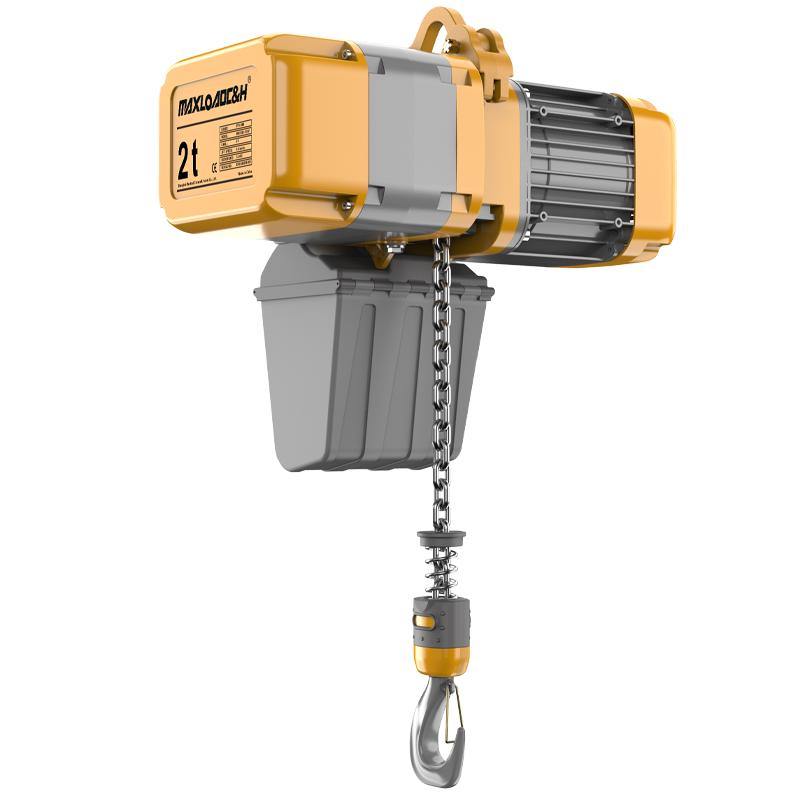
2. Chain Electric Hoist: Uses a high-strength alloy lifting chain for lifting operations. Its structure is very compact, and the body is small, making it suitable for confined spaces. It is lightweight, easy to install and move. It has good sealing performance and strong resistance to harsh environments. It is often used in low-height spaces, maintenance and installation, and fixed-point lifting on production lines, with a carrying capacity usually in the small to medium tonnage range.
In addition, according to the operating method, it can be divided into fixed type, single-beam trolley type, double-beam trolley type, etc.; according to the operating environment, there are also special designs such as explosion-proof type, corrosion-resistant type, and metallurgical special type.
II. The Inner Workings: Working Principle and Technical Characteristics
A typical electric hoist is the result of the precise and coordinated work of its internal components. The core working process is as follows: After the power is switched on, the control system issues a command to drive the motor to rotate; the high-speed rotation of the motor is significantly reduced and the torque is increased through a gear reducer; the output shaft of the reducer drives the drum to rotate, winding or releasing the steel wire rope in an orderly manner, or driving the sprocket to rotate, raising or lowering the lifting chain; finally, the lifting and lowering of heavy objects is achieved through the hook device.
The key technical features supporting this process include:
Motor and braking system: A dedicated conical rotor motor or side-magnetic braking motor is often used.Its characteristic is that when the motor is powered off, the rotor is displaced under the action of axial magnetic force or mechanical spring, immediately pressing the brake wheel to achieve fast and reliable braking, ensuring that the heavy object can be safely suspended.
Reduction mechanism: Multi-stage gear transmission converts the high speed of the motor into the low speed and high torque required by the hook, which is key to achieving smooth lifting and high load capacity.
Limit protection: Limit switches are installed at both the upper and lower limit positions. When the hook reaches the limit position, the circuit is automatically cut off to prevent "over-lifting" or excessive rope release, which is a crucial safety device.
Load-bearing components: The steel wire rope has high strength and a certain degree of flexibility; the lifting chain is wear-resistant and impact-resistant. The hook is usually equipped with an anti-slip device to prevent accidental slipping of the sling or rope.
III. Ubiquitous Applications: From Workshops to the Sky
Electric hoists have an extremely wide range of applications:
Manufacturing workshops: Used for mold assembly and disassembly, turning and assembly of large workpieces, and component replacement during machine tool maintenance on production lines, ensuring the smooth operation of production processes.
Warehousing and logistics: Used for vertical access and loading/unloading of goods between shelves or on loading platforms, significantly improving warehouse space utilization and handling efficiency.
Construction and decoration: Used for lifting building materials and installing equipment, playing a crucial role, especially in the internal construction of high-rise buildings.
Power and energy industry: Used in substations and hydropower stations for the installation and maintenance of switchgear and transformers.
Stage arts: Used in theaters and studios for the rapid and precise lifting and lowering of lighting, sound equipment, curtains, and scenery, achieving brilliant stage effects.
IV. How to Choose the Right Electric Hoist
Choosing the right electric hoist is essential for ensuring safety, efficiency, and cost-effectiveness. Key considerations include:
1. Rated Lifting Capacity: Must be greater than or equal to the maximum weight required for daily lifting, and consider possible dynamic loads. Overloading is strictly prohibited.
2. Lifting Height: Determined by the maximum vertical distance the hook needs to travel, with a small safety margin included.
3. Work Class and Usage Frequency: Select a hoist with the appropriate work class based on the number of work cycles per day or hour and the load factor. Frequent and heavy-duty use requires a higher work-class product.
4. Power Supply Conditions: Confirm that the voltage and frequency at the work site match the equipment.
5. Operating Environment: Consider whether there are special conditions such as explosive gases, dust, high humidity, corrosive media, or high temperatures.
6. Installation Method and Track: Whether it is a fixed installation or requires movement, the track model and span must match the hoist trolley.
7. Control Method: Choose between ground-level operation, remote control, or wired control room operation, based on ease of operation and safety requirements.
Conclusion
The electric hoist, a seemingly inconspicuous industrial device, is actually a solid and vital link in the modern system of material production and circulation. With its reliable power and precise control, it silently supports a vast system ranging from basic infrastructure to high-end manufacturing. Understanding its principles, correctly selecting, properly using, and carefully maintaining it will not only maximize its efficiency and reduce costs for businesses but also directly safeguard the foundation of industrial civilization: safe production. On the road to a smarter and more efficient industrial future, the continuously evolving electric hoist will continue to play a crucial role, steadily lifting the expectations of a new era.
 0086 156 1824 5535
 0086 156 1824 5535