The Two Pillars of Industrial Lifting: Electric Hoists and Cranes
In modern industrial production and logistics, efficient and safe material-lifting solutions are crucial to production efficiency. Electric hoists and jib cranes, two common lifting devices, each possess unique technical characteristics and application scenarios, while also complementing each other in many industrial environments, together building a flexible and diverse material-handling system. Understanding their characteristics, correct selection, and standardized use is essential for improving operational safety and work efficiency.
I. Precise and Efficient Vertical Lifting Experts
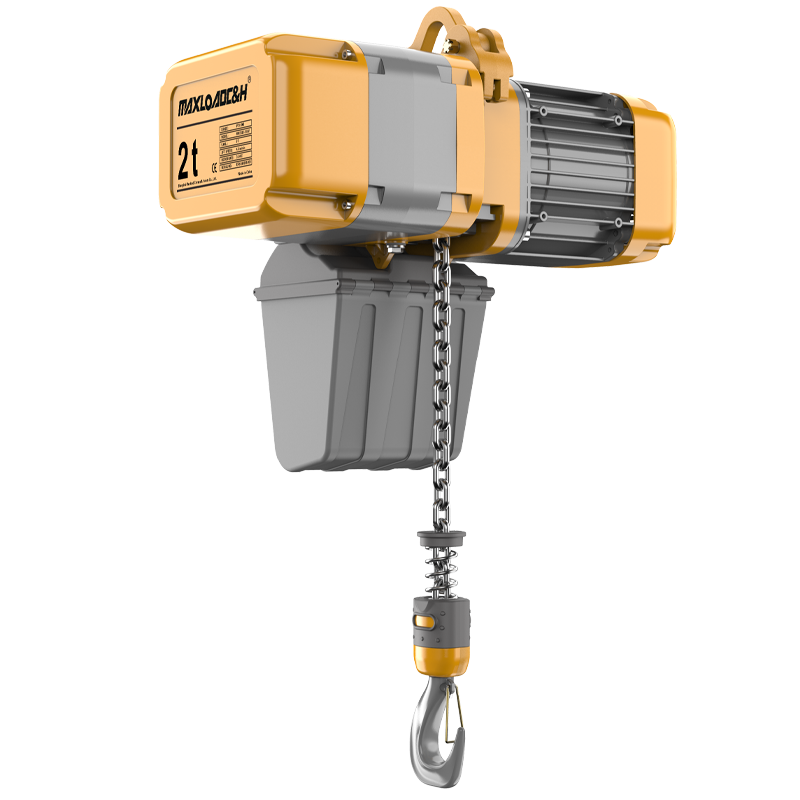
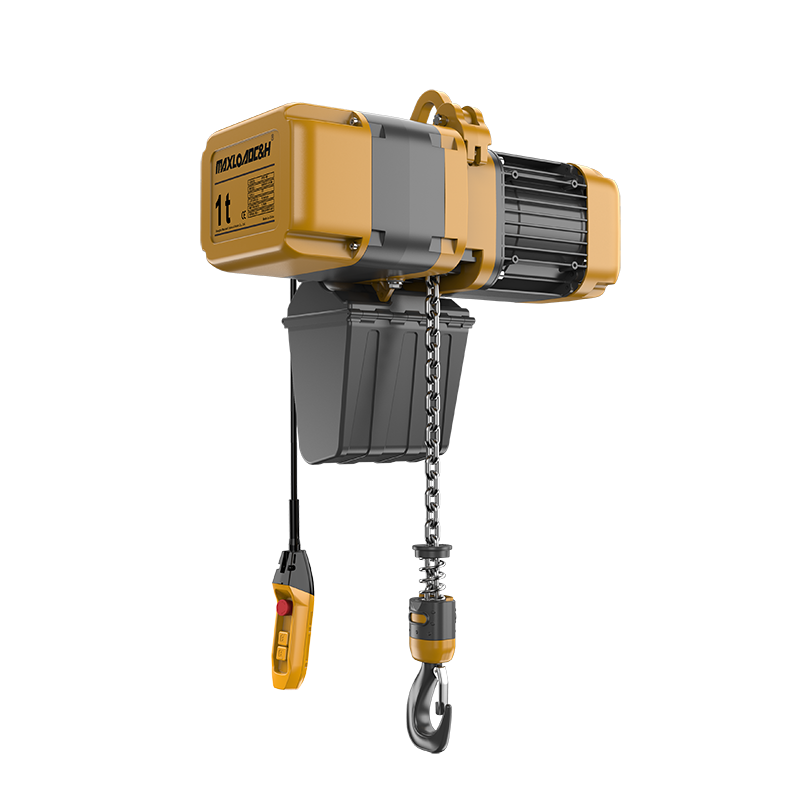
An electric hoist is a compact, easy-to-operate electric lifting device, usually installed on an I-beam track or fixed bracket, enabling vertical lifting and horizontal movement of materials. Its core advantages include high lifting precision, flexible control, and a small footprint.
From a technical perspective, the electric hoist drives a drum or sprocket via an electric motor, winding a steel wire rope or lifting chain to raise and lower the hook and load. Modern electric hoists are often equipped with sophisticated control systems, supporting multi-speed adjustment, jogging operation, and limit protection, meeting the needs of precision assembly, fine placement, and other operations requiring high positioning accuracy.
Selecting an electric hoist requires comprehensive consideration of multiple parameters. Lifting capacity is the primary factor and must strictly match the maximum load in actual operation, with an appropriate safety margin. The lifting height determines the rope or chain capacity of the hoist drum and must meet the needs from the lowest pick-up point to the highest placement point. The working class reflects the expected load frequency and load rate of the equipment and is a key indicator of its durability and reliability. In addition, operating speed, motor power, protection level, and special environmental requirements such as explosion-proof capabilities must be carefully considered during selection.
In practical applications, electric hoists are widely used in workshops, warehouses, repair shops, assembly lines, and other places. Whether it's loading and unloading machine-tool workpieces, distributing components on the production line, or disassembling and assembling parts during equipment maintenance, their flexibility and precision can significantly improve work efficiency. However, their horizontal movement range is usually limited by the length and direction of the track, and their flexibility may be insufficient when covering a large or specifically shaped planar work area.
II. Flexible and Agile Fixed-Point Operation Experts
A jib crane is a lifting device with a cantilever structure. Its core components include a column, a rotating arm, and a lifting mechanism. The cantilever can rotate around the column, providing efficient material delivery services to a specific workstation within a certain circular range.
According to their structural form, jib cranes are mainly divided into column-mounted jib cranes, wall-mounted jib cranes, and balance cranes. Column-mounted cranes are independently stable, while wall-mounted cranes save floor space, each suitable for different site conditions. Their greatest advantage is the ability to achieve fast and precise positioning of the load within the cantilever's radius, centered on the column. This is particularly suitable for distributing materials from a central supply point to multiple surrounding workstations, or for frequent loading, unloading, and assembly operations at fixed workstations.
When selecting a jib crane, the cantilever length is a parameter that needs to be determined first, as it defines the equipment's coverage area. The rotation angle determines the service sector or circular area. Similarly, lifting capacity, lifting height, and working class are also basic selection criteria. The installation method of the column should be determined according to the site structure and load-bearing capacity.
In machining workshops, jib cranes often serve equipment such as lathes and milling machines, facilitating the handling of raw materials and finished products; at welding stations, they can easily position large welded parts; and next to assembly lines, they can efficiently supply parts to multiple workstations in a cyclical manner. Their advantage lies in greatly reducing the manpower and time required for short-distance material handling, but their coverage is relatively limited to a circular area centered on the column, and they are not suitable for long-distance linear transportation.
III. Building an Efficient Material Flow Network
In many complex production scenarios, using a single type of equipment is often insufficient to meet all needs. The synergistic application of electric hoists and jib cranes can create a more comprehensive and efficient material handling network.
For example, in a medium-sized repair workshop or manufacturing unit, a solution can be designed as follows: an I-beam track is installed at the top of the workshop, running through the main areas, with one or more large-tonnage electric hoists responsible for the "trunk transportation" of raw materials and large components across different areas. At the same time, independent jib cranes are set up at each key workstation, responsible for the "last mile" precise positioning and frequent loading and unloading operations within that workstation's area. The electric hoist transports materials from the warehouse to the workstation area, where the jib crane takes over to complete precise positioning. Through rational work zone division and seamless integration, this combination achieves a perfect blend of "long-distance rapid transfer" and "short-distance precise operation."
In terms of space utilization, this combination also offers significant advantages. The overhead track fully utilizes the upper space of the factory building, without affecting ground equipment and personnel activities; the ground- or wall-mounted jib crane focuses on point-to-point service, with a compact structure that avoids interference. Through scientific layout planning, the logistics efficiency within the entire workspace can be maximized, reducing handling blind spots.
Summary
Electric hoists and jib cranes, like two powerful wings in the field of industrial material handling, play an irreplaceable role in vertical lifting and point-to-point rotational operations, thanks to their respective technical strengths. A deep understanding of their performance parameters and applicable scenarios, combined with innovative applications and layout planning in practice, can effectively optimize production processes, reduce labor intensity, and improve overall operational efficiency. However, all of this must be based on strict adherence to safety operating procedures and consistent maintenance. Only by prioritizing both efficiency and safety can these two "industrial wings" soar steadily, truly providing solid and reliable support for the development of the enterprise.
 0086 156 1824 5535
 0086 156 1824 5535