Tools for Enhanced Efficiency and Safety: Electric Hoists and Jib Cranes
In modern workshops, warehouses, repair shops, and even construction sites, efficient and safe material handling is a crucial aspect of ensuring smooth production and operational safety. Among the many lifting equipment options, electric hoists and jib cranes, as two extremely common and efficient combination tools, have become the preferred solution for precise material handling in localized areas due to their flexibility, cost-effectiveness, and powerful functionality. This article will delve into the technical characteristics, applicable scenarios, safety usage guidelines, and best practices for collaborative operation of these two types of equipment.
I. Core Principles and Classification
1. Electric Hoist: The Power Core for Precise Lifting
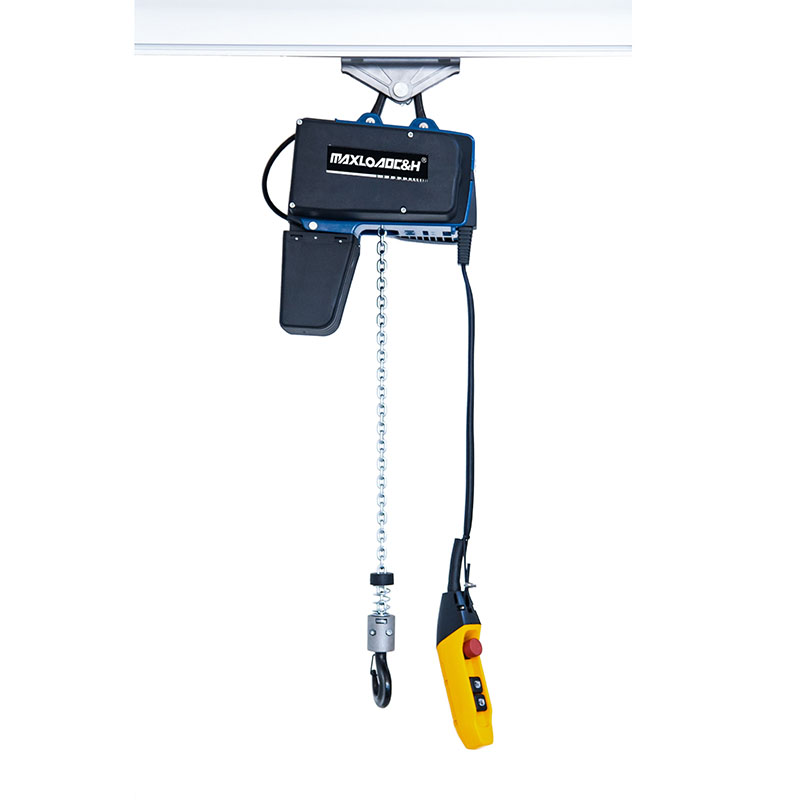
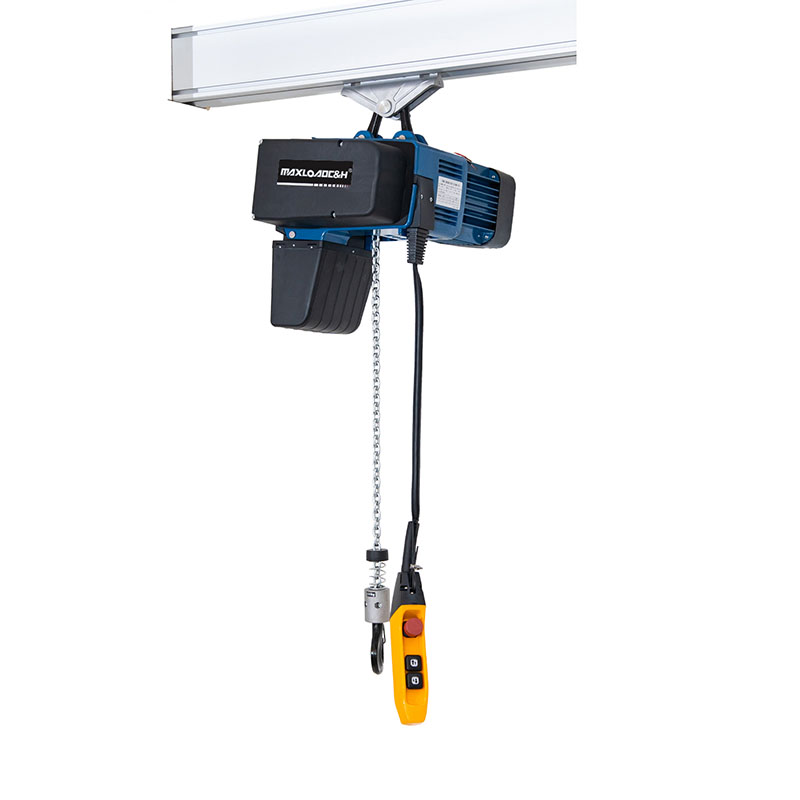
An electric hoist is a light and compact lifting device that integrates a motor, transmission mechanism, drum (or sprocket), and hook. It is primarily responsible for vertical lifting and lowering operations.
Working Principle: The electric motor drives the drum to wind the wire rope (or chain) through a gear reducer, thereby driving the hook and load to move linearly up and down.
Main Classifications:
Wire Rope Electric Hoist: Wide load capacity range, large lifting height, relatively heavy weight, and stable operation, suitable for most industrial environments.
Chain Electric Hoist: Uses an alloy lifting chain, compact structure, light weight, and economical price, making it more suitable for medium-to-low frequency, medium-to-low load, and space-constrained applications.
Core Features: Small size, light weight, simple operation, and precise lifting. It is usually installed as an "actuator" on various lifting frames or trolleys.
2. Jib Crane: The Flexible Rotating Arm for Coverage
A jib crane is a structural lifting device mainly composed of a column, rotating arm, rotating support system, and electrical system. It is responsible for providing a horizontal movement path and support for the electric hoist.
Working Principle: The column is fixed to the ground or wall, and the jib can rotate at a fixed angle (e.g., 180°, 270°) or 360° through the rotating support. The electric hoist is installed on the I-beam of the jib and can move linearly along the length of the jib. This creates a flexible two-dimensional or three-dimensional workspace covering a sector or circular working area. Column-mounted jib crane: The base is fixed to the ground, providing a stable structure and a large coverage area, making it the most commonly used independent workstation lifting equipment in workshops.
Main classifications:
Wall-mounted jib crane: The column is fixed to a wall or pillar, saving floor space and is suitable for material handling at workstations near walls or at the edge of production lines.
Core features: Precise positioning, flexible operation, space-saving, and effectively eliminates "dead zones" that traditional gantry cranes or overhead cranes cannot cover.
II. Application Scenarios and Synergistic Advantages
The combination of an electric hoist and jib crane is not simply a functional addition, but rather creates a "1+1>2" synergistic effect, solving core pain points in specific scenarios.
1. Typical Application Scenarios:
Machine tool loading and unloading: Easily transport workpieces from the material area to workbenches such as lathes, milling machines, and machining centers, with precise positioning, significantly reducing worker labor intensity and improving machine tool utilization.
Assembly production line: Used at assembly workstations to lift and transport parts, components, or small assemblies, enabling efficient and labor-saving assembly line operations.
Repair and maintenance areas: In equipment maintenance areas, used for disassembling and lifting heavy components such as engines, motors, and gearboxes, safely and conveniently.
Warehouse picking and stacking: In specific shelving areas of the warehouse, used for accessing and storing medium-weight boxes or bundled goods.
Mold changing: Mold lifting and changing next to injection molding machines and stamping machines requires extremely precise positioning, making this combination an ideal choice.
2. Synergistic Advantages:
Ultimate work efficiency: The operator can control the hoist's lifting and the jib's rotation/movement individually or in conjunction via a handheld button station, completing the entire process of picking up, moving, positioning, and placing materials in a few minutes or even tens of seconds, several times faster than traditional forklifts or manual handling.
Excellent space economy: No need for large crane tracks and massive support structures; only the footprint of a single column is required, effectively utilizing the vertical space, especially suitable for old workshop renovations or space-constrained locations.
Significantly reduced risk of workplace injuries: Fundamentally avoids the risks of muscle strain and crushing injuries caused by manual handling. High-quality equipment features multiple safety protections, ensuring that heavy loads remain under control at all times.
Improved product quality: The smooth, shock-free lifting method prevents bumps and scratches to workpieces during handling, making it particularly suitable for precision parts or finished surfaces.
III. Operating Procedures and Maintenance Points
Even the best equipment requires proper operation and careful maintenance. Safety is always the top priority.
1. Essential Operating Procedures for Operators:
Certified Operation: Operators must undergo professional training and understand the equipment structure, performance, and emergency procedures.
Pre-operation Inspection: Before daily use, a "point inspection" must be performed: check the lifting hook for cracks or deformation; check the wire rope/chain for broken strands, twisting, or corrosion; check if the button station is functioning correctly; check if the limit device is effective; and check for obstacles on the track.
Prohibited Actions:
Overloading is strictly prohibited (the load must be clearly marked).
Pulling or lifting heavy objects at an angle is strictly prohibited.
Using the hook to directly wrap around or rub against the load is strictly prohibited.
Lifting heavy objects above personnel or passing over people's heads is strictly prohibited.
Dragging a load that has not been unhooked from the ground is strictly prohibited.
Performing more than one uncoordinated action simultaneously is strictly prohibited.
Standard Operation: Lift smoothly, first inching the wire rope/chain to tighten it, checking the load balance before lifting at a constant speed; when moving, ensure the load path is clear and sound the warning bell; after the operation is complete, move the hoist to the designated position and raise the hook to more than 2 meters above the ground.
2. Regular Maintenance and Servicing of Equipment:
Daily Maintenance: Keep the equipment clean, especially the tracks and wire ropes/chains, to prevent dust and metal shavings from accumulating and affecting operation.
Regular Inspection: More in-depth inspections should be conducted by professional personnel, including checking for loose electrical connections, gearbox oil level, brake wear, and loose welds or connecting bolts on structural components.
Professional Annual Inspection: A comprehensive safety inspection and technical performance test should be conducted annually, preferably by a qualified third party, to ensure compliance with national lifting machinery safety regulations. All inspections and maintenance should be documented.
IV. How to Choose the Best Configuration for Your Working Conditions
Choosing the right electric hoist and jib crane is crucial for a successful investment. Key considerations include:
Maximum lifting capacity: Determined by the heaviest workpiece you lift daily, with approximately 20% safety margin.
Working radius: The length of the jib determines the coverage area and must cover the furthest distance from the pick-up point to the drop-off point.
Lifting height: The vertical distance between the lowest pick-up position and the highest required placement position.
Work duty cycle: Is it light-duty occasional use, medium-duty frequent use, or heavy-duty continuous use? This determines the motor and structural rating.
Installation environment: Ground load-bearing capacity, workshop headroom, presence of obstacles, power supply configuration, etc.
Special requirements: Do you need explosion-proof features, dual-speed/variable frequency control, low headroom design, etc.?
Conclusion
The combination of electric hoists and jib cranes is an indispensable "efficiency multiplier" and "safety guardian" in modern lean manufacturing. With relatively low investment, they solve the problems of precision and flexibility in material handling at specific workstations, directly improving production pace, ensuring personnel safety, and optimizing space layout.
A successful application begins with scientific selection and is achieved through strict safety management. A deep understanding of equipment characteristics, integrating them into the production process, and establishing a comprehensive operation and maintenance system are essential to maximize the value of this golden combination and provide solid and reliable support for the high-quality development of the enterprise.
 0086 156 1824 5535
 0086 156 1824 5535