Electric Hoists and Jib Cranes: Powerful Assistants for Improving Lifting Efficiency
In modern industrial production and logistics operations, efficient and safe material handling systems are crucial for ensuring production efficiency. Among these, electric hoists and jib cranes, as two common lifting devices, play an indispensable role in various working environments thanks to their unique design advantages and application characteristics. Understanding their basic principles, applicable scope, and collaborative working methods is of great significance for optimizing work processes and improving operational safety.
I. Flexible and Efficient Vertical Lifting Experts
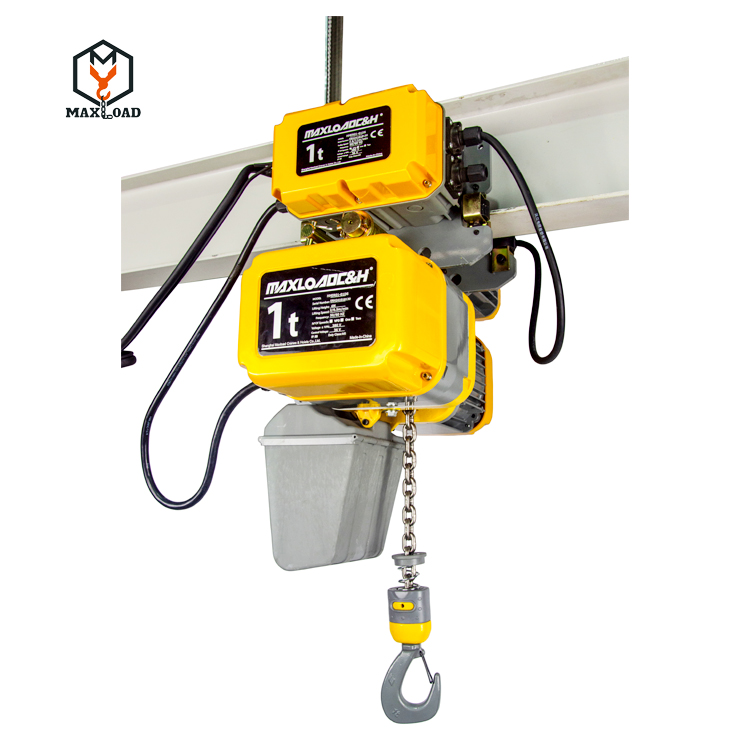
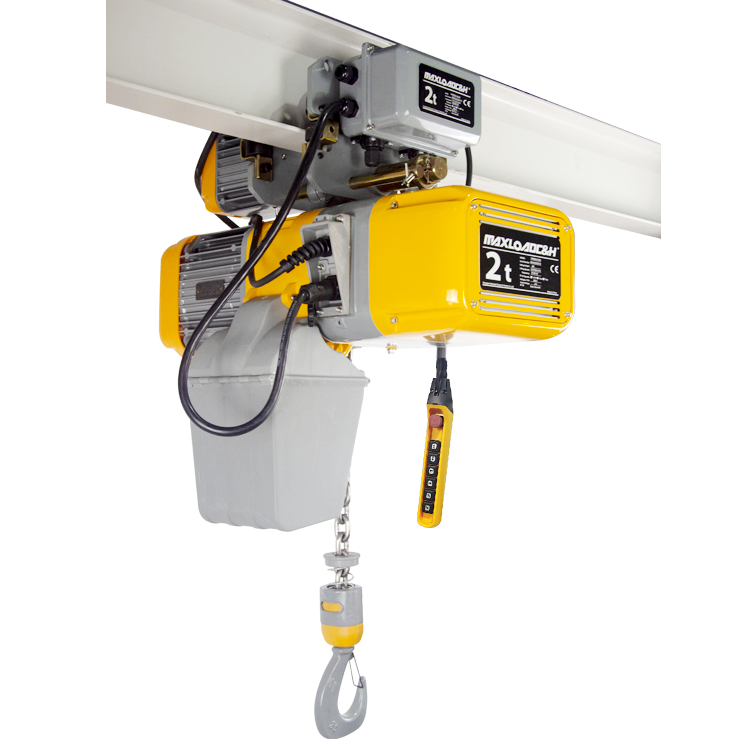
Electric hoists, often referred to as electric lifting devices, are compact and easy-to-operate lifting equipment. Their core working principle is to drive a motor, which transmits power through a reduction mechanism to drive a drum to wind a steel wire rope or chain, thereby achieving the vertical lifting and lowering of heavy objects. Thanks to the motor drive, their lifting speed is stable and controllable, and their load capacity covers a wide range, from hundreds of kilograms to tens of tons, meeting the lifting needs of most small and medium-sized materials.
The most significant advantage of electric hoists lies in their flexibility and adaptability. They can be installed individually on a fixed bracket as a simple lifting tool or easily integrated into various complex lifting systems, such as serving as the lifting mechanism for bridge cranes and gantry cranes. The modular design makes installation and maintenance relatively simple. In addition, modern electric hoists are usually equipped with multiple safety devices, such as overload protection, limit switches, and phase sequence protection, significantly improving operational safety. Their application scenarios are extremely wide, from material transfer and equipment maintenance on factory production lines to cargo stacking in warehouses and material lifting in construction projects.
II. Precise Positioning Experts for Local Area Rotation
The core feature of a jib crane is its cantilever structure that can rotate around a fixed axis. This cantilever can be fixed to a wall or column, or supported by a column installed on a foundation; some models of cantilevers can also move within a certain range. The rotation function is its essence. The operator drives the cantilever to rotate manually, electrically, or pneumatically, allowing the heavy object suspended from the lifting device at the end of the arm to be quickly and accurately delivered to any position within the circular coverage area centered on the rotation point. The core value of a jib crane lies in its excellent efficiency in localized material handling. It is particularly suitable for scenarios where the work point is relatively fixed, but materials need to be frequently moved within a limited radius. For example, transferring workpieces between machine tools, loading and unloading materials for machining centers, distributing parts to assembly line workstations, or performing loading and unloading operations in specific areas of a warehouse. Compared to bridge cranes that require both trolley and bridge movement for positioning, jib cranes offer more direct and faster operation within their working range, effectively reducing non-productive movement time, and are especially suitable for workshops with dense process layouts.
III. Application Scenario Analysis and Synergistic Efficiency
Although electric hoists and jib cranes have some overlapping functions, their design intent and primary applications differ. The key to choosing between them lies in a thorough analysis of specific operational needs.
The core advantage of an electric hoist is its powerful and stable vertical lifting and lowering capabilities, as well as its ability to be integrated as a module with other large crane systems. When the operational requirement is primarily pure vertical lifting, or when moving heavy objects along a line or within a large planar area, an independent electric hoist or a bridge/gantry crane system with an electric hoist as its core is a more economical and efficient choice.
The core competitiveness of a jib crane lies in its unparalleled localized area coverage and precise positioning capabilities. When the work area is a sector or circular area around a central point, and materials need to be frequently and quickly transferred from the central point to various points around the periphery, the efficiency advantage of the jib crane becomes apparent. It can deliver materials "within easy reach" to the operator's required location, greatly reducing the distance and labor intensity of material handling for workers.
In actual production, the two are not mutually exclusive, but often form a complementary collaborative relationship. The most common and efficient combination is to install an electric hoist as the lifting mechanism at the end of the jib crane's arm. This combination fully utilizes the advantages of the electric hoist's efficient vertical lifting and the jib crane's flexible rotational coverage, creating a highly mobile "point-to-area" material handling solution. Operators can easily lift heavy objects from point A within the rotation radius, rotate the cantilever arm, and accurately place them at point B. The entire process is smooth, effortless, and precise.
IV. Selection and Safety Considerations
Selecting the appropriate equipment requires a comprehensive assessment of multiple factors: firstly, the maximum lifting capacity and working frequency, which determine the basic specifications of the equipment; secondly, the working range, i.e., the required lifting height and horizontal coverage radius, which directly influences whether to choose a pure lifting device or a system with a rotating arm; thirdly, the installation environment, including workshop height, load-bearing capacity of columns or walls, and floor space; and finally, the balance between budget and efficiency improvement.
Regardless of the equipment chosen, safety is always the top priority. It is essential to ensure that the equipment is installed and regularly maintained by qualified professionals. Operators must undergo rigorous training and be familiar with equipment operating procedures and emergency plans. During daily use, the rated load must be strictly adhered to, and overloading is strictly prohibited; equipment status checks should be performed before operation; the working area should be observed to ensure that there are no people under the lifting path; and full use should be made of the various limit switches and protective devices provided with the equipment.
With the development of industrial automation and intelligence, electric hoists and jib cranes are also constantly evolving. The application of variable frequency control technology makes lifting and operation smoother and more precise; remote control, automated positioning, and even intelligent cranes linked with production line management systems are becoming increasingly common, further improving the efficiency and safety of material handling.
In summary, electric hoists and jib cranes, as extensions of industrial arms, play a core role in vertical lifting and localized rotational handling. A thorough understanding of their technical characteristics and application scenarios, along with reasonable selection and configuration, and consistent adherence to safety regulations, will ensure that they truly become reliable partners in improving productivity and guaranteeing operational safety, laying a solid foundation for the smooth operation of modern industry.
 0086 156 1824 5535
 0086 156 1824 5535