Electric Hoists and KBK Cranes: Modern Lightweight Material Handling
In modern industrial production, warehousing, logistics, and commercial settings, efficient and safe material handling is crucial for ensuring smooth operations and enhancing production efficiency. Among numerous lifting and handling equipment, electric hoists and KBK cranes, with their unique advantages, have become indispensable solutions in the field of light to medium load handling. While they often work together, each has its own focus, jointly constructing a flexible and efficient aerial handling system.
I. Electric Hoists: The Core of Precise and Efficient Vertical Lifting
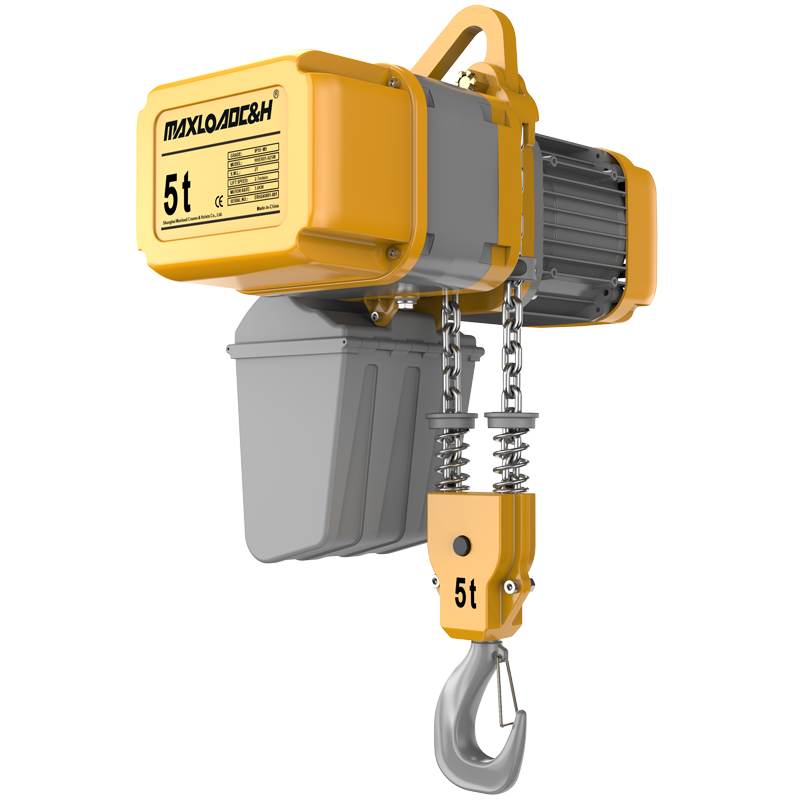
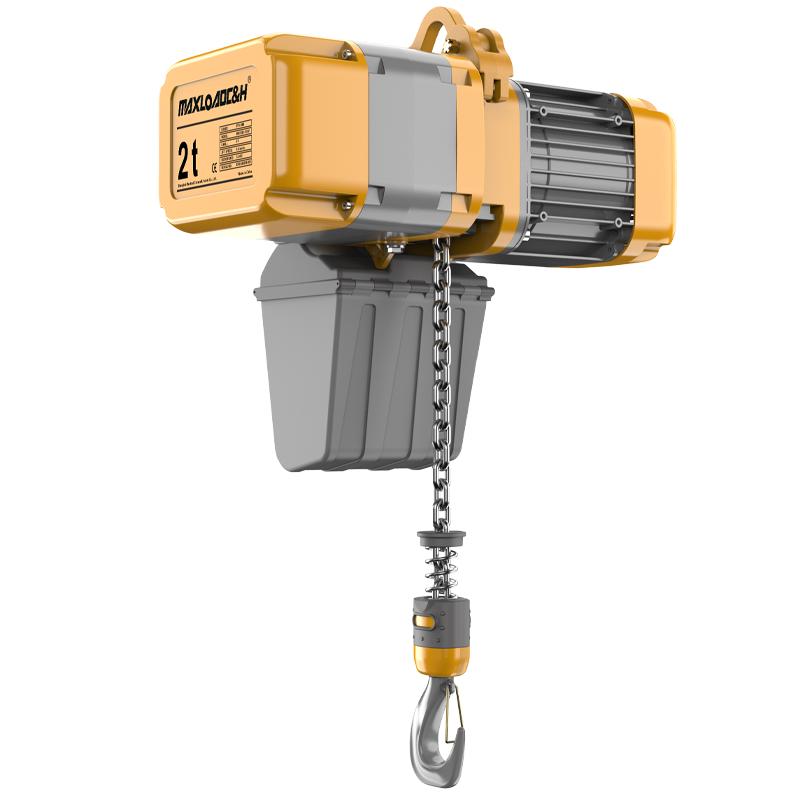
Compact Structure, High Load Capacity: Electric hoists typically consist of a motor, reduction gear, drum or sprocket, and hook. Their ingenious design provides considerable lifting capacity within a limited volume and weight, covering a range of needs from hundreds of kilograms to several tons or even higher.
Smooth Lifting, Precise Positioning: Utilizing high-quality motors and transmission systems, they operate smoothly with a gentle start and stop. Combined with a precise control system, they can achieve millimeter-level micro-motion lifting of loads, meeting the high-precision requirements of precision assembly, mold assembly, and other similar operations.
High Safety: Typically equipped with multiple safety devices, such as overload protection, upper and lower limit switches, emergency stop buttons, and phase sequence protection, effectively preventing misoperation and overload operation, ensuring the safety of personnel and equipment.
High Adaptability: Depending on the operating environment, wire rope hoists or chain hoists can be selected. Wire rope hoists offer greater lifting height and faster operating speed; chain hoists have a more compact structure, lighter weight, and lower installation space requirements. In addition, there are special designs such as explosion-proof and corrosion-resistant types, suitable for various occasions such as workshops, warehouses, maintenance rooms, and production lines.
Main Application Scenarios: Point-to-point lifting and assembly processes on production lines.
In warehouses, used in conjunction with manual monorail trolleys for loading and unloading materials within designated areas.
In maintenance workshops, used to lift components for repair.
As the main or auxiliary lifting mechanism for large cranes.
II. KBK Cranes: Flexible and Versatile Planar Conveying Systems
Modular Design, Excellent Flexibility: The KBK system is composed of standardized components. Based on the factory structure and work area requirements, KBK track systems can be flexibly constructed into straight, curved, circular, and even complex grid-like two-dimensional or three-dimensional conveying paths, achieving near-complete coverage.
Lightweight and with low building requirements: The KBK track system is lightweight, transferring the load directly to the steel structure above the factory. It eliminates the need for complex and bulky ground support columns, resulting in relatively low requirements for the factory structure and load-bearing capacity. Installation is convenient, making it particularly suitable for renovation projects or environments with limited space.
Easy to operate and flexible in positioning: Manually operated KBK systems require minimal pushing and pulling force, making operation effortless; electrically operated KBK systems allow for precise remote or button control. Whether manual or electric, the load can be easily positioned at any point in the work area.
Convenient expansion and reconfiguration: Due to its modular design, the system can be easily expanded, shortened, or reconfigured as the production process layout is adjusted, ensuring long-term investment effectiveness and adapting to dynamic business development.
Main application scenarios: Material loading, unloading, and inter-workstation flow on production lines.
Sequential conveying and precise positioning of components on assembly lines.
Material transfer between machining centers or within specific areas of a warehouse.
Any work area requiring frequent and flexible movement of small to medium-sized workpieces.
III. Synergy and Differences: How to Choose the Optimal Combination
Electric hoists and KBK cranes often form a complete light-duty lifting and conveying system in the form of "KBK rail + electric hoist". The hoist handles "vertical" movement, while the KBK rail handles "horizontal, horizontal, and backward" movement. Together, they enable three-dimensional material access at any point within the workspace.
The main differences between the two are:
Functional Positioning: The electric hoist is the lifting mechanism; the KBK is the running and support system.
Core Function: The hoist solves vertical movement; the KBK solves horizontal movement and system construction.
Independence: The electric hoist can be used independently; the KBK system must be combined with a hoist to complete lifting operations.
When selecting, the following factors should be considered:
Load Parameters:
Lifting Capacity: Clearly define the maximum weight of the goods to be moved. This is the primary basis for selecting the electric hoist model and KBK rail specifications. An appropriate safety margin should be allowed.
Work Frequency: For frequent use, choose products with higher operating levels and more stable performance.
Work Scope and Process:
Coverage Area: Analyze all points where materials need to reach. A single fixed-point operation may only require one stationary electric hoist; however, for transfers between multiple workstations, the KBK track layout needs to be planned.
Process Flow: Is it simple point-to-point handling or a complex multi-process flow? This determines the complexity of the KBK system and whether special components such as switches and turntables need to be integrated.
Space and Environment:
Plant Conditions: Inspect the roof structure, height, and presence of obstructions such as columns. This determines whether the KBK system uses a suspended or column-supported design and the track layout.
Environmental Conditions: Are there dust, humidity, corrosive, or explosive gases? Appropriate protection levels or explosion-proof electric hoists and KBK components must be selected.
Operational Requirements and Efficiency:
Control Method: Based on operating frequency and accuracy requirements, select manual operation, manual gate control, wireless remote control, or automated integration.
Lifting and Operating Speed: Select appropriate lifting and horizontal operating speeds based on production cycle requirements.
Budget and Scalability: Assess initial investment costs while considering potential changes in future production layout. Modular KBK systems may be more economical and flexible in the long run.
IV. Application Outlook and Safety Guidelines
With the advancement of Industry 4.0 and smart manufacturing, the integration of electric hoists and KBK cranes is becoming increasingly intelligent and integrated. For example, by integrating sensors, encoders, and PLC control, automatic load positioning, path memory, and linkage with AGVs or production management systems can be achieved, constructing intelligent logistics subsystems.
Regardless of technological advancements, safety is always the first principle. When using this type of equipment, the following must be ensured:
Design, installation, and commissioning must be performed by qualified personnel.
Overloading is strictly prohibited.
Regular maintenance and safety inspections must be conducted.
Operators must be trained and familiar with equipment performance and operating procedures.
Strictly implement daily inspection procedures to ensure all safety devices are effective.
In conclusion, the lightweight material handling system composed of electric hoists and KBK cranes plays a crucial role in modern industrial production and logistics systems due to its high flexibility, modularity, and excellent cost-effectiveness. Understanding their individual characteristics and the advantages of their synergistic operation, and making scientific selections and plans based on actual needs, can not only significantly improve the efficiency and safety of material handling but also optimize workflows, unleash production potential, and lay a solid foundation for lean production and intelligent upgrades in enterprises. When selecting and applying these systems, focusing on actual needs and adhering to safety regulations are essential to maximizing the value of this golden combination.
 0086 156 1824 5535
 0086 156 1824 5535