Essential Industrial Partners: Electric Hoists and Overhead Cranes
In modern factories, warehousing and logistics, and bridge construction, the aerial handling of heavy objects relies heavily on a golden pair—overhead cranes and electric hoists. For many non-professionals, the distinction between the two is often unclear: which is which?
Simply put, the overhead crane provides the track and framework for "running," while the electric hoist is responsible for the "lifting" action. Together, they form the lifeblood of modern industrial material handling. This article will delve into the technical composition, core features, and maintenance points of this combination without any brand bias.
I. Electric Hoists: The Power Source of Lifting Cores
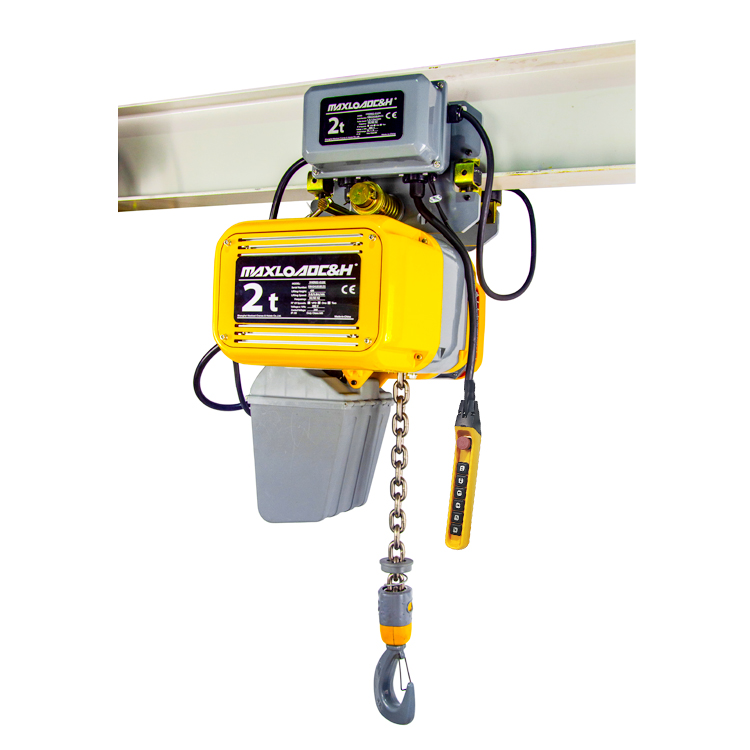
Electric hoists are lightweight lifting devices, typically composed of an electric motor, transmission mechanism, drum or sprocket, and hook. Depending on the application and structure, they are mainly divided into two categories: wire rope electric hoists and chain electric hoists.
1. Chain Electric Hoists: Masters of Flexibility
Chain electric hoists are favored for their light weight and small maximum dimensions. It uses a special alloy steel chain as the load-bearing component. The chain runs stably in the sprocket, is not easy to fall off or jump out of the groove, and has relatively low noise. This type of hoist is particularly suitable for mold installation, precision machining, and other applications, because it can be used alone or assembled with manual or electric trolleys, moving freely on I-beams. Some low-headroom chain hoists are a lifesaver for low-ceilinged factories, maximizing the use of limited lifting space.
2. Wire Rope Electric Hoist: Heavy-Duty Stability Expert
Wire rope electric hoists are usually equipped with a conical rotor motor, which integrates power and braking functions. When energized, the motor rotor generates axial magnetic pull, compressing the spring and opening the brake; when de-energized, the magnetic pull disappears, the spring returns to its original position, generating friction to quickly lock the rotor, thus preventing the load from slipping and ensuring safety. This type of hoist has a large lifting height and runs smoothly, often used as the main lifting mechanism of single-girder or double-girder bridge cranes, and can even be found on large gantry cranes.
II. Overhead Crane: The Skeleton for Load Bearing and Movement
If the electric hoist is the "muscle," then the overhead crane frame is the "skeleton." An overhead crane typically consists of the frame, a trolley traveling mechanism, a trip trolley traveling mechanism, and an electrical control system.
In heavy-duty or complex working conditions, the trip trolley frame may be equipped with two lifting mechanisms. Its working mechanism is as follows: the lifting mechanism is responsible for vertically lifting and lowering the load, while the trolley traveling mechanism drives the entire bridge to move longitudinally along the track, and the trip trolley traveling mechanism carries the electric hoist to move laterally along the main beam. Through the combination of these three sets of movements, the overhead crane can precisely cover any point within the factory building.
The overhead crane frame generally adopts a box girder structure, characterized by high rigidity and strong load-bearing capacity. To ensure long-term operational stability, the main beam is usually manufactured with a certain degree of camber to compensate for potential subsidence caused by long-term load.
III. Core Working Mechanism and Safety "Black Technology"
The combination of the electric hoist and the overhead crane is not merely a superposition of mechanical structures, but also a fusion of electrical control and safety logic.
1. Power and Braking
Whether it's a chain or wire rope electric hoist, its core drive typically uses a motor with excellent lifting characteristics. Taking the common conical rotor motor as an example, its greatest advantage lies in the linkage between mechanical braking and electrical control. This "power-off braking" characteristic ensures that in the event of a sudden power outage, the load is firmly locked, preventing free fall.
2. Multiple Safety Protections
Modern lifting equipment safety design permeates every detail:
Limit Position Protection: Both the lifting and traveling mechanisms are equipped with limit switches. When the hook rises to its limit position, the limit switch cuts off the lifting power to prevent overshooting and accidents.
Prevention of Wire Rope/Chain Detachment: For wire rope drums, the rope groove design guides the wire rope to align in an orderly manner; for chain hoists, sprocket guide grooves and chain bags prevent the chain from jumping out or jamming.
Low Voltage and Phase Sequence Protection: Ground operation buttons and handles typically use low-voltage electricity to prevent electric shock due to damaged wiring. Meanwhile, the reverse phase protection device equipped in the control system can automatically lock the circuit when the power supply wiring is incorrect, preventing the dangerous situation where the operator moves from "up" to "down".
IV. The Art of Configuration in Application Scenarios
In practical applications, electric hoists and overhead cranes are paired in various ways depending on the different working environments:
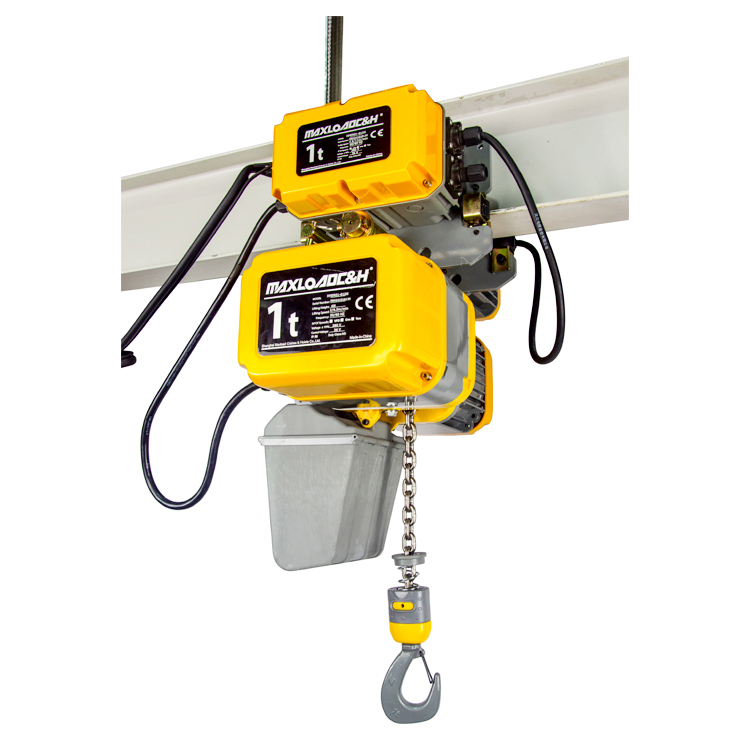
Suspended and Running Types: Fixed electric hoists are usually directly suspended from the ceiling or supports. More often, they are paired with electric trolleys to form running electric hoists. This type of hoist uses a guiding device on the electric trolley to make its movement on the I-beam rail more stable.
Single Girder and Double Girder: In applications with small lifting capacities and short spans, electric single-girder cranes are generally used, where the electric hoist runs on the lower edge of a single main beam's rail. In applications with large tonnage and wide spans, double-girder bridge cranes are required, where the electric hoist is installed on the rail between two main beams, significantly improving load-bearing capacity and stability.
V. Maintenance: The Key to Extending Equipment Lifespan
Even the most sophisticated equipment cannot function without proper maintenance. For combinations of overhead cranes and electric hoists, routine maintenance mainly focuses on the following aspects:
Transmission system lubrication: The reducer, wheel bearings, and wire rope/chain all require regular lubrication. Newly installed equipment should have its lubricating oil checked and replaced after 500 hours of operation, and thereafter, the oil level and quality should be checked regularly. For the chain, proper lubrication should be maintained to reduce wear, and extra care should be taken to keep it clean in high-dust environments.
Braking system inspection: The brakes are the core of safety. The wear of the brake pads and the axial movement of the conical motor should be checked regularly to ensure they are within the standard range. Adjusting the brake tension is also crucial for the trolley and crane running mechanisms to ensure smooth start-stop and prevent rail wear.
Wire rope and hook flaw detection: Wire ropes with broken wires, wear, corrosion, or a diameter reduction exceeding 10% must be immediately scrapped. Hooks with wear exceeding 10% of their original size at critical sections, or with permanent deformation, also need to be replaced.
Rail adjustment: The overhead crane's running track needs to have its span and elevation difference measured regularly. If the main beam sinks or the rails are severely worn, the problem must be resolved by adjusting the wheels or repairing the deformed cable tray.
VI. Conclusion
Electric hoists and overhead cranes, as indispensable tools in industrial material handling, are advancing towards more compact structures, more precise control, and more intelligent safety features. Understanding their basic principles and matching logic not only helps companies make more appropriate purchasing decisions but also lays a solid foundation for safe operation and maintenance in daily operations.
In the future, with the upgrading of the manufacturing industry, this "iron duo" will continue to trace busy and orderly tracks in the workshop, becoming an indispensable support for industrial production.
 0086 156 1824 5535
 0086 156 1824 5535