Industrial Essentials: Electric Hoists and Overhead Cranes
In the grand scenes of modern industrial production, whether in bustling machine shops or warehousing and logistics centers piled high with materials, one can always see a steel behemoth traversing the factory rooftops, effortlessly lifting, lowering, and transporting tons of materials. This amazing equipment is composed of the golden duo of overhead cranes and electric hoists. For many newcomers to industrial equipment, these two are often confused. Today, we will delve into the structural principles, application scenarios, and key details of this combination's daily maintenance.
I. Definition and Division of Labor: Which is the "Heart," and Which is the "Skeleton"?
Simply put, the overhead crane provides the ability to move "across" surfaces, while the electric hoist provides the ability to lift "points."
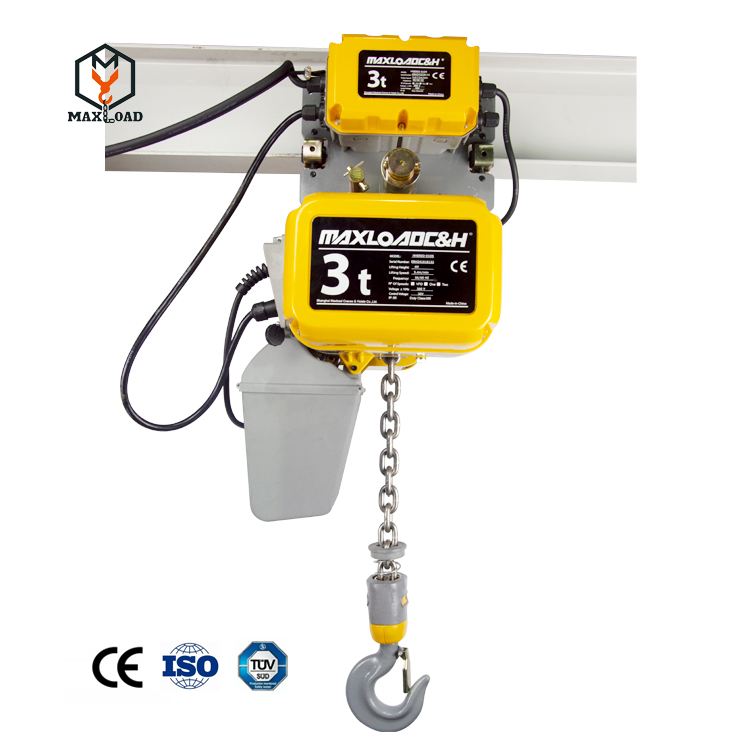
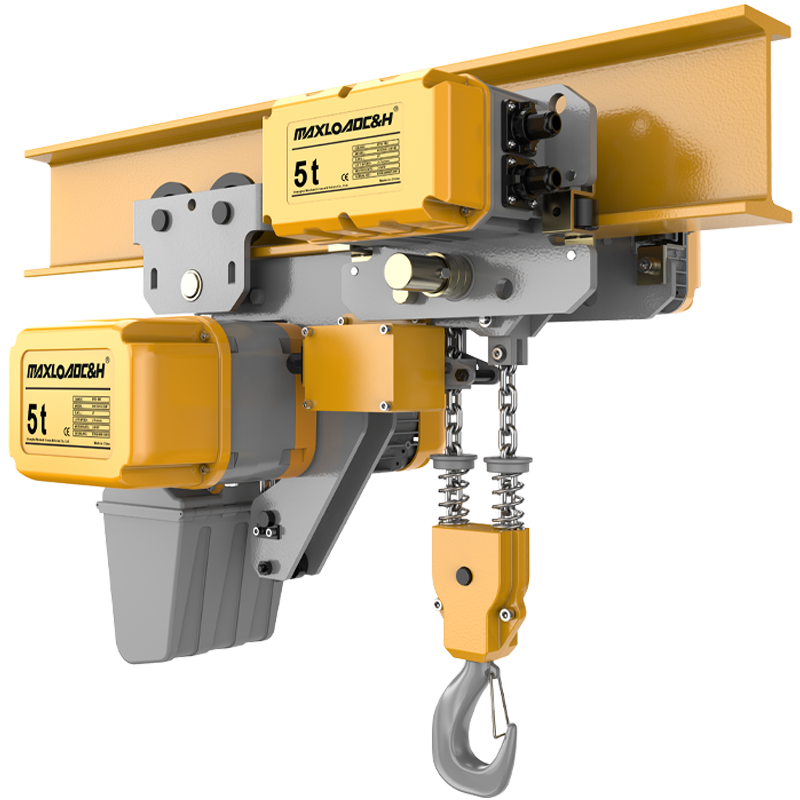
An electric hoist is a small, lightweight lifting device. It can be used independently, but is more often mounted on an overhead crane or monorail boom. Internally, it integrates a lifting motor, transmission mechanism, drum or sprocket, and hook. Based on their structure, electric hoists are mainly divided into two categories: wire rope electric hoists and chain electric hoists. The wire rope hoist serves as the "heart" or "hand" of the crane, lifting or lowering heavy loads.
The overhead crane itself is a complete structural frame, typically composed of main beams, end beams, a trolley traveling mechanism, a gantry traveling mechanism, and an electrical system. It spans across the rail beams on both sides of the factory building, forming a rectangular working area. When the electric hoist is installed as the lifting mechanism on the "trolley" of the overhead crane, the crane can drive the hoist to move in a wide range of lateral and longitudinal directions. At this time, the overhead crane acts like the "skeleton" and "legs," responsible for accurately transporting heavy objects to any corner of the factory building.
II. Core Structure: Unveiling the Precision Collaboration Beneath the Steel Outer Garment
A complete electric hoist bridge crane exhibits a precision collaboration far exceeding what the naked eye can perceive.
1. Bridge Frame Structure
The bridge frame is the body of the overhead crane, typically constructed from welded box-beam structures, possessing excellent rigidity and bending resistance. To ensure operational safety, the main beam is manufactured with a certain upward camber to counteract downward deflection under load. A walkway is typically installed on one side of the cable tray for easy maintenance; the other side has a power supply frame for the moving trolley.
2. Lifting Mechanism
This is the core technology. Taking the most common wire rope electric hoist as an example, the motor drives the drum to rotate via a reducer. The drum winds up and unwinds the wire rope, thus raising and lowering the hook. To prevent the wire rope from becoming tangled or slipping off the groove during winding and unwinding, modern drums are designed with precise rope grooves and equipped with rope guides or limiting mechanisms to ensure the wire rope is neatly aligned. Furthermore, the hook design is also crucial, requiring an anti-disengagement device and often using high-quality low-carbon alloy steel to prevent sudden breakage.
3. Traveling Mechanism
The traveling mechanism consists of the trolley and the main trolley. The trolley is typically driven by a conical rotor motor, which in turn drives the drive wheels via a reducer. To improve operational stability, especially when the track is not parallel, some traveling cranes employ articulated structures or one-way bearing differential designs. This allows the driven wheels to automatically adjust their height during operation, ensuring all four wheels remain in contact with the track and reducing "rail biting" (gagging).
III. Application Scenarios: From Home Workshops to Heavy Smelting
The combination of electric hoists and traveling cranes, due to its modular design, has extremely wide applications. Simply changing the specifications and materials allows it to adapt to different environments.
Lightweight and Small-Scale Operations: In home garages, small workshops, or farms, 0.5-ton to 3-ton mini electric hoists paired with simple I-beam rails can meet the daily needs of moving motorcycles, engines, or agricultural supplies. These devices typically use 220V household voltage, are easy to operate, and greatly reduce manpower requirements.
Standard Industrial Scenarios: Machinery manufacturing workshops, warehouses, and material yards are the most common "battlegrounds" for this combination. 5-ton to 32-ton electric hoist bridge cranes are responsible for loading and unloading raw materials and unloading finished products. They typically offer both ground-operated and cab-operated modes, with the cab requiring a field of vision greater than 280 degrees to ensure operational safety.
Special Environmental Scenarios: Ordinary electric hoists are unsuitable for special applications such as metallurgy, casting, and explosion-proof environments. These applications require specialized metallurgical or explosion-proof electric hoists, which have extremely high requirements for motor insulation, protection levels, and control system reliability. The use of ordinary equipment in environments with explosion hazards, corrosive gases, or relative humidity exceeding 85% is strictly prohibited.
IV. Safety and Maintenance: An Inviolable Lifeline
Lifting machinery is special equipment; its safe operation is crucial to life and property safety. Daily maintenance and periodic inspections are essential.
1. Daily Inspection Details
Pre-use inspections by operators are paramount. First, a no-load test run should be conducted to check the normal operation of each mechanism and the sensitivity and reliability of the limit switches. Pay attention to whether the hook has cracks or permanent deformation; if the wear on a dangerous section exceeds 10% of its original size, it must be scrapped immediately. Wire rope inspection is crucial. If the number of broken wires within a single lay reaches the specified value, or the diameter decreases by more than 10%, or a knot appears, the rope must be replaced.
2. Brake and Reducer Maintenance
The brake is the hoist's "safety pin." If slippage occurs after lifting a heavy load, it's usually due to excessive clearance caused by worn brake rings. Adjusting the nut can restore the brake clearance, but if the brake rings are severely worn or the springs are fatigued, immediate replacement is necessary. For the reducer, regularly check the oil level and quality. Change the lubricating oil after the first 500 hours of use, and then check it every three months to prevent bearing overheating or gear damage due to insufficient lubrication.
3. Rail and Wheel Management
"Rail wear" is a common fault during operation, manifested as severe wear between the wheel flange and the rail side. This may be due to gauge changes caused by main beam sagging, or excessive diagonal or perpendicularity deviations of the wheels themselves. Once rail wear is detected, the main beam camber and wheel alignment need to be measured. The problem can be resolved by adjusting wheel shims or repairing bridge frame deformation.
In conclusion, electric hoists and overhead cranes, this combination of moving up and down, vertical and horizontal, liberates humans from heavy manual labor through precise mechanical cooperation, greatly improving production efficiency. Whether it's a small household hoist costing a few thousand yuan or a heavy-duty industrial crane costing millions, they all follow similar mechanical principles and safety guidelines. As users, only by thoroughly understanding their structural characteristics, strictly adhering to operating procedures, and performing meticulous maintenance can this "steel duo" serve the production line safely and efficiently.
 0086 156 1824 5535
 0086 156 1824 5535