The Secret to Effortless Industrial Lifting
In the grand narrative of modern industrial production, whether in bustling workshops, vast warehouses, or towering construction sites, a seemingly unassuming yet crucial piece of machinery is indispensable—the electric hoist. Like an extension of power, it effortlessly lifts and precisely places heavy workpieces, raw materials, and equipment, greatly liberating manpower and improving production efficiency. This article will provide an in-depth analysis of the basic concepts, core structure, and main classifications of electric hoists, along with a detailed selection and usage guide to help you better understand and utilize this "industrial powerhouse."
An electric hoist is a lightweight lifting device, typically installed on overhead cranes, gantry cranes, or single-girder cranes, and can also be used in a fixed, suspended configuration. Its core function is to achieve the vertical lifting and lowering of heavy objects via electric power. Its widespread application in mining, docks, warehouses, and even construction is due to its compact structure, light weight, simple operation, and ease of use.
To understand electric hoists thoroughly, we must first disassemble their "body structure." It mainly consists of three core components: an electric motor, a transmission mechanism (reducer), and a drum or sprocket. It also includes a hook device, wire rope or chain, control box, running motor, and limit devices.
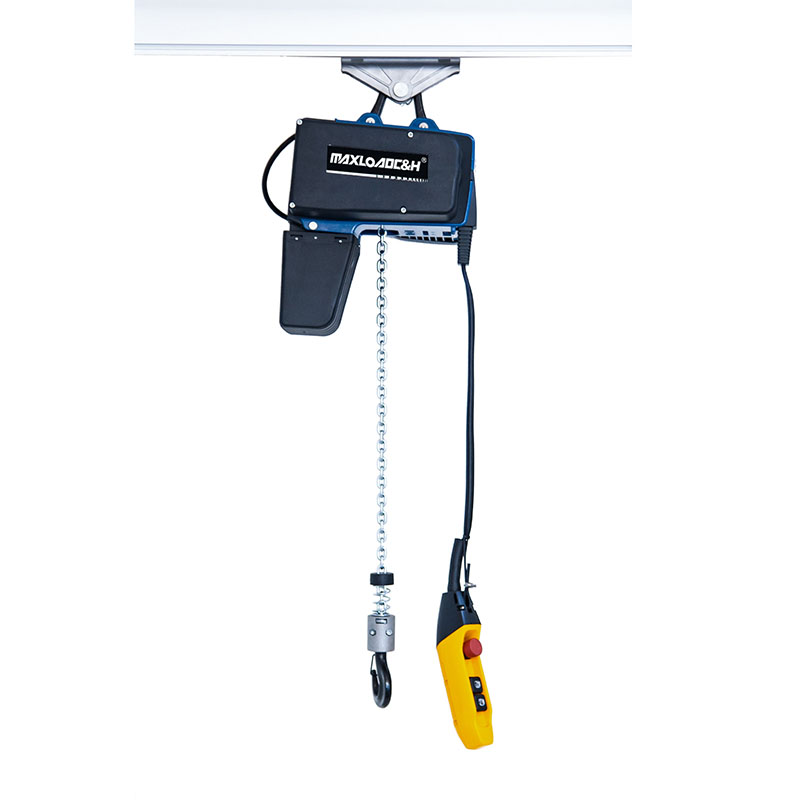
Based on the lifting medium and structure, electric hoists are mainly divided into two categories:
Wire Rope Electric Hoists: This is currently the most mainstream type. It uses a wire rope as the flexible load-bearing component, and lifting is achieved by rotating the drum to wind and unwind the wire rope. This type of hoist has a large lifting height, stable operation, and high safety, making it suitable for various general applications. Its internal motor often uses a conical rotor brake asynchronous motor, which has a built-in brake and a clever structure that automatically brakes upon power failure to prevent the load from falling.
Chain Electric Hoists: This type of hoist uses a high-strength alloy steel chain as the load-bearing component. Compared to wire rope hoists, it is smaller, lighter, and more economical. It is usually equipped with a disc brake motor and a planetary reducer. While its operating stability is slightly inferior to that of wire rope hoists, it excels in portability and flexibility, making it particularly suitable for confined working environments.
In addition, there are some variants designed for specific scenarios, such as multi-unit electric hoists specifically for lifting scaffolding modules in construction projects, which can synchronously lift massive scaffolding modules at extremely slow speeds; and explosion-proof hoists with special explosion-proof functions, used in hazardous environments such as petroleum and chemical plants where flammable and explosive gases are present.
Faced with a dazzling array of products on the market, how can you choose the electric hoist that best suits your needs? The following points are key factors you cannot ignore in your decision-making process:
Define Lifting Capacity and Working Class
Rated Load: This is the most crucial indicator. Consider not only the weight of the heaviest single item but also the weight of the lifting gear.
Working Class: Electric hoists are divided into various working classes, such as M3 and M4, based on usage frequency and load conditions.
Measure Lifting Height and Speed
Lifting Height: Accurately measure the vertical distance from the ground to the highest suspension point and ensure that the drum or sprocket has sufficient rope or chain capacity.
Power Supply Type: Confirm whether your site's power supply is single-phase 220V or three-phase 380V. Different hoist specifications correspond to different motor power; voltage mismatch will cause the equipment to malfunction.
Operating Environment: Standard hoists can be used in dry indoor environments. If the environment contains corrosive gases, high temperatures, or flammable and explosive dust, special hoists with appropriate corrosion resistance, high temperature resistance, or explosion-proof ratings must be selected.
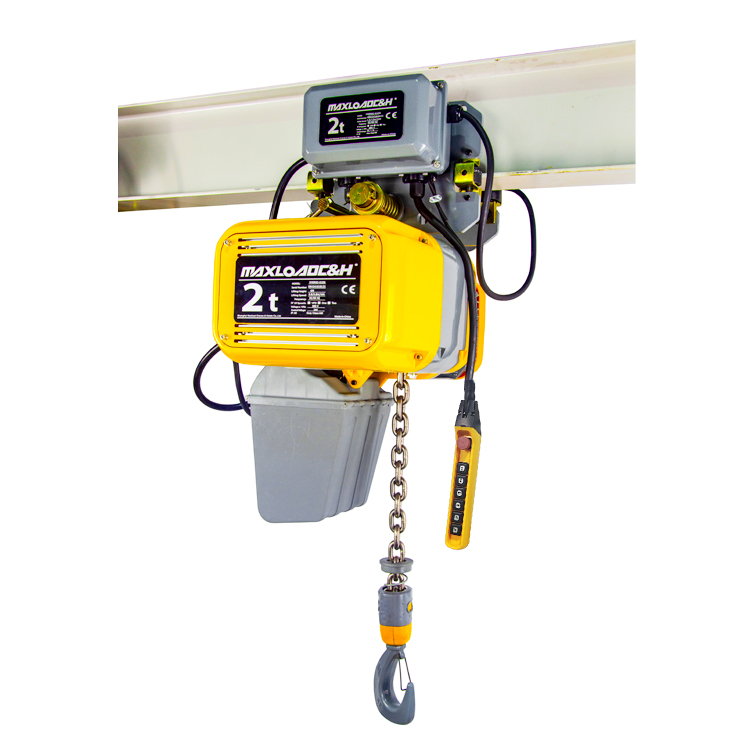
Choose the Appropriate Installation and Control Method
Installation Type: Is it fixed at a single point (fixed type), or does it need to move horizontally on an I-beam track (traveling type)? Traveling electric hoists require a hand-operated or electric trolley to expand the working range.
Control Method: Traditional wired handle operation is economical, while wireless remote control technology gives the operator great freedom, allowing operation from the best observation position, effectively avoiding blind spots, and improving safety and convenience.
While electric hoists are powerful, they must be used correctly. Safety is always the top priority.
Pre-operation inspection: Before daily use, check the wire rope (or chain) for broken strands, knots, and wear; ensure the hook rotates smoothly and the stop nut is tight; check the upper and lower limit switches for sensitive and reliable operation; conduct a no-load test run, listening for abnormal noises from the motor and reducer.
Strictly prohibit unauthorized operation: Overloading is absolutely prohibited, as is pulling or lifting at an angle. No one is allowed to stand under the load during hoisting. Operators must concentrate and are not allowed to press two buttons in opposite directions simultaneously.
Regular maintenance: During daily maintenance, ensure sufficient lubrication and regularly clean oil and dust from the motor and brake. The wire rope must be replaced immediately when it reaches the scrap standard (e.g., excessive broken strands, reduced diameter).
Conclusion:
From the "intelligent little box" used to transport large valves in oil fields to the "small electric hoist" used in carbon plants to solve the problem of manual lifting, electric hoists, with their excellent practicality and reliability, continue to play a crucial role in various infrastructure projects and industrial production. It is not merely a machine, but one of the cornerstones of modern industrial civilization. Correctly understanding, scientifically selecting, and properly using electric hoists can significantly improve work efficiency and is a solemn commitment to the safety and health of every worker. We hope this article will serve as a valuable technical advisor in your production practice.
 0086 156 1824 5535
 0086 156 1824 5535