A Combination of Flexibility and Power: Electric Hoists and JIB Cranes
In modern industrial production, the efficiency of material handling directly impacts the smoothness of the entire production process. With the increasing sophistication of workshop operations, single lifting equipment often struggles to meet the demands of complex and ever-changing working conditions. The synergistic application of electric hoists and jib cranes, as a classic and efficient material handling solution, is gaining increasing popularity among manufacturing enterprises. This article will delve into the unique value of this combination from the perspectives of equipment characteristics, synergistic advantages, key technologies, and application scenarios.
I. Understanding the Two Core Equipment
1. Electric Hoist: The Core Lifting Mechanism
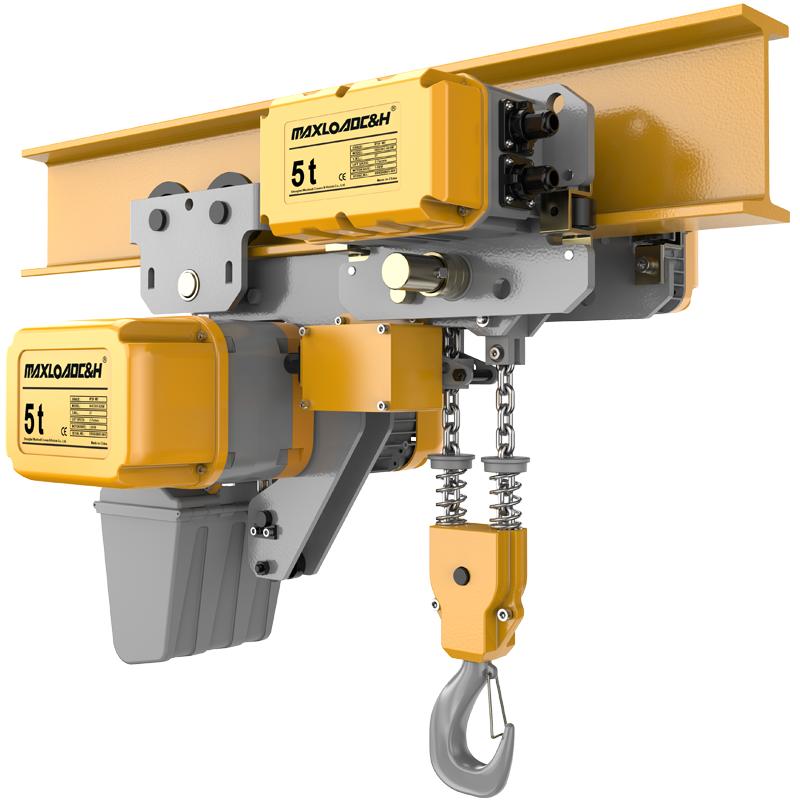
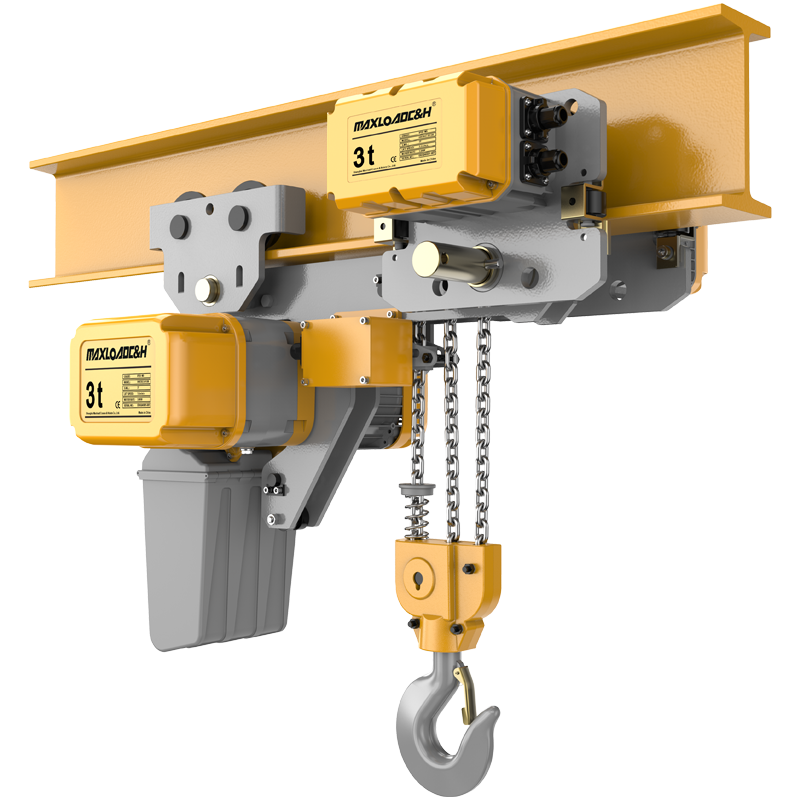
An electric hoist is a small, lightweight lifting device, typically composed of a motor, transmission mechanism, drum or sprocket, and hook. Its core function is to lift heavy objects. Based on their structure, they are mainly divided into two categories: wire rope electric hoists and chain electric hoists. Their characteristics include small size, light weight, simple operation, and high lifting accuracy; some products can achieve millimeter-level lifting accuracy. Electric hoists can be used independently suspended at a fixed point, or as a lifting mechanism for overhead cranes, jib cranes, and other similar devices.
2. Jib Cranes: Flexible Working Range Coverage
A jib crane, also known as a swing crane or jib hoist, is a lightweight lifting device. It mainly consists of a column, a cantilever, and a traveling mechanism. Its significant feature is that the cantilever can rotate, covering a fan-shaped working area. Depending on the installation method, jib cranes can be divided into column-mounted, wall-mounted, and mobile types. The main function of a jib crane is to extend the horizontal working range of the electric hoist, preventing it from being limited to a single lifting point.
II. Synergistic Effect of "1+1>2"
Installing an electric hoist on a jib crane is not a simple physical addition, but a deep functional integration, producing a significant synergistic effect.
1. Perfect Coverage of the Working Space
Without any auxiliary equipment, an electric hoist can only function as a fixed point-lifting device. Once combined with a jib crane, the situation changes completely. The slewing motion of the cantilever, combined with the lateral movement of the electric hoist on the cantilever's I-beam, creates a complete polar coordinate-based working area. Whether it's the 360-degree rotation of a column-mounted cantilever crane or the longitudinal movement and rotation of a wall-mounted cantilever crane, it seamlessly covers every corner of the workstation. This combination is particularly suitable for scenarios requiring multi-point operation within a fixed area, such as machine tool loading and unloading and workstation assembly.
2. A Balance of Rigidity and Flexibility in Load-Bearing Performance
From a mechanical perspective, the cantilever crane, as a supporting structure, bears bending and torque moments. The electric hoist, as the power output end, is crucial for operational stability. In the collaborative design, the electric hoist is suspended from the lower flange of the cantilever via wheel sets. When lifting heavy objects, the electric hoist transfers the load to the cantilever through the wheels. A well-designed structure ensures that the cantilever deflection remains within allowable limits during movement, guaranteeing both verticality during lifting and preventing the risk of the trolley climbing or slipping due to excessive cantilever deformation.
3. A Balance of Effortless and High-Efficiency
Patent data shows that by pre-setting guide rails on the support arm surface and adjusting the position of the electric hoist using an electric actuator, users can easily achieve multi-station lifting. This collaboration allows operators to simultaneously complete the lifting, rotation, and horizontal movement of heavy objects using only a handle, greatly reducing the labor intensity of manual handling. Especially in situations requiring precise installation, such as mold repair or equipment installation, this combination enables the "suspended" state of the heavy object, facilitating fine-tuning and alignment by workers.
III. Key Technical Points in Collaborative Applications
While the combination of electric hoists and jib cranes offers significant advantages, the following technical points deserve special attention in practical applications to achieve safe and efficient collaborative operations.
1. Integration and Expanded Mobility
With the development of flexible manufacturing, fixed workstation operations can no longer meet all needs. Currently, solutions integrating jib cranes with electric flatbed carts have emerged in the industry. This design mounts the jib crane on a movable electric flatbed cart, retaining the jib crane's rotational lifting capability while also giving it the ability to move between different workstations. This "mobile cantilever crane" solves the pain point of "disconnect between movement and lifting" in traditional workshop material handling, enabling direct material transport across areas and reducing intermediate lifting steps.
2. Safety Protection for Multi-Hoist Collaboration
In the lifting of certain large workpieces or objects with special shapes, it may be necessary to install two electric hoists on the same cantilever or the same system for collaborative lifting. In this case, safety is the primary consideration. Unauthorized installation of electric hoists poses significant safety hazards, such as overloading and collisions between the two hoists. When designing such collaborative hoists, specific technical requirements must be met:
Overload Protection: Both electric hoists should be equipped with overload limiters. During joint operations, the control system must prevent both the total lifting load from exceeding the limit and the overloading of a single hoist under eccentric loading conditions.
Collision Prevention Measures: Limit switches or limit devices should be installed between the two hoists. When one hoist approaches the limit position of the other, the control system should automatically cut off the power or issue an alarm to prevent mechanical collisions that could damage the motor or reducer.
Electrical Interlock Protection: Synchronous control of the two hoists is achieved by setting a single-action/interlocking switch. When the height limit switch of one hoist activates, the other should also stop simultaneously to ensure the workpiece remains level.
IV. Typical Application Scenarios The collaborative operation of electric hoists and cantilever cranes, due to their flexibility, is widely used in various industrial fields.
1. Automobile Manufacturing and Assembly Lines
In automobile assembly workshops, especially interior and chassis lines, wall-mounted cantilever cranes, in conjunction with electric chain hoists, play a crucial role. They are densely arranged on both sides of the production line for lifting large assemblies such as engines, transmissions, and rear axles. Because the cantilever can move longitudinally along the wall track, it can follow the assembly workpiece according to the production rhythm, greatly improving the convenience of assembly. At the same time, this structure does not occupy floor space, ensuring smooth logistics channels on the assembly line.
2. Machining and Machine Tool Loading/Unloading
In machining workshops, one column-mounted cantilever crane can serve multiple CNC machine tools. Workers utilize the cantilever's rotational characteristics to lift blanks from the rack, rotate them to the machine tool spindle center, and clamp them using precise lifting and lowering via an electric hoist. After processing, the finished product is unloaded. This process replaces traditional manual handling, significantly reducing worker workload and improving machine tool operating efficiency.
3. Maintenance and Logistics Transfer
In equipment maintenance sites, the combination of a mobile cantilever crane and an electric flatbed cart is highly practical. Maintenance personnel can push the equipment next to large equipment and directly lift and replace heavy components. In warehousing and logistics areas, the cantilever crane can cover the loading and unloading areas of truck beds, and in conjunction with the efficient lifting of electric hoists, quickly complete cargo loading and unloading operations.
V. Conclusion
The synergistic application of electric hoists and cantilever cranes embodies the maturity of modern industrial material handling technology. It not only solves the problem of "how to lift heavy objects," but also the problem of "how to place heavy objects in the most suitable position." From fixed column-mounted cantilever cranes to mobile integrated equipment, and then to intelligent systems with multi-hoist linkage and telescopic boom functions, this combination is developing towards greater flexibility, precision, and safety.
For manufacturing enterprises, the rational planning and selection of synergistic solutions for electric hoists and cantilever cranes can not only optimize production processes and improve operational efficiency, but is also a crucial element in creating flexible and lean production workshops. In the future, with the integration of intelligent control and sensing technologies, this classic combination will be revitalized, bringing even more possibilities to industrial material handling.
 0086 156 1824 5535
 0086 156 1824 5535