Exploring New Paths to Industrial Efficiency Improvement: Electric Hoists and Overhead Cranes
In modern industrial production, the efficiency of material handling directly affects the smoothness of the entire production process and cost control. As core representatives of light and small lifting equipment, the collaborative application of electric hoists and overhead cranes has become an indispensable combination in workshops, warehouses, docks, and other places. This combination not only liberates manpower but also achieves precise material displacement in three-dimensional space through precise structural design and intelligent control technology. This article will explore in depth how this "golden pair" works from the dimensions of structural principles, application advantages, and key operating points.
I. The Basis of Collaborative Work: Structure and Principles
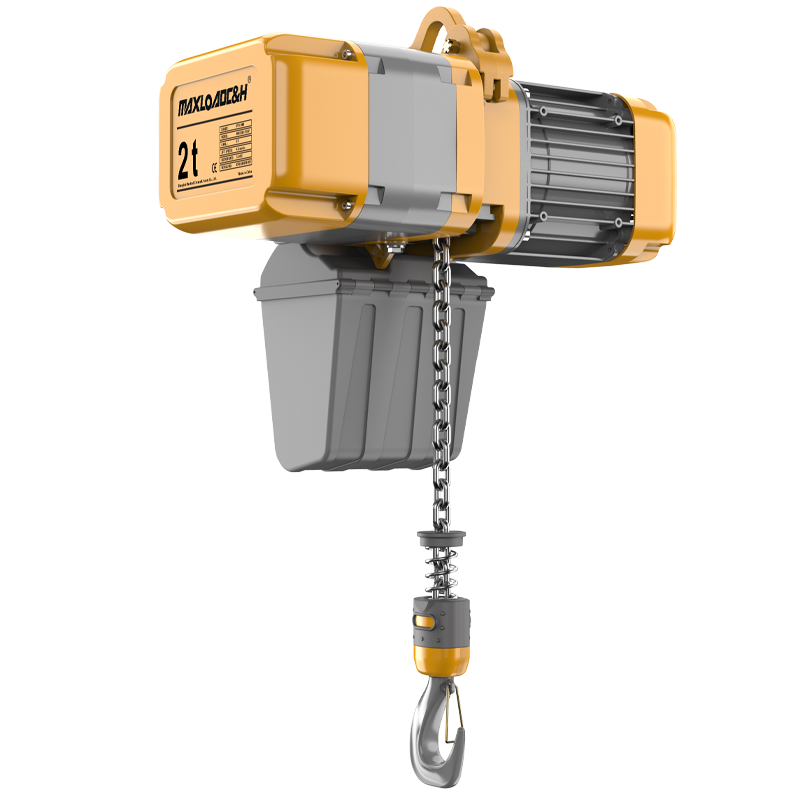
To understand the collaboration between the two, it is first necessary to clarify their respective roles. The electric hoist is mainly responsible for vertical lifting and lowering, while the overhead crane is responsible for longitudinal movement along the track in the horizontal plane. When the electric hoist and the trolley's running mechanism are combined, a complete two-way vertical and horizontal movement system is formed.
Structurally, the electric hoist's traveling mechanism is the key component for achieving collaboration. A typical electric hoist traveling mechanism includes an active traveling mechanism and a driven traveling mechanism. The active traveling mechanism typically consists of a reducer, a servo motor, and a drive gear. The motor power is transmitted to the active traveling wheel via the drive gear, driving the entire hoist along the track. To maintain operational stability, the driven traveling mechanism, while not providing power, ensures that the hoist does not sway during travel and operates synchronously with the active traveling wheel through the design of the wall plates, driven wheels, and guide wheels. In more advanced designs, to achieve dual-sided drive, engineers use a three-in-one geared motor directly connected to the wheels, and through the meshing of the drive shaft and gears, the wheels on both sides rotate synchronously. This design reduces the number of mechanical transmission links, making the driving force more balanced.
For the overhead crane, its main trolley traveling mechanism works in conjunction with the hoist's trolley traveling mechanism. Through this three-dimensional transmission layout, the overhead crane is responsible for transporting the hoist to any area covered by the factory, while the hoist is responsible for accurately lifting or placing materials. The two work together to achieve material handling without dead spots.
II. Application Advantages in Multiple Scenarios
In new energy vehicle manufacturing workshops, the handling of heavy components places stringent requirements on equipment, including high-frequency start-stop and precise positioning. The coordination between electric chain hoists and overhead cranes plays a crucial role in such scenarios. The overhead crane rapidly moves the trolley carrying the electric chain hoist above the workstation, while the electric hoist, with its high-strength chain and sealed gearbox, withstands continuous operating loads to vertically lift battery modules or engine assemblies. Especially in processes requiring millimeter-level precision, electric hoists equipped with variable frequency speed control technology can operate at speeds as low as 0.5 meters per minute, ensuring that precision components do not collide during assembly.
In large machining workshops or steel warehouses, there is often a need to lift extra-long or irregularly shaped materials. In these situations, dual-trolley or group lifting technology demonstrates a higher level of coordination. When two or more electric hoists work together to lift via the overhead crane beam, the operational difficulty far exceeds that of single-machine operation. For handling long objects, two overhead crane trolleys can operate independently or work together, adjusting the distance between lifting points to balance load distribution, improving the accuracy and safety of lifting long objects.
In more complex group lifting scenarios, such as loading and unloading on standard rails, multiple gantry cranes and their equipped electric hoists often need to operate simultaneously. Because asynchronous motors can develop positional deviations after prolonged operation, affecting lifting synchronization, modern control systems have incorporated laser rangefinders and PLC controllers.
By monitoring the running distance of each electric hoist in real time and adjusting its speed using frequency converters, the system effectively reduces deviations between multiple hoists, solving the problem of synchronized operation of the electric hoist trolleys in group lifting operations.
III. Key Technologies: Precision and Safety Assurance The coordination between electric hoists and gantry cranes is not merely a combination of mechanical movements, but also relies on precise control technology and safety mechanisms.
Precise Control Technology: To achieve smooth material transfer in the air, variable frequency speed control technology is widely used. Operators can control the gantry crane to move quickly via remote control or hand switch, while simultaneously switching the hoist to a micro-speed when approaching the target position. Some intelligent electric hoist models also feature a levitation function, allowing operators to easily fine-tune the load position while pushing heavy objects, greatly improving operational flexibility. The hand-operated switch for controlling forward, backward, left, and right directions is quickly connected via a connector, making the operating interface more integrated.
Safety Mechanism: In collaborative operations, any misoperation could lead to a safety accident. Therefore, modern electric hoists are typically equipped with a dual slipper clutch and an electromagnetic braking system, forming double protection. In the event of an overload, the system automatically cuts off the circuit, and the emergency stop function responds quickly, preventing the risk of heavy objects falling from the source. Furthermore, to prevent violent shaking of the hoist during acceleration and deceleration, operating procedures require avoiding simultaneous lifting and traveling movements as much as possible. When one tool is in motion, the other should ideally remain stationary until the load is stable before proceeding to the next operation.
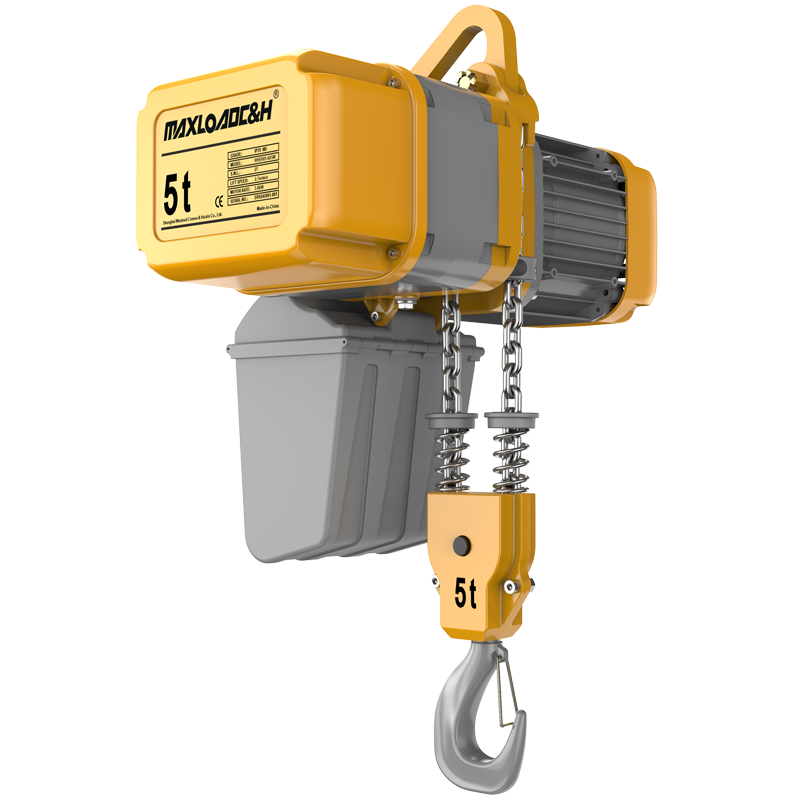
Structural Optimization Design: To meet the needs of low-headroom workshops, the European-style electric chain hoist uses a compact design to increase lifting height while maintaining load-bearing capacity. This design allows the hoist to better fit against the lower edge of the overhead crane's I-beam, reducing the ineffective space at the lifting point. Meanwhile, the selection of wheel materials such as 40Cr and the heat treatment processes, including tempering and tooth quenching ensure the wear resistance and strength of both the driving and driven wheels under long-term heavy-load operation.
IV. Operation Practice and Precautions
Although the collaborative application of electric hoists and overhead cranes is becoming increasingly intelligent, standardized operation remains the core of ensuring work efficiency and safety.
Before starting, operators must check the limit switches, brakes, and overhead crane tracks for foreign objects. For equipment that needs to operate at high frequencies for extended periods, pay attention to the motor's temperature rise and ensure that the continuous operating load is within the design limits.
During collaborative operation, operators should carefully observe the stress state of the lifting equipment. Especially when using a traction hook to move objects significantly affected by inertia, the manual traction rope should maintain a safe distance from the hook. Pulling the turntable by the handle can reduce the swaying of the moved object due to inertia and improve the stability of the object's traction. When multiple overhead cranes are operating simultaneously, laser or radar detection should be used to prevent mutual interference and ensure that each operates within its designated safety warning zone.
After the operation, the electric hoist hook should be raised to its upper limit, the gantry crane parked in the designated position, and the main power supply disconnected. During regular maintenance, the wear of the travel wheel treads and the meshing clearance of the bridge gears should be checked, as even minor transmission errors can accumulate over long distances and cause wear between the hoist and the gantry rails.
V. Future Trends
With the development of intelligent manufacturing, the collaborative application of electric hoists and overhead cranes is evolving towards digitalization and automation. Through collaborative operation with AGVs (Automated Guided Vehicles), the overhead crane system can become a node in an intelligent logistics network, automatically completing the entire process of material unloading, transfer, and loading. At the control level, by utilizing load spectra and operational data collected by PLCs, equipment failures can be predicted, enabling preventative maintenance.
In summary, the collaborative application of electric hoists and overhead cranes is not merely a simple combination of mechanical equipment, but a product of the deep integration of modern industrial engineering and control technology. From precise mechanical transmission mechanisms to intelligent synchronous control systems, this golden pair is supporting daily production across various industries with higher efficiency, better safety, and longer service life. For enterprises, a deep understanding of their collaborative principles and optimization of operating procedures is undoubtedly one of the most effective ways to enhance core competitiveness.
 0086 156 1824 5535
 0086 156 1824 5535