Core solutions for modern industrial material handling
In modern industrial production, the efficiency and safety of material handling directly affect an enterprise's operating costs and market competitiveness. As a light and small lifting equipment, the combined application of electric hoist and crane is undoubtedly the most common material solution in workshops, warehouses, docks and other places. This article will deeply explore the technical characteristics, application scenarios and operation and maintenance specifications of this "golden partner", aiming to provide a comprehensive technical reference for industrial users.
Ⅰ. Core technology analysis: composition and working principle of the electric hoist
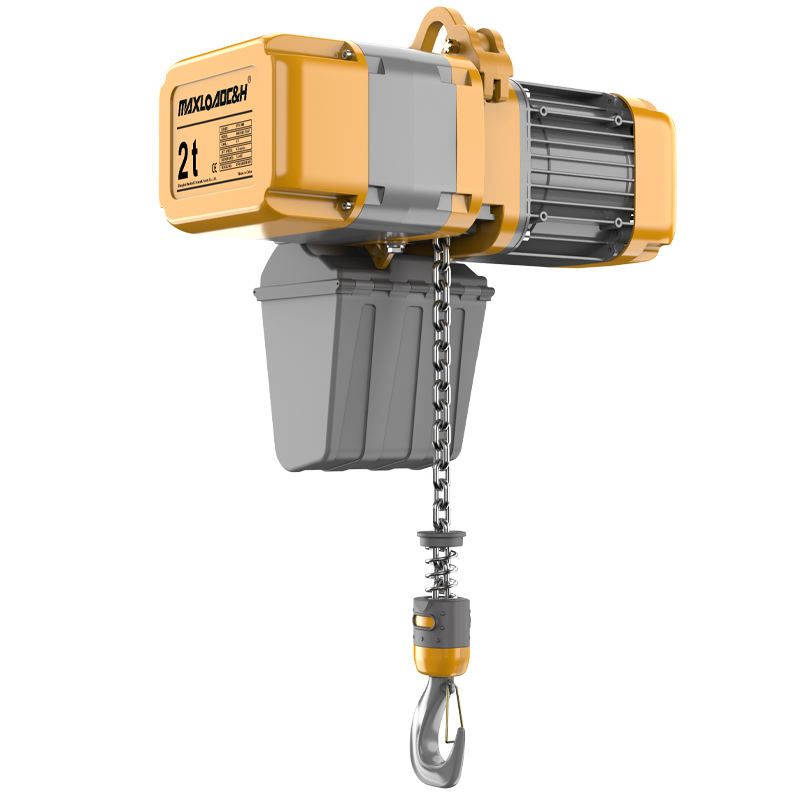
The electric hoist is a special lifting equipment installed on the crane and gantry crane. It has the characteristics of small size, light weight and simple operation. It usually consists of a motor, transmission mechanism, drum or sprocket, and is mainly divided into two categories: wire rope electric hoist and chain electric hoist.
The core technological highlight of modern electric hoists lies in their integrated design of power and braking. Most electric hoists use conical rotor motors. When this kind of motor is powered on, the air gap magnetic field generates axial magnetic pull, and the brake spring is compressed to open the brake, allowing the motor to rotate freely; when the power is turned off, the axial magnetic pull disappears, and the rotor is reset under the thrust of the brake spring, causing the brake disc to press the brake pad, generating friction, achieving rapid parking and preventing heavy objects from falling. This mechatronic design greatly improves the safety of the equipment.
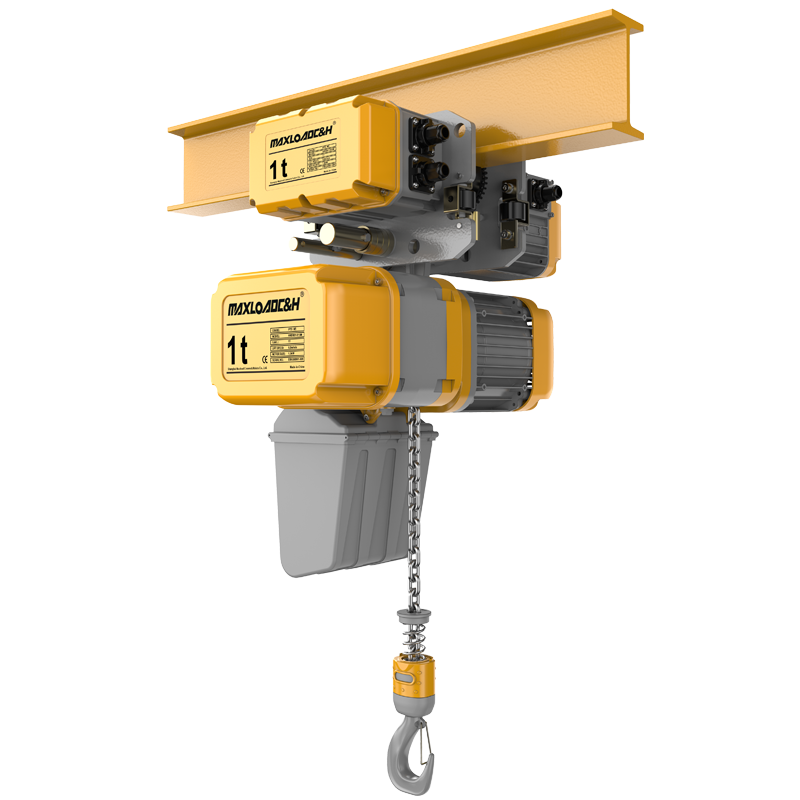
From a structural layout point of view, electric hoists have various designs based on the relative positions of the motor and the drum. At present, the more common structure is that the motor is installed outside the drum. Its advantages are good grouping, high degree of generalization, and convenient installation and maintenance. The "walking" function that driving users are most concerned about is realized by the operating electric hoist. This kind of hoist comes with an electric sports car. It walks left and right on the I-beam track through the guide wheel device. In conjunction with the lifting action of the hoist itself, it can move up, down, left, right, front and back in six directions, meeting the needs of three-dimensional operations.
Ⅱ. From point to surface: collaborative operation of the electric hoist and crane
Installing the electric hoist on a single-girder or double-girder crane constitutes a complete crane. The traveling cart runs longitudinally along the workshop track, while the trolley (electric hoist) located on the main beam runs horizontally. This combination extends the coverage of the lifting operation from "points" to "surfaces".
According to different application scenarios, this combination presents diverse configurations:
Fixed and mobile: The fixed electric hoist is fixed at a specific lifting point through a rigid bracket and can only perform vertical lifting operations. It is suitable for fixed lifting points in maintenance workshops or specific work stations on the production line. The mobile electric hoist trolley is integrated with the operating trolley and installed on the I-beam track to achieve a wide range of three-dimensional space operations. It can cover a track area of several hundred meters to meet the needs of multi-station collaborative operations.
Applicable environment: From conventional manufacturing workshops, warehousing and logistics centers, to complex infrastructure project sites, such as steel structure factory building installation, subway shield segment lifting, etc., the combination of electric hoist and crane plays an irreplaceable role. Even in petrochemical workshops with special requirements, special explosion-proof electric hoists can be configured.
Ⅲ.Performance and Safety: A Guide to Modern Operation and Maintenance
In order to give full play to the efficiency of the electric hoist and crane and ensure operational safety, modern operating concepts and strict maintenance systems are indispensable.
Evolution of operation methods: Traditional ground following operations have been gradually replaced by safer and smarter methods. At present, wireless remote control technology is widely used. Operators can clearly control the lifting and movement of equipment through remote control from a safe distance, and at the same time, observe the status of heavy objects. Some high-end application scenarios also introduce frequency conversion control technology and PLC collaborative control systems, which can not only reduce energy consumption by 30%, but also achieve high-precision positioning at the ±10 mm level.
Routine inspections and standardized operations: Inspections before operation are the first line of defense to ensure safety. The operator must confirm that the hand control button is accurate and sensitive, the upper and lower stoppers are reliable, the wire rope (or chain) has no cracks or random buckles, and is arranged neatly on the drum. There should be no foreign objects on the track and the hook can rotate flexibly. It is strictly prohibited to pull or lift at an angle or use it with an overload. This is a safety red line that must be adhered to.
Professional maintenance and upkeep:
Lubrication management: The load chain (or wire rope) of the electric hoist needs to maintain adequate lubrication, which is a key factor affecting its service life. A hard-bristled brush should be used when oiling. It is strictly forbidden to oil the working wire rope directly with your hands.
Braking system adjustment: Under-rated load, the braking slippage should be ensured to be within the standard range. If the slippage is too large, the brake spring needs to be adjusted in time.
Wire rope scrapping standards: Wire ropes must be inspected and scrapped in accordance with national standards. When broken wires, wear, or corrosion reach specified limits, they must be replaced immediately.
Electrical safety inspection: The equipment must be reliably grounded, and the ground resistance of all power loops and control loops should comply with specifications.
Conclusion
The combination of an electric hoist and crane is the solid backbone of modern industrial moving logistics. From the installation and debugging of precision molds to the hoisting of hundreds of tons of core components of generator sets, they are everywhere. With the development of material science and control technology, this classic combination is becoming more intelligent, efficient and safe. For the user, understanding its working principles and following scientific operation and maintenance specifications are not only the basis for ensuring smooth production, but also a reflection of being responsible for the safety of every operator. In the future, with the advancement of Industry 4.0, this traditional material handling equipment will continue to be upgraded, providing more powerful capabilities for intelligent manufacturing.
 0086 156 1824 5535
 0086 156 1824 5535