An Indispensable, Powerful Assistant in Industry: Electric Hoists
In the grand symphony of modern industry, every piece of machinery is a unique note, and the electric hoist is undoubtedly one of the indispensable melodies. This seemingly compact lifting device shoulders the crucial task of vertically lifting heavy objects within limited spaces. From the giant factories of heavy industry to the narrow shafts of construction sites, from the precise positioning of automated production lines to the cluster hoisting of large storage tanks, the electric hoist, with its significant advantages of small size, light weight, simple operation, and ease of use, has become an essential machine for improving labor efficiency and working conditions.
This article will delve into the practical applications of electric hoists in several core areas, showcasing the boundless potential of this "industrial little giant."
Industrial Manufacturing and Warehousing Logistics: The Internal Arteries
In machining workshops, warehouses, and docks, electric hoists are the most common standard equipment. Traditional material handling relied on a large amount of manpower or complex conveyor systems, but the introduction of electric hoists has completely changed this situation.
Taking the steel smelting industry as an example, in warehouse areas with limited space or where forklifts cannot access, the efficient handling of heavy materials such as cables and spare parts can be achieved by installing simple I-beam rails and electric hoists. This not only significantly reduces the labor intensity of workers but also avoids the collision risks and exhaust pollution caused by forklift operations, achieving an inherent safety improvement. In pallet conveyor systems, electric hoists are the core execution unit. Integrated into the central control system, electric hoists can precisely lift loaded pallets vertically to platforms several meters high, completing material transfers between different floors or heights. This vertical lifting solution has a simple structure, high space utilization, and, through frequency conversion technology and precise limit switch control, can achieve millimeter-level positioning, meeting the demands of modern logistics for efficiency and precision.
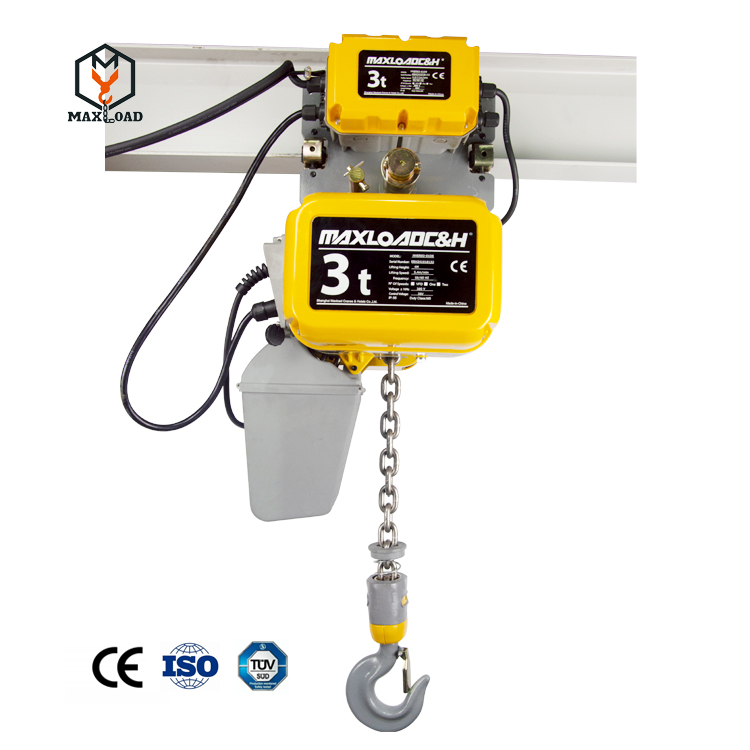
In the automotive manufacturing sector, the application of electric hoists is equally representative. In the final assembly workshop, the assembly process of the car body and chassis requires extremely high precision. Operators need to smoothly lift car body parts several meters long and weighing several tons and move them to the workstation for precise alignment. At this point, a combined overhead crane equipped with an electric chain hoist becomes the preferred solution. Its smooth lifting and lowering operation, combined with low-voltage operation control, not only ensures personnel safety but also enables impact-free and precise workpiece docking through its low-speed function, significantly improving production cycle time and assembly quality.
Special Environments and Precision Assembly: Demonstrating Ultimate Performance
Beyond general applications, electric hoists have also demonstrated exceptional adaptability in special working conditions and precision assembly lines.
The application of electric hoists is not limited to conventional environments. Facing extreme working conditions and technical challenges, specially designed electric hoists exhibit remarkable adaptability.
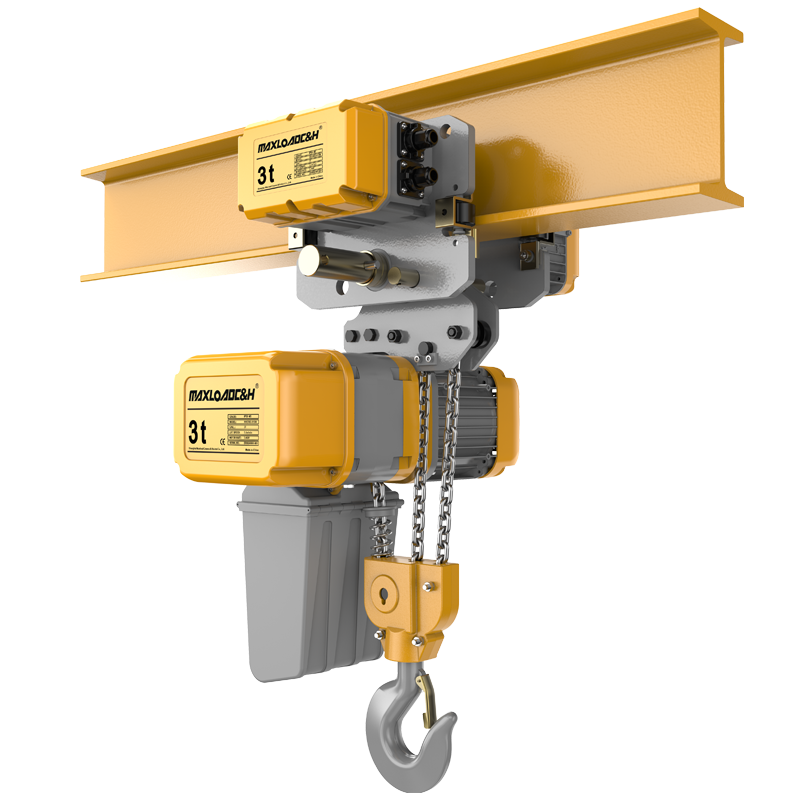
In high humidity, low temperature, tropical climates, and even the corrosive environments of electroplating plants, ordinary lifting equipment often struggles to perform. However, wire rope electric hoists, specifically designed for harsh conditions, maintain stable operation through the use of special protective coatings, low-temperature resistant materials, and dedicated motors with temperature monitoring functions. These hoists not only serve indoor crane applications but also extend to lifting gates in hydroelectric power plants, opening and closing massive safety doors in hangars, and even safely moving rooftop steel structures weighing several tons on construction sites.
With the advancement of intelligent technology, modern electric hoists are developing towards higher intelligence and lower blind spots. The latest technological trends show that by adopting standard clearance structure designs, the blind spots of electric hoists are significantly reduced, allowing for closer operation to factory roof beams. Simultaneously, the application of polymer material rope guides extends the lifespan of wire ropes by more than 50%. At the control level, technologies such as electronic anti-sway functions, multi-hook coordination, and zero-speed hovering are becoming increasingly common.
These technologies transform electric hoists from simple lifting tools into sophisticated spatial robots. For example, in precision machining industries requiring accurate material handling, electric hoistsequipped with intelligent control systems can achieve positioning accuracy dozens of times higher than traditional equipment and realize full lifecycle management through cloud platforms.
Conclusion: From traditional workshops and warehouses to towering construction sites, from high-speed assembly lines to precision-driven assembly workshops, electric hoists, with their diverse forms and performance, silently support the operation of modern industry. They are not merely simple lifting tools, but comprehensive technological products deeply integrated with intelligent control systems and specialized materials and processes.
With the advancement of Industry 4.0 and smart manufacturing, future electric hoists will be more intelligent, precise, and durable. They will no longer exist in isolation, but will be integrated into the entire production management system through IoT technology, providing real-time feedback of operational data and predicting maintenance needs. Whether it's efficient material handling under standard conditions or reliable operation in extreme environments, electric hoists will continue to be an indispensable and powerful assistant in the industrial field, driving the continuous advancement of productivity.
 0086 156 1824 5535
 0086 156 1824 5535