Choosing between overhead cranes and electric hoists for the workshop
In the grand scheme of modern industrial production, lifting equipment acts as the "skeleton" and "arms" of the factory, silently bearing the heavy responsibility of material handling. Whether in heavy machinery processing workshops or precision assembly lines, electric hoists, overhead cranes, and jib cranes are the most common material-handling solutions. This article will delve into the technical characteristics, application scenarios, and collaborative selection logic of these three types of equipment to help you build an efficient lifting and logistics system.
I. Core Power: The Versatility of Electric Hoists
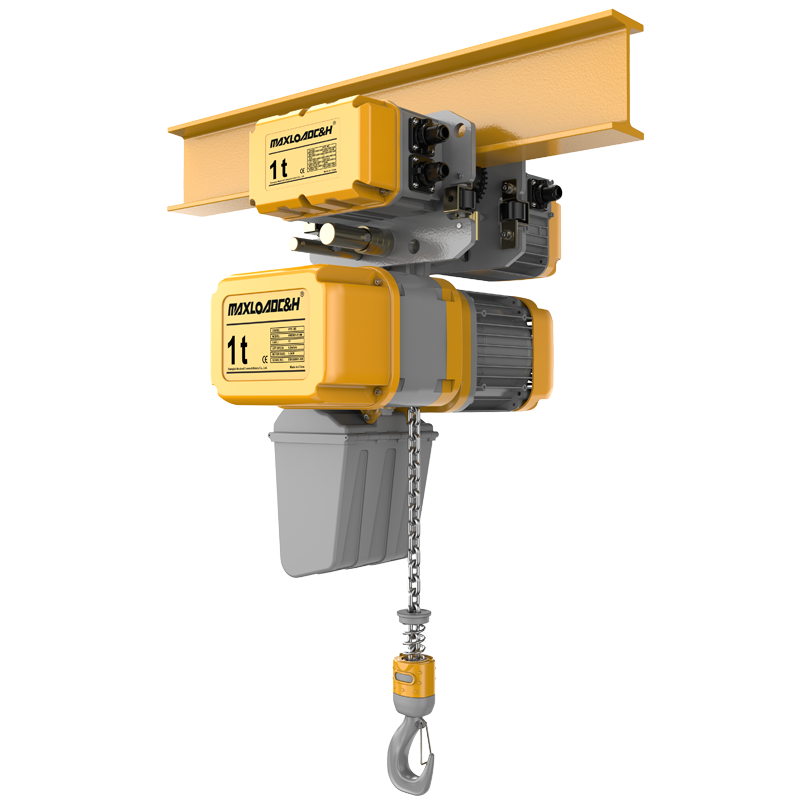
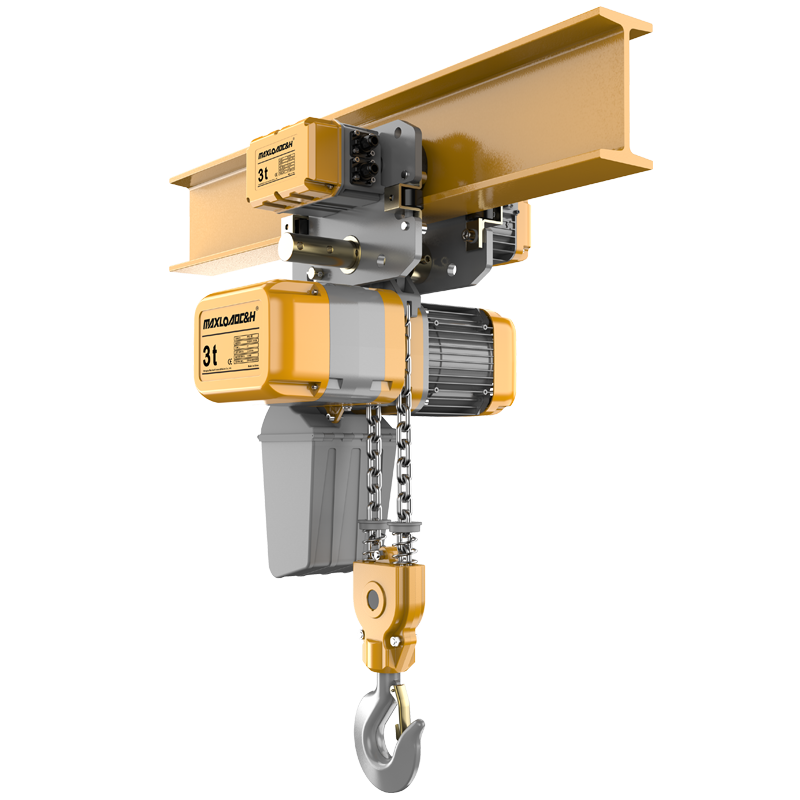
Electric hoists are the core lifting mechanism of the entire lifting system. They can be used independently or as components of overhead cranes and jib cranes. Based on their structure, they are mainly divided into wire rope electric hoists and chain electric hoists.
Electric hoists, with their compact design, low weight, and simple operation, are widely used across various applications. Functionally, they are equipped with a conical rotor brake motor and bidirectional upper and lower limit devices to ensure safety during lifting. Modern electric hoists also support dual-speed or slow-speed lifting, meeting the stringent requirements for workpiece stability in precision assembly.
It is worth noting that electric hoists are not limited to straight-line operation. When used on a single-rail curve, they can turn, enabling material flow on complex production lines. Common installation forms include fixed and trolley types, and this flexibility makes them a standard module in modular lifting systems.
II. Overhead Corridor: The System Advantages of Overhead Cranes
Overhead cranes, also known as bridge cranes or overhead gantry cranes, are the most widely used lifting equipment in workshops. Erected on rails on fixed span supports of a building, they act like a moving "bridge" in the air. The core value of an overhead crane lies in its comprehensive coverage capability.
Structurally, overhead cranes mainly consist of a trolley traveling mechanism and a gantry traveling mechanism. Their coverage area is rectangular, reaching most areas within the workshop. For scenarios requiring long-distance, large-scale material handling, overhead cranes have irreplaceable advantages. For example, in a machinery manufacturing workshop, one overhead crane can simultaneously serve multiple assembly stations and storage areas, achieving precise material scheduling through three-dimensional movement (forward, backward, left, right, up, and down).
When selecting a crane, overhead cranes can be divided into single-girder and double-girder types. Single-girder overhead cranes are typically used with electric hoists as the lifting mechanism and are suitable for applications with smaller lifting capacities and shorter spans; while double-girder overhead cranes have a stronger structure and are suitable for heavy-load, high-speed, or special lifting conditions. With technological advancements, modern overhead cranes are increasingly equipped with variable frequency speed control systems and wireless remote control devices, significantly improving operational precision and safety.
III. Flexible Arm: The Local Coverage Capability of Cantilever Cranes
Unlike the wide-area coverage of overhead cranes, cantilever cranes focus on solving the "last mile" lifting problem, especially in space-constrained areas or dead zones that overhead cranes cannot reach.
A cantilever crane typically consists of a column, a slewing boom, and an electric hoist. Its working area is a fan-shaped or circular region centered on the column. Based on the installation method, it is mainly divided into column-mounted and mobile types. Column-mounted cantilever cranes are fixed to the ground with chemical bolts and are suitable for repetitive operations next to a machine tool or workstation. Mobile cantilever cranes, on the other hand, are equipped with casters and counterweights, allowing them to be pushed to the desired location in any direction. They are particularly suitable for low-ceilinged buildings where overhead cranes are not feasible, or for locations with variable work sites such as outdoor areas and warehouses.
In application scenarios, cantilever cranes are often used in conjunction with precision equipment. For example, next to a coordinate measuring machine (CMM), a cantilever crane is used to smoothly lift workpieces from the pallet to the measuring platform, avoiding the laboriousness and safety hazards of manual handling. Furthermore, due to its simple structure, large working space, and flexible rotation, the cantilever crane is ideal as an auxiliary lifting tool on the assembly line, assisting in precise alignment during pressing, welding, and other processes.
IV. Three-in-One: How to Select Equipment Coordinated Based on Working Conditions
In actual factory planning, these three types of equipment are not mutually exclusive but complementary. A reasonable combination can maximize production efficiency and reduce investment costs.
First, determine the main equipment based on the scope of work. If the workshop needs to cover the entire span of material transport, an overhead crane is the preferred option. However, if the factory height is low or the investment budget is limited, and lifting is only required at a few specific workstations, a combination of multiple mobile cantilever cranes may be more cost-effective than installing a single overhead crane.
Second, consider workstation density and material weight. For workshops requiring frequent lifting of heavy workpieces, the large tonnage and high working level of overhead cranes are essential. In precision machining areas, for workpieces weighing tens to hundreds of kilograms, it is recommended to use cantilever cranes or self-standing overhead cranes with matching load capacities. This meets the needs while avoiding energy waste caused by overloading large overhead cranes.
Finally, safety interlocks and space utilization cannot be ignored. In areas where overhead cranes and cantilever cranes are used simultaneously, their respective operating trajectories must be carefully planned to prevent collisions. Especially around precision equipment, the installation position of the cantilever crane needs careful calculation to ensure that the equipment can return to a safe position when lifting workpieces. Even establishing an electrical safety interlock mechanism can fundamentally prevent losses caused by misoperation.
V. Conclusion
Electric hoists, overhead cranes, and cantilever cranes together constitute a three-dimensional lifting network for modern industrial production. Electric hoists, as the "heart," provide power; overhead cranes, as the "main arteries," achieve full coverage; and cantilever cranes, as the "capillaries," penetrate every precision workstation. Understanding the technical characteristics and application boundaries of these three technologies helps companies make more scientific and economical equipment selections when building new factories or upgrading existing ones, thereby creating a safe, efficient, and smooth modern material handling system. In the future wave of intelligent manufacturing, these seemingly traditional lifting equipment are also showing new vitality through deep integration with automation and information technologies.
 0086 156 1824 5535
 0086 156 1824 5535
 kimliu@chnhoist.com