The "Golden Duo" of Industrial Lifting
In modern industrial production, the efficiency of material handling directly determines a workshop's production capacity. Whether in heavy machinery manufacturing or precision assembly lines, the support of lifting equipment is indispensable. Within this field, the electric hoist—a compact, lightweight lifting device—plays the role of the "power core." It rarely operates in isolation; instead, it is typically mounted on an overhead crane or a jib crane, forming a complete, integrated operational unit.
Drawing upon real-world application scenarios, this article provides an in-depth analysis of the synergistic relationship between electric hoists, overhead cranes, and jib cranes, offering valuable insights to assist you in selecting the optimal equipment for your facility.
I. The Core Power Source: A Primer on Electric Hoists
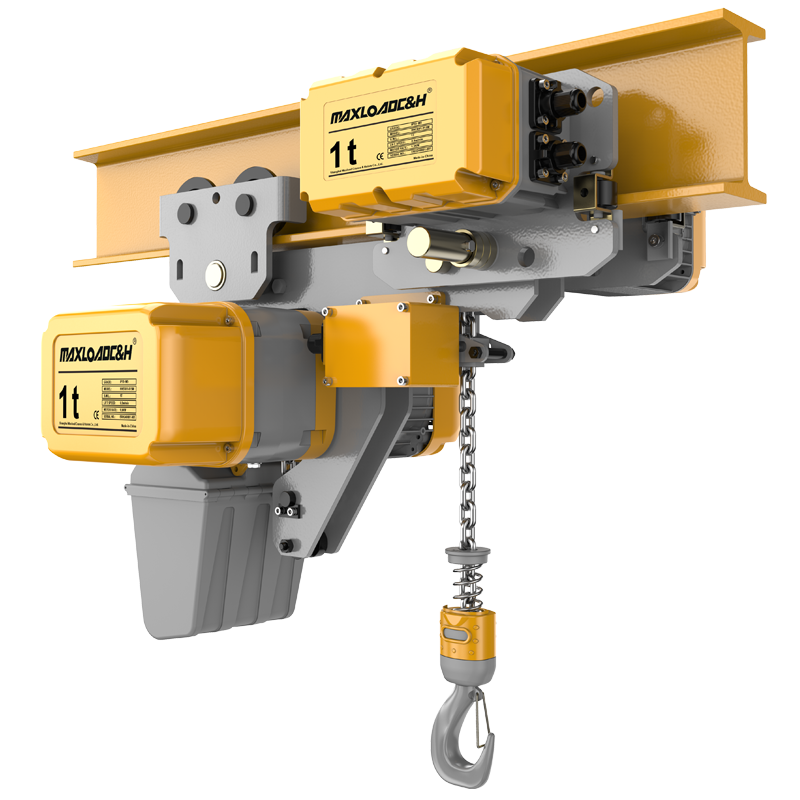
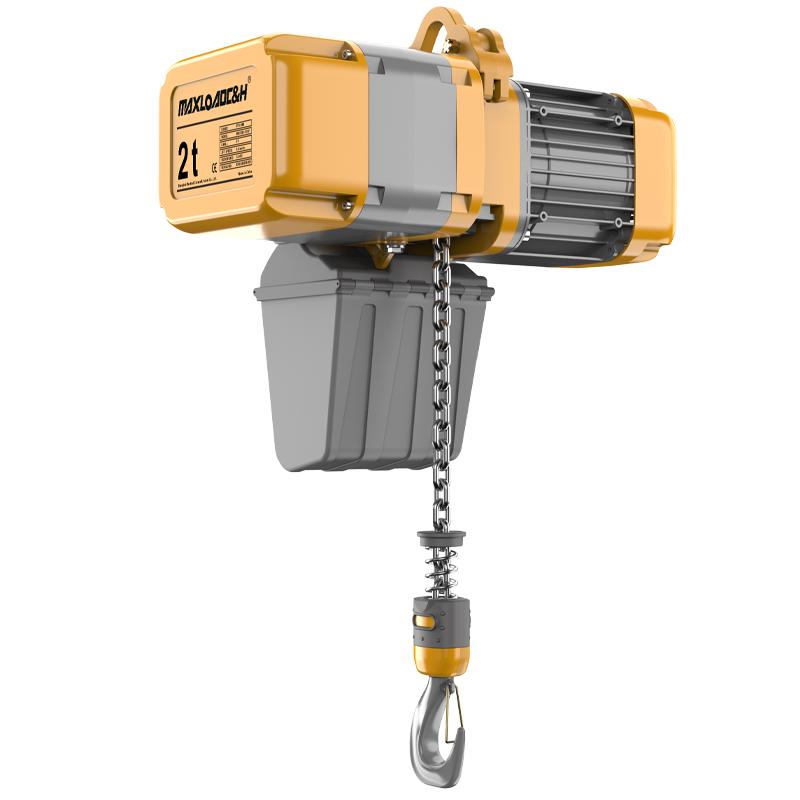
An electric hoist is an electrically driven device designed to perform the vertical lifting of heavy loads through the combined action of an electric motor, a transmission mechanism, and either a hoisting drum or a sprocket wheel. Primarily categorized into wire rope hoists and chain hoists, these devices boast distinct advantages such as compact dimensions, light self-weight, and simple operation. Consequently, they are capable of meeting the requirements of the vast majority of industrial enterprises, mining operations, warehouses, docks, and workshops.
Within a complete lifting system, the electric hoist is responsible for the most critical action: the actual lifting of the load. However, the method by which it achieves lateral movement depends entirely on the "host" equipment to which it is attached—whether it travels along the main girder of an overhead crane or rotates in tandem with a jib crane.
II. The Workshop's Backbone: Integrated Applications of Electric Hoists and Overhead Cranes
In factory workshops, one of the most common sights is an overhead crane, suspended high above, traversing the space while hoisting massive loads.
1. Structure and Principles
An overhead crane typically consists of a main girder spanning the width of the workshop, a trolley that travels along the main girder, and a bridge (or crane frame) that moves longitudinally along the workshop's runway rails. In this configuration, the electric hoist serves specifically as the "lifting mechanism." When an electric hoist is mounted on the crane's trolley, it is capable of not only performing vertical lifts but also moving laterally (left and right) along the main girder with the trolley, and moving longitudinally (forward and backward) across the workshop with the bridge. Effectively, this creates a three-dimensional spatial grid for material transport.
2. Advantages of the Application
The primary advantage of this combined system is the complete absence of ground-level obstructions or interference. Since the overhead crane is suspended from tracks mounted on the factory roof, it occupies absolutely no floor space—a critical advantage for large-scale machining and assembly workshops. For instance, on automotive manufacturing or heavy machinery assembly lines, an overhead crane—working in tandem with an electric hoist—can effortlessly span massive workpieces and equipment to precisely deliver components to their designated workstations.
3. Applicable Scenarios
Wide-Area Coverage: Material handling operations requiring coverage across the entire length of a workshop.
Specialized Processes: Operations involving specialized lifting attachments—such as grabs or electromagnets—for handling specific types of materials.
III. The Flexible Arm: Point-to-Point Collaboration Between Electric Hoists and Jib Cranes
If the overhead crane serves as the workshop's "main public transit line," then the jib crane acts as the "private vehicle" stationed right alongside the production line. A jib crane is a piece of light-duty equipment featuring a unique structural design; it consists of a vertical column (or wall-mounted bracket), a rotating boom (jib), and an electric hoist, and is primarily dedicated to serving a specific, localized area surrounding a fixed workstation.
1. Structure and Types
The core functionality of a jib crane lies in the rotational capability of its "boom." Common types include column-mounted and wall-mounted configurations.
Column-Mounted Jib Crane: Secured to the floor via anchor bolts, this type features a boom capable of rotating 270°—or even a full 360°—while the electric hoist travels laterally along the boom's I-beam track.
Wall-Mounted Jib Crane: Directly affixed to a factory wall or structural column, this configuration occupies no floor space and is ideally suited for workshop aisles or work zones situated along walls.
2. Advantages of Collaborative Operation
When an electric hoist is mounted onto a jib crane, the strengths of both components combine to create a perfectly complementary system:
Precise Workstation Coverage: For tasks such as loading and unloading machine tools, assembly operations at specific points on a production line, or maintenance work, relying on a large overhead crane is not only an inefficient use of resources but may also disrupt operations in other areas. A jib crane enables the electric hoist to operate flexibly within a fixed sector or circular zone, allowing for highly targeted, "point-and-lift" precision.
Reducing Congestion and Wait Times: In large-scale workshops, requiring every workstation to wait for the scheduling and arrival of an overhead crane can result in significant wasted labor hours. As an auxiliary device, the jib crane allows a workstation to independently handle its own lifting requirements, thereby substantially alleviating the workload on the main overhead crane and effectively eliminating waiting periods. Low cost and easy installation: Compared to installing a complex overhead crane system, column-mounted or wall-mounted cantilever cranes are simpler in structure, lighter in weight, easier to install, and have lower initial costs, making them an economical and efficient workstation lifting solution.
3. Typical Applications
Machining: Used for workpiece clamping in machining centers or heavy machine tools.
Equipment Maintenance: Used for disassembling and assembling heavy components in workshop maintenance areas.
Warehousing and Logistics: Used for loading, unloading, and sorting goods at the edge of shelving.
IV. Selection Considerations: How to Combine for Maximum Efficiency?
When planning material handling solutions, companies should choose different combinations based on actual working conditions:
By operating range:
Full-plant area, long-distance handling: Prioritize the combination of overhead crane + electric hoist, utilizing its three-dimensional motion to achieve material flow.
Fixed workstations, short-distance intensive operations: Choose cantilever crane + electric hoist. Especially in areas with dense equipment and limited space, the rotational characteristics of the cantilever crane are more flexible than the linear movement of the overhead crane.
Choose based on load and workload: Light load, frequent start/stop: Cantilever cranes are usually paired with electric chain hoists. This combination is lightweight, has good inching performance, and is very suitable for frequent assembly operations.
Choose based on space utilization: If floor space is limited and the walls have sufficient load-bearing capacity, a wall-mounted cantilever crane is an excellent choice, essentially "borrowing space from the ceiling."
If the workshop has limited headroom and is not suitable for installing complex overhead crane tracks, a low-headroom column-mounted cantilever crane can play a greater role.
V. Safety and Maintenance Points
Regardless of the combination method, safety is always the top priority.
Overloading is strictly prohibited: The rated load of the electric hoist and cantilever crane/overhead crane must be clearly defined, and overloading is strictly prohibited.
Proper operation: When lifting heavy objects, it is strictly forbidden to pull or drag them at an angle to avoid damage to the wire rope and guide rails. No one is allowed to stand under heavy objects.
Regular Inspections: Periodic checks must be conducted on the electric hoist’s brakes and limit switches, as well as the bridge crane’s rail connections and the jib crane’s slewing mechanism, to ensure that all components remain in good working order.
Conclusion
The electric hoist serves as a powerful "heart," while the bridge crane and jib crane act as the "body" upon which it relies for its function. The bridge crane grants it the ability to traverse vast spaces, whereas the jib crane enables flexible and precise reach within a specific localized area. Understanding the symbiotic relationship among these three components allows enterprises to rationally allocate resources across different production zones—utilizing bridge cranes to resolve macro-level logistics challenges and jib cranes to optimize micro-level workstation efficiency—thereby achieving a comprehensive enhancement of overall factory productivity.
Guided by modern lean manufacturing principles, the judicious selection of these hoisting devices not only reduces manual labor intensity but also provides a robust guarantee for an enterprise's operational safety and high-efficiency output.
 0086 156 1824 5535
 0086 156 1824 5535