A Flexible and Efficient Handling Duo: Electric Hoists and Jib Cranes
In modern industrial production, the efficiency of material handling directly impacts an enterprise's production capacity and operational costs. With the increasingly specialized division of labor on workshop production lines, the question of how to safely, flexibly, and efficiently execute repetitive lifting tasks within a fixed workstation has become a focal point for many companies. The combination of an electric hoist and a jib crane was created precisely to address this critical challenge. Thanks to their flexibility, cost-effectiveness, and high efficiency, this "golden duo" plays an indispensable role as a "workstation assistant" in modern workshops.
I. Understanding the Core Equipment: Structure and Function
To fully appreciate the value of this combination, we must first examine the individual functions and structural characteristics of each component.
The jib crane—also known as a slewing crane—is a type of light-duty lifting equipment. Its basic structure consists of a column, a rotating boom (or arm), a rotation drive mechanism, and an electric hoist that travels along the boom. The column is anchored to a concrete foundation using anchor bolts, providing structural support for the entire system; the boom is capable of rotating through a wide arc around the column, thereby covering a fan-shaped operational zone. Depending on the installation method, jib cranes can be categorized into column-mounted, wall-mounted, and mobile types, allowing them to adapt to various workshop layouts.
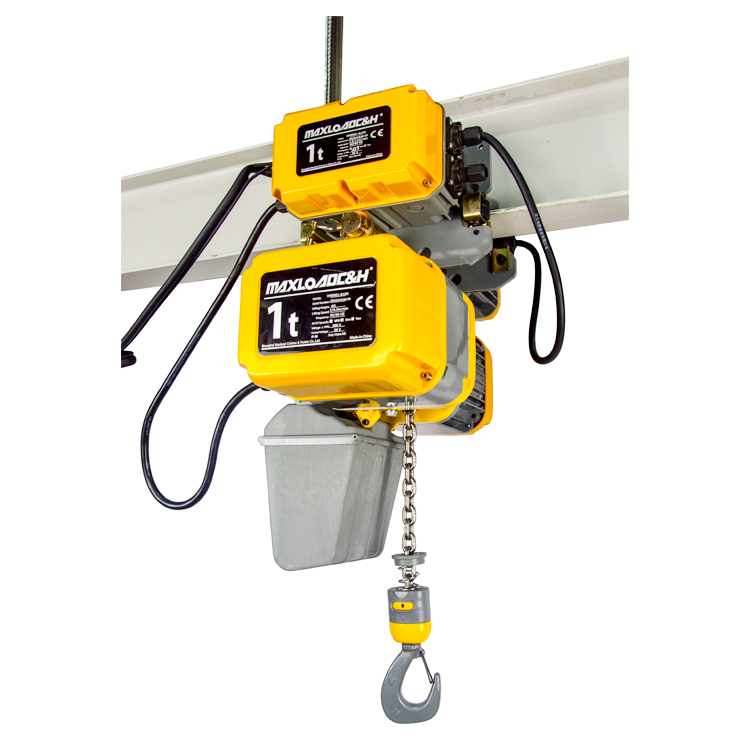
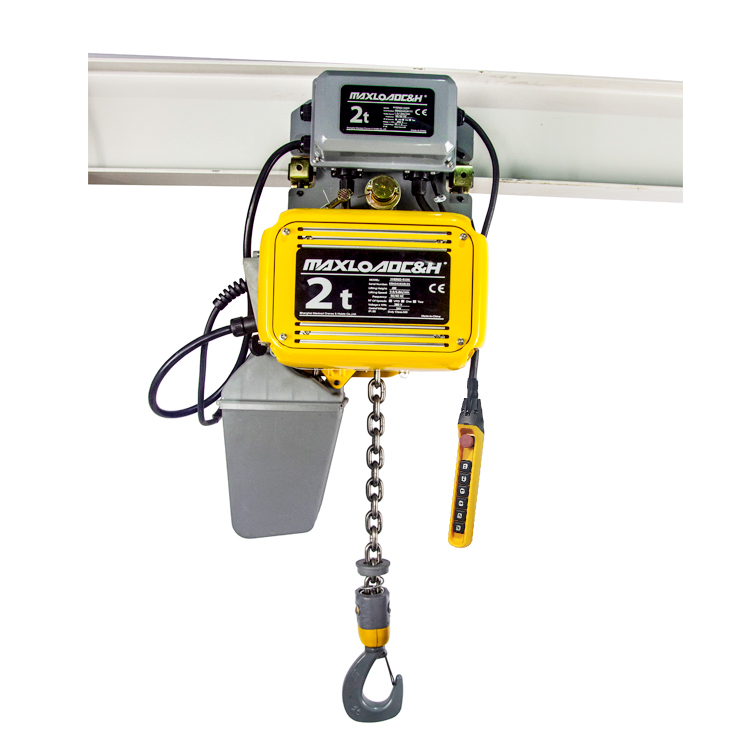
The electric hoist serves as the core lifting mechanism mounted on the jib crane's boom. Based on the specific lifting mechanism employed, hoists are primarily classified into two major categories: electric chain hoists and electric wire rope hoists. Electric chain hoists are particularly widely used on jib cranes due to their compact size, lightweight structure, and relatively simple maintenance requirements; they are especially well-suited for high-frequency lifting operations involving light to medium loads. Conversely, electric wire rope hoists are better suited for heavy-duty applications involving heavier loads or situations where exceptional lifting stability is required.
When an electric hoist is mounted onto the I-beam of a jib crane, the two combine to form a complete material-handling unit capable of moving materials in three-dimensional space: the rotation of the boom facilitates horizontal, arc-shaped movement; the lateral travel of the hoist along the boom enables radial, linear movement; and the hoist's own lifting mechanism provides vertical lifting and lowering capabilities.
II. Application Scenarios: The Ubiquitous "Workstation Assistant"
The combination of an electric hoist and a jib crane is widely adopted because it perfectly bridges the gap between large-scale overhead bridge cranes and manual handling. It does not tie up valuable overhead crane resources, nor is it as physically strenuous or fraught with safety risks as manual lifting.
1. Machining Operations and Machine Tool Loading/Unloading
In machining workshops, workers frequently need to transport heavy workpieces from storage racks to machine tool worktables and subsequently unload the finished products. If this operation relies solely on manual labor, the physical exertion is immense, and the risk of work-related injuries—often triggered by fatigue—becomes extremely high.
By positioning a column-mounted jib crane—equipped with an electric chain hoist—next to each machine tool, operators can use a single hand to manipulate a remote control. This allows them to effortlessly grasp workpieces and, by rotating the jib arm, precisely position the workpiece onto the machine's chuck or worktable center. This significantly reduces auxiliary processing time and boosts machine tool utilization rates.
2. Precise Alignment on Assembly Lines
In sectors such as automotive final assembly or engine manufacturing, assembly precision requirements are exceptionally high. For instance, during the mating of a vehicle body to its chassis, the workpieces are large and heavy, demanding extremely precise alignment.
In such scenarios, a jib crane—paired with a smoothly operating electric chain hoist—demonstrates its distinct advantages. The hoist's lifting mechanism is typically equipped with dual-speed or variable-frequency drive capabilities, enabling micro-movements with millimeter-level precision. Operators can gently guide a vehicle body weighing up to 1.3 tons within the jib crane's coverage area, making fine adjustments to achieve a precise mating process. This not only ensures product quality but also prevents collision damage between workpieces.
3. Mold Handling and Maintenance
In stamping or injection molding workshops, the efficient exchange of molds is a critical factor in determining production flexibility. A single mold can easily weigh hundreds of kilograms—or even several tons.
By installing jib cranes in mold storage areas or adjacent to presses, operators can quickly attach a mold. Leveraging the jib crane's 360-degree rotation capability, they can maneuver around obstacles and precisely position the mold into the press or onto a storage rack. This approach offers greater flexibility than using forklifts and remains unaffected by congestion in workshop aisles, thereby significantly reducing mold changeover times and boosting overall equipment effectiveness.
4. Customized Applications for Specialized Operating Conditions
In industries with stringent requirements regarding hygiene or corrosion resistance—such as food processing, pharmaceuticals, and chemicals—standard equipment may fail to meet environmental mandates. In such cases, it is advisable to utilize stainless steel columns and jibs, paired with specially designed electric hoists. Stainless steel jib cranes feature smooth, corrosion-resistant surfaces that are easy to clean; this effectively inhibits bacterial growth, satisfies the requirements of GMP-compliant workshops, and ensures the safe and hygienic handling of raw materials or finished products.
Furthermore, in heavy industrial sectors—such as steel processing plants and wind turbine component manufacturing facilities—combining an electric chain hoist with a jib crane allows for the efficient lifting and transport of long steel sections or heavy components, thereby vastly improving both the convenience and safety of heavy-load handling operations.
III. Key Selection Criteria: Tailoring the Solution for Maximum Efficiency
Although this equipment combination is highly versatile and powerful, an incorrect selection can lead to operational inefficiencies or even safety hazards. When selecting a system, the following dimensions must be given primary consideration:
Load Capacity and Working Radius: These constitute the most fundamental parameters. It is essential to clearly define the weight of the heaviest workpiece to be handled and to measure the distance from the column's mounting point to the furthest point within the operational zone. Generally, as the lifting capacity or working radius increases, the structural requirements for the column and jib become more demanding, resulting in a corresponding increase in cost.
Environmental and Operating Conditions:
Usage Frequency: For high-frequency operations involving hundreds of lifts per day, it is imperative to select an electric hoist with a high duty cycle rating, ensuring that the motor and braking system possess sufficient heat dissipation capabilities and service life.
Environmental Factors: As previously noted, humid or corrosive environments necessitate the selection of jib cranes constructed from stainless steel or treated with hot-dip galvanization; conversely, in flammable or explosive environments, the use of explosion-proof electric hoists and electrical components is mandatory.
Installation Method and Spatial Layout: The choice between column-mounted, wall-mounted, or mobile configurations should be guided by the specific structural characteristics of the workshop. If the workshop's overhead clearance is limited, particular attention must be paid to the hoist's maximum lifting height and the hook's maximum reach.
IV. Maintenance and Safety: The Cornerstone of Long-Term Operational Reliability
With any lifting equipment, safety must always remain the absolute top priority. The routine maintenance of electric hoists and jib cranes is not complex, but it must be institutionalized and conducted on a regular basis.
1. Test Runs and Daily Inspections
Before the first use of each day, a no-load test run should be performed to verify that all mechanisms are functioning correctly and that the limit switches are sensitive and reliable. Particular attention should be paid to the electric hoist's braking system to ensure that there is no noticeable slippage when a load is suspended.
2. Periodic Maintenance of Key Components
Chains and Wire Ropes: The load chains of chain hoists require periodic lubrication to minimize wear; wire ropes on wire rope hoists must be inspected for broken strands, indentations, or corrosion. If the number of broken strands within a single lay length reaches a specific threshold, or if wear exceeds 10% of the original diameter, the wire rope must be mandatorily scrapped.
Hooks: Inspect the hook for any widening of the throat opening, wear on the critical cross-section, or the presence of cracks. Any hook exhibiting permanent deformation or cracks must be replaced immediately.
JIB Rotation Mechanism: Periodically clean dust and grease buildup from the joint connecting the column and the cantilever, and replenish the lubricant to prevent rotational jamming or abnormal noises.
3. Electrical and Safety Devices
Verify the responsiveness of the control buttons and inspect the power cables for any damage. Ensure that safety features—such as overload protection devices and upper/lower limit switches—are reliable and fully functional. For newly installed equipment or equipment that has undergone major repairs, a static load test at 1.25 times the rated load must also be conducted to verify the structural strength and rigidity of the entire assembly.
V. Conclusion
The combination of electric hoists and jib cranes—characterised by its flexible spatial coverage, significant labour-saving benefits, and relatively low investment costs—serves as a quintessential example of the refined and human-centric design principles found in modern factories. It is far more than a mere lifting tool; it is a critical asset for accelerating production cycles and safeguarding the occupational health and safety of operators. From the precise assembly of large workpieces to the frequent handling of small components, this dynamic duo leverages its unique advantages to empower manufacturing enterprises of all types to achieve the dual objectives of cost reduction, efficiency improvement, and safe production.
 0086 156 1824 5535
 0086 156 1824 5535